BATUMI — When Beşiktaş and Hapoel Be'er Sheva were drawn to face each other in the Europa League, it was clear to everyone that the fixture would create a real clash.
That significance only grew once Beşiktaş were confirmed as the home side.
In 2017, the two teams met in the Europa League knockout stage, each hosting the other at home. Beşiktaş players even took part in a ceremony at the Turkish soldiers' memorial in Be'er Sheva. Since then, things have moved in a completely different direction. Two years ago, Beşiktaş hosted Maccabi Tel Aviv in Hungary behind closed doors. This time they took a different approach, playing the match in Batumi in front of a stadium full of Turkish fans.
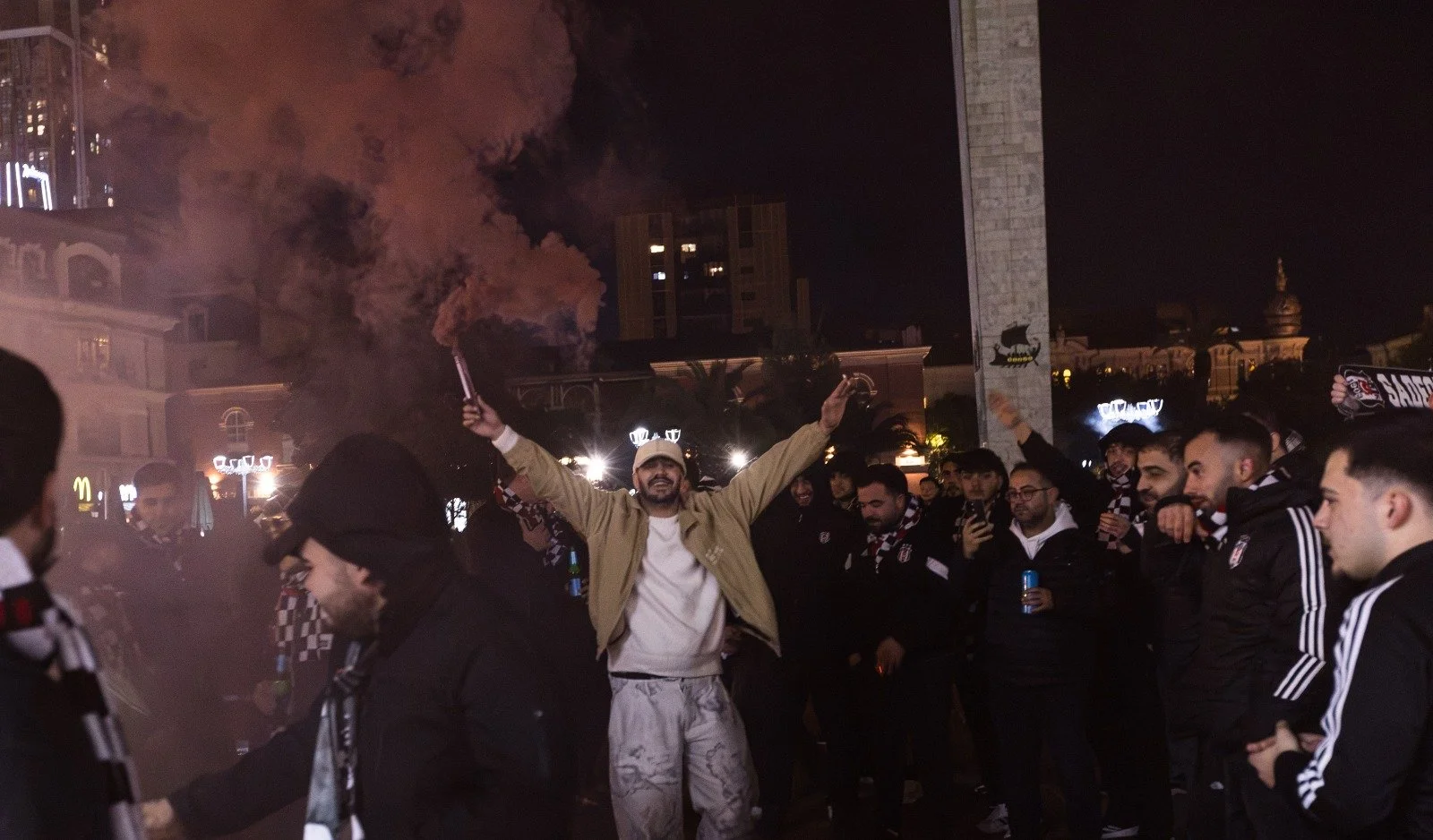
Beşiktaş fans took over Batumi before the match. (Photo courtesy: Shaul Greenfeld)
Choosing Batumi made sense. About a quarter of the city's population is Turkish, and it has become a major destination for Turkish tourists, who take the short trip over to the Georgian resort city. Above all, the city's location roughly half an hour's drive from the Sarpi border crossing made it even easier for fans to arrive.
The conflict between Turkey and Israel has escalated in recent years. For more than a decade, Turkish President Recep Tayyip Erdoğan has taken a hardline stance toward the policies of the Israeli government. The issue became far more extreme with the war in Gaza, and Israel's embassy in Turkey was even closed. Erdoğan has used rhetoric describing Israel not only as a state committing war crimes, but as a country whose right to exist should be denied.
The anti-Israeli mood has also grown more pronounced among football crowds, and Beşiktaş fans have fallen in line. Alongside displays over the past three years, Beşiktaş supporters have shown one recurring banner in the stands, which made its way to Batumi as well: "May Palestine be freed from the Zionist occupier," with the emblem of Beşiktaş's ultras group, Çarşı, at its center.
This marks a significant shift from the past. Beşiktaş as a club, and Çarşı as an ultras group, were historically known as politically neutral and largely anti-establishment, with fans rarely taking part in political activity. The most memorable exception came during the 2013 Gezi Park protests, when Beşiktaş fans stood against the government alongside supporters of Fenerbahçe and Galatasaray — political activity, but of an anti-establishment kind.
Despite this history, opinions on the war in Gaza have become a rare consensus that unites rival Turkish crowds. That unity was visible in this match too, as fans of different clubs travelled from cities across the country to Batumi in support of the team. Shirts of Fenerbahçe, Galatasaray and Trabzonspor all appeared in the stadium. "We are all here together — it doesn't matter if I'm Galatasaray or Beşiktaş," said Mert, a Galatasaray fan who attended the match wearing a Beşiktaş scarf. "We are here to support Palestine, to say Turkey is here."
The match itself became secondary as early as the 25th minute. Clashes broke out between Georgian police and Beşiktaş fans even before kickoff, after fans attempting to bring Palestinian flags into the stands were met by Georgian officers trying to stop them, at times violently. When police moved in again to restore order, the situation escalated into a riot, with tear gas used and Beşiktaş fans throwing seats. Several Beşiktaş fans were injured in the incident, including one who fell from the stands onto the pitch.
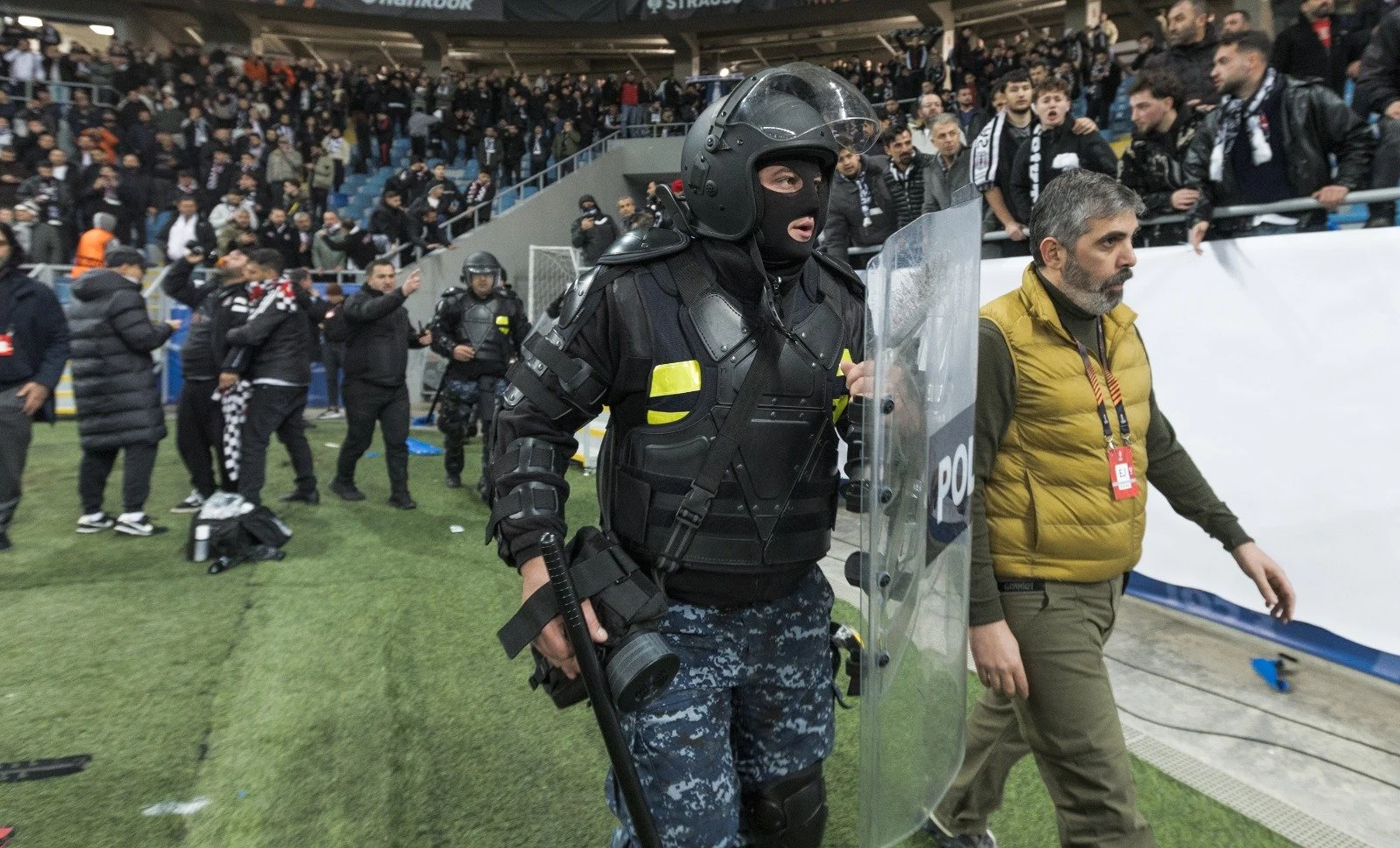
Georgian police on their way to the Beşiktaş end. (Photo courtesy: Shaul Greenfeld)
But the war in Gaza was not the only nationalist flashpoint in this match. At noon, a group of fans who had crossed the Sarpi border crossing raised a banner reading "82 Batum." Batum is the Turkish name for the city, but the number 82 carries deeper meaning: Turkey has 81 provinces, and for nationalists, 82 symbolizes a future new province. The number is most commonly associated with Northern Cyprus, though it has historically also been linked to parts of Iraq and Syria, as well as to Batumi itself.
Beyond Turkey's present-day ties to the city, it's worth remembering that Batumi was once under Ottoman rule. The old town was built during that period, with the Orta Jame Mosque standing at its center. In 1921, the Turkish army, led by Atatürk, made another attempt to seize the city and the wider Adjara region — an episode that ended with the Treaty of Kars, which settled the status of the area and fixed the border between Turkey and the Soviet Union.
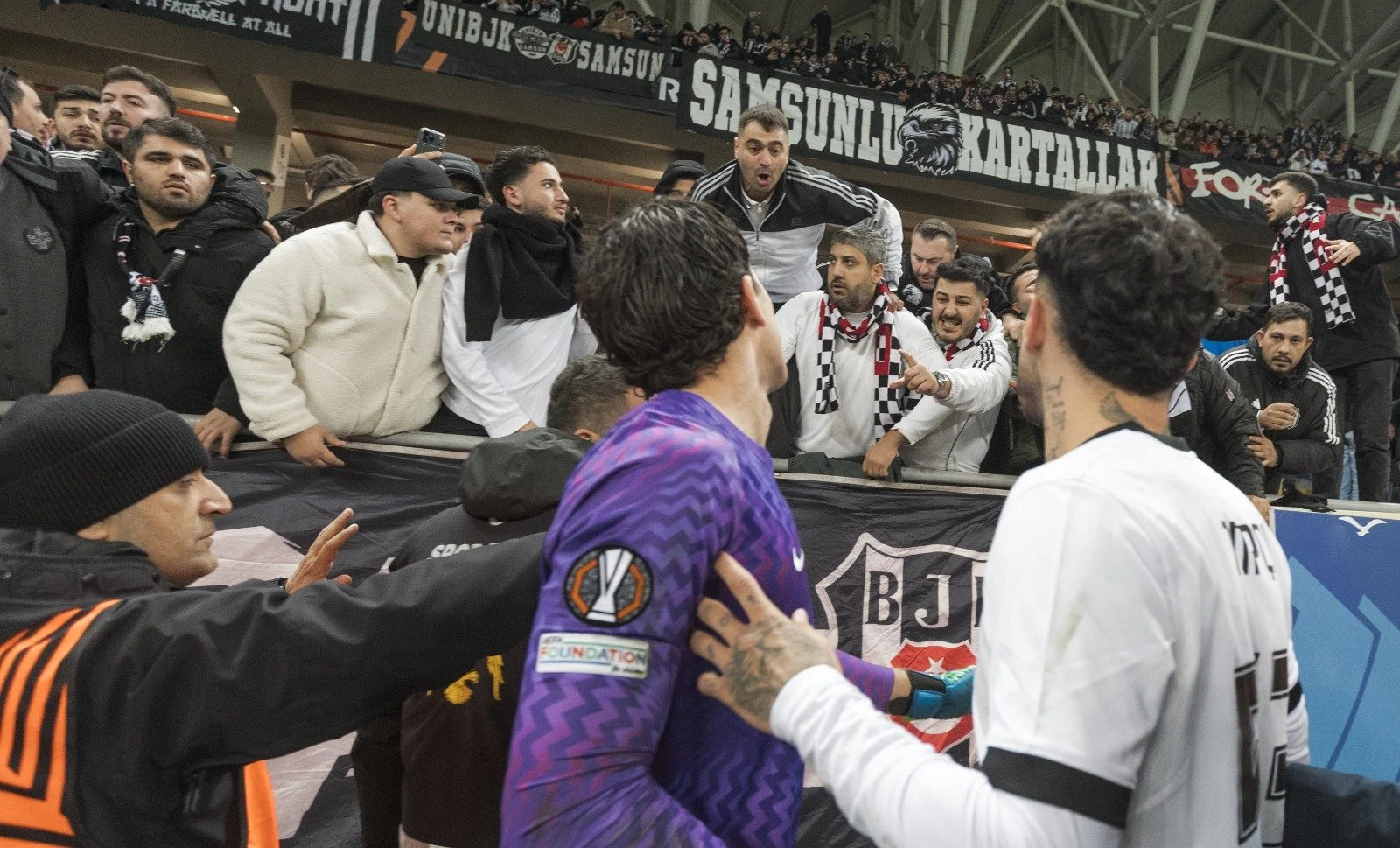
Beşiktaş players speaking with their fans during the chaos. (Photo courtesy: Shaul Greenfeld)
In the end, the match became a display of Turkish nationalist unity. Beşiktaş won 2-1, moving significantly closer to advancing to the next stage of the Europa League, while Hapoel Be'er Sheva slipped further into trouble at the bottom of the table with just one point from five matches. For Beşiktaş fans, the match itself was little more than a pretext to showcase something far bigger than football.
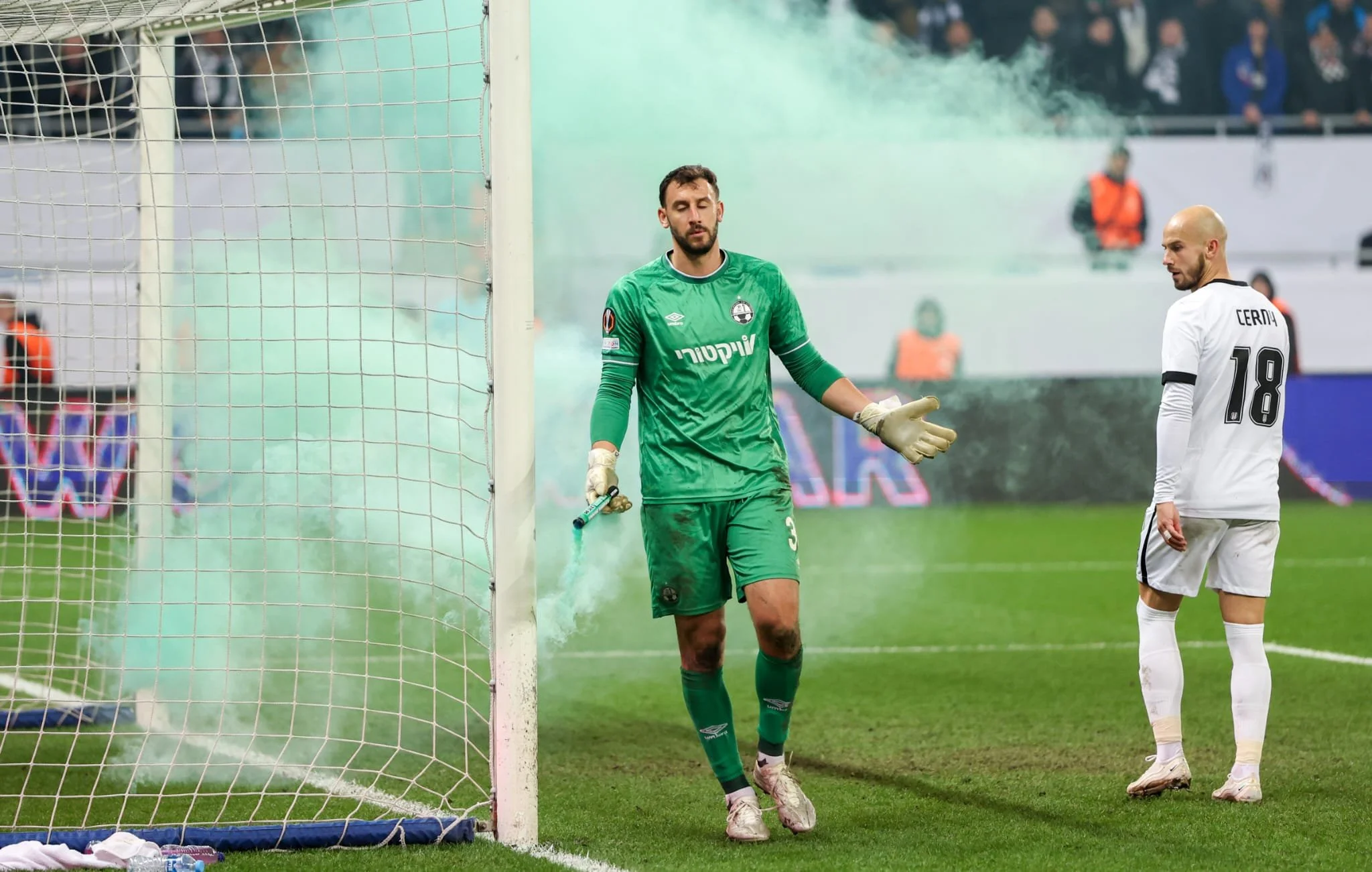
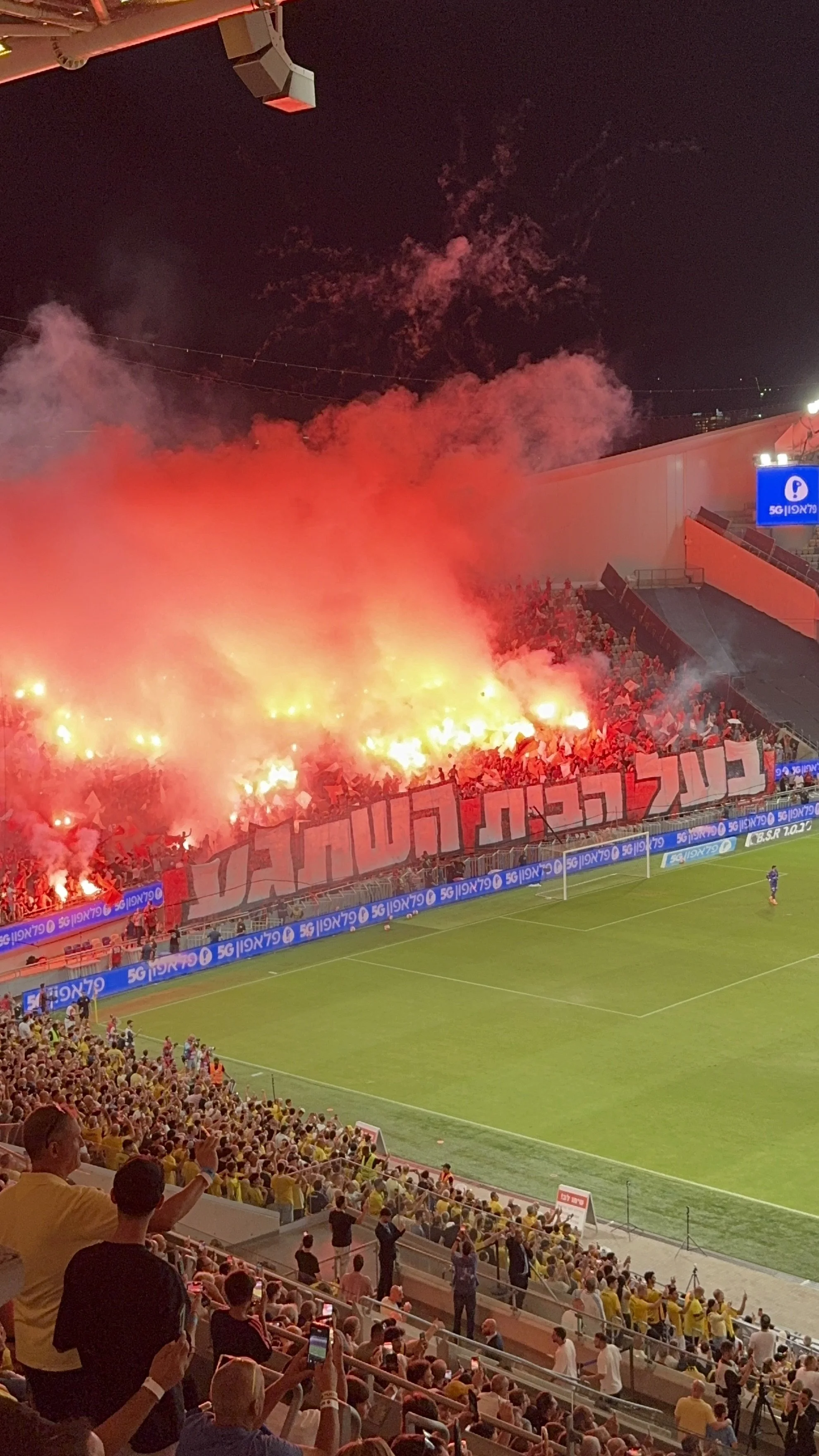
Hapoel Be’er Sheva’s goalie, Marco Wolff, deals with pyrotechnics. (Photo courtesy: Shaul Greenfeld)








Beşiktaş beat Hapoel Be'er Sheva 2-1 in Batumi, in a match overshadowed by pro-Palestinian displays, nationalist banners and police clashes.