
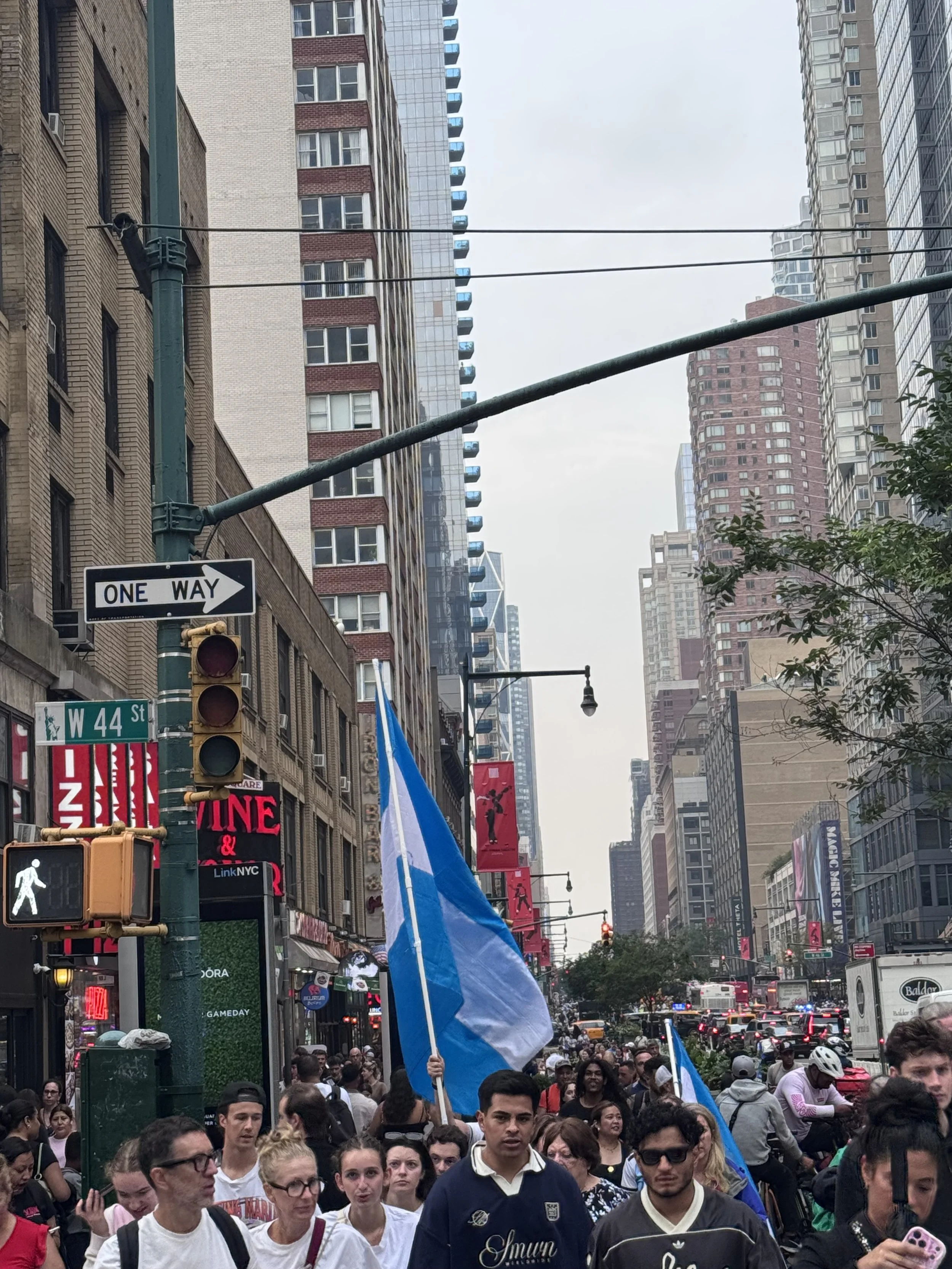
NEW YORK/NEW JERSEY — Swarms of supporters dressed in Argentina's iconic sky blue and white gathered on a sleepy New York Sunday morning.
Thousands upon thousands—some singing, others simply smiling and patiently waiting for their turn to board the train.
The 2026 World Cup Final was, above all else, a home game for Argentina because of its fans.
"I sold both my car and my wife's car just to buy a ticket," Juan, who traveled from Rosario, told BabaGol.
From 9 a.m. onward, Penn Station in Manhattan filled with Argentina supporters, each carrying a different story. Some had flown from Argentina, others were Argentines living in the United States, and many had simply caught the Albiceleste fever.
Just as happened throughout this World Cup in Israel, the same phenomenon could be seen around the globe: fans from every continent wearing Argentina shirts with the number 10 and "Messi" on the back.
Football was not the only topic occupying Penn Station.
"Red card for Donald Trump! Come get your red card for Donald Trump!" shouted Edna, an activist protesting the renewed war, as she attempted to hand out symbolic red cards to supporters. Very few stopped to take one. Their focus was elsewhere.
The stadium in New Jersey—ironically named MetLife Stadium—sits well outside the city, requiring train transfers for most visitors. Arriving there feels more like reaching a spacecraft launch site than one of the world's biggest sporting events. Detached from the pulse of New York City, even its official tournament name, "New York New Jersey Stadium," feels oddly disconnected.
That isolation seemed to influence both the atmosphere and the football itself.
The spotlight naturally fell on Lionel Messi and Lamine Yamal.
Messi struggled to find space or receive meaningful service. Yamal looked dangerous early, nearly scoring in the opening minutes, but gradually faded from the match.
Argentina never truly settled during the first half, which ended scoreless.
Ironically, after a World Cup filled with drama and unforgettable moments, the Final itself became a disappointing football match.
That feeling was reinforced by a halftime show featuring Madonna, Justin Bieber, and Shakira, which lasted nearly 28 minutes. Watching artists of that caliber is entertaining, but in the middle of a World Cup Final it felt out of place, overly commercial, and at times even cringeworthy.
When play resumed, it became clear that if Argentina had been poor before halftime, they were virtually absent after the break.
Every tactical adjustment made by Lionel Scaloni failed to change the flow of the match.
Then came the turning point.
Just moments after Argentina produced arguably its best attacking move, Enzo Fernández—already booked earlier in the second half—lunged into a reckless challenge, received a second yellow card, and was sent off, leaving Argentina with ten men.
Deep into stoppage time, Lamine Yamal had a chance to win it from a free kick, but sent his effort well over the crossbar.
Extra time followed the same pattern.
Argentina looked completely out of ideas. Even the desperate encouragement from tens of thousands of supporters failed to generate the momentum that had carried the team throughout the tournament.
In every previous Argentina match, there had been a moment when the crowd lifted the players and pushed them toward victory.
This time, that moment never came.
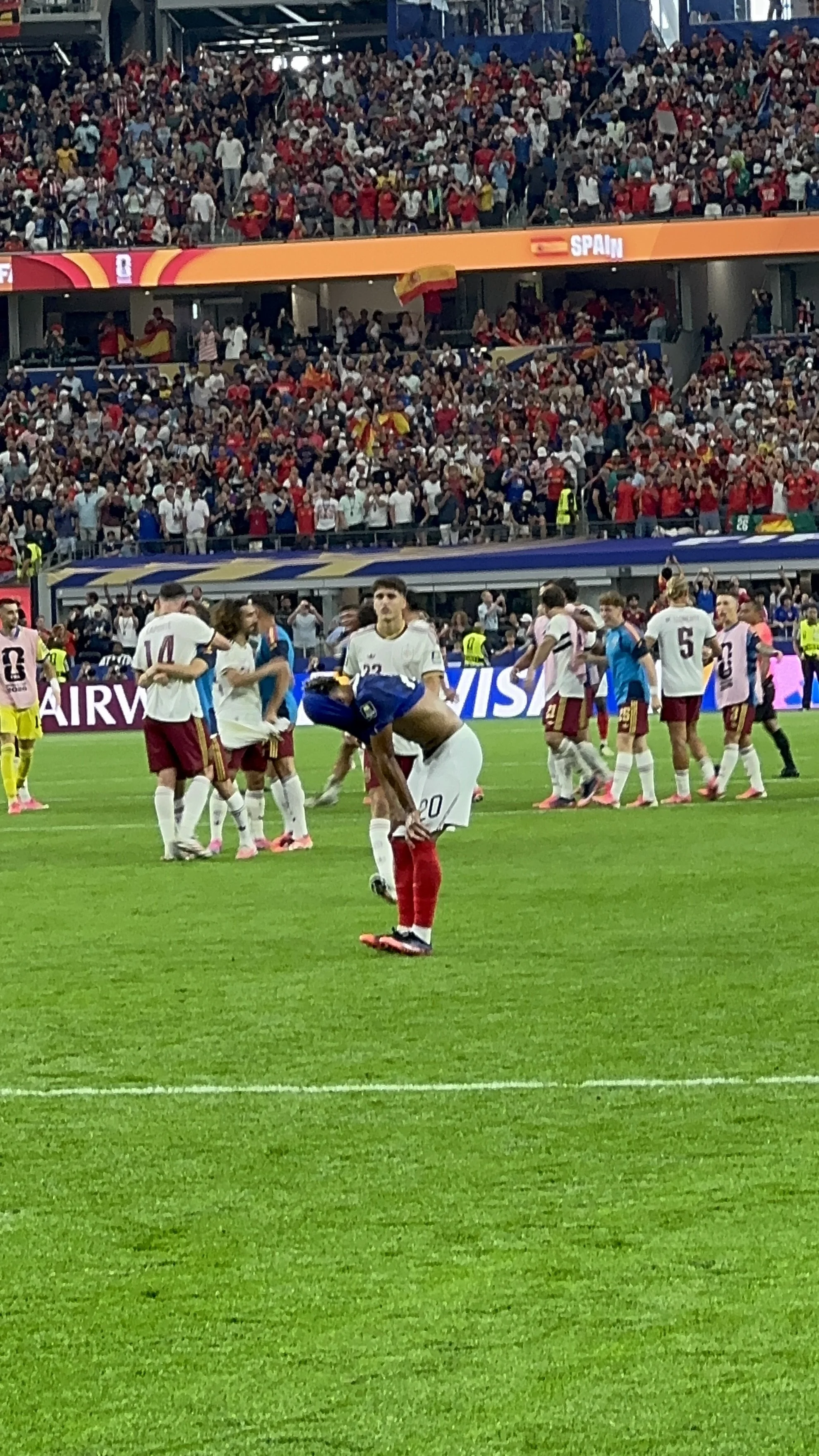
In the 106th minute, Spain struck.
A calm, clinical counterattack—exactly the kind Spain has perfected—ended with substitute Ferran Torres finishing after another substitute, Nico Williams, brilliantly set him up.
The stadium fell silent.
The public announcer called out the scorer's name and the updated scoreline, but what everyone truly noticed was the overwhelming silence that had engulfed the arena.
Tens of thousands of Argentina supporters knew the truth.
After such a flat performance, and after surviving so many difficult moments through individual brilliance earlier in the tournament, overturning the deficit now seemed impossible.
The goal itself was a reminder of football's enduring truth: disciplined, organized, and resilient teams can overcome emotion, passion, national identity—and even the greatest player in history.
Messi's tears at the final whistle moved many inside the stadium.
They understood they were likely witnessing the farewell of the man who had given Argentina hope for two decades.
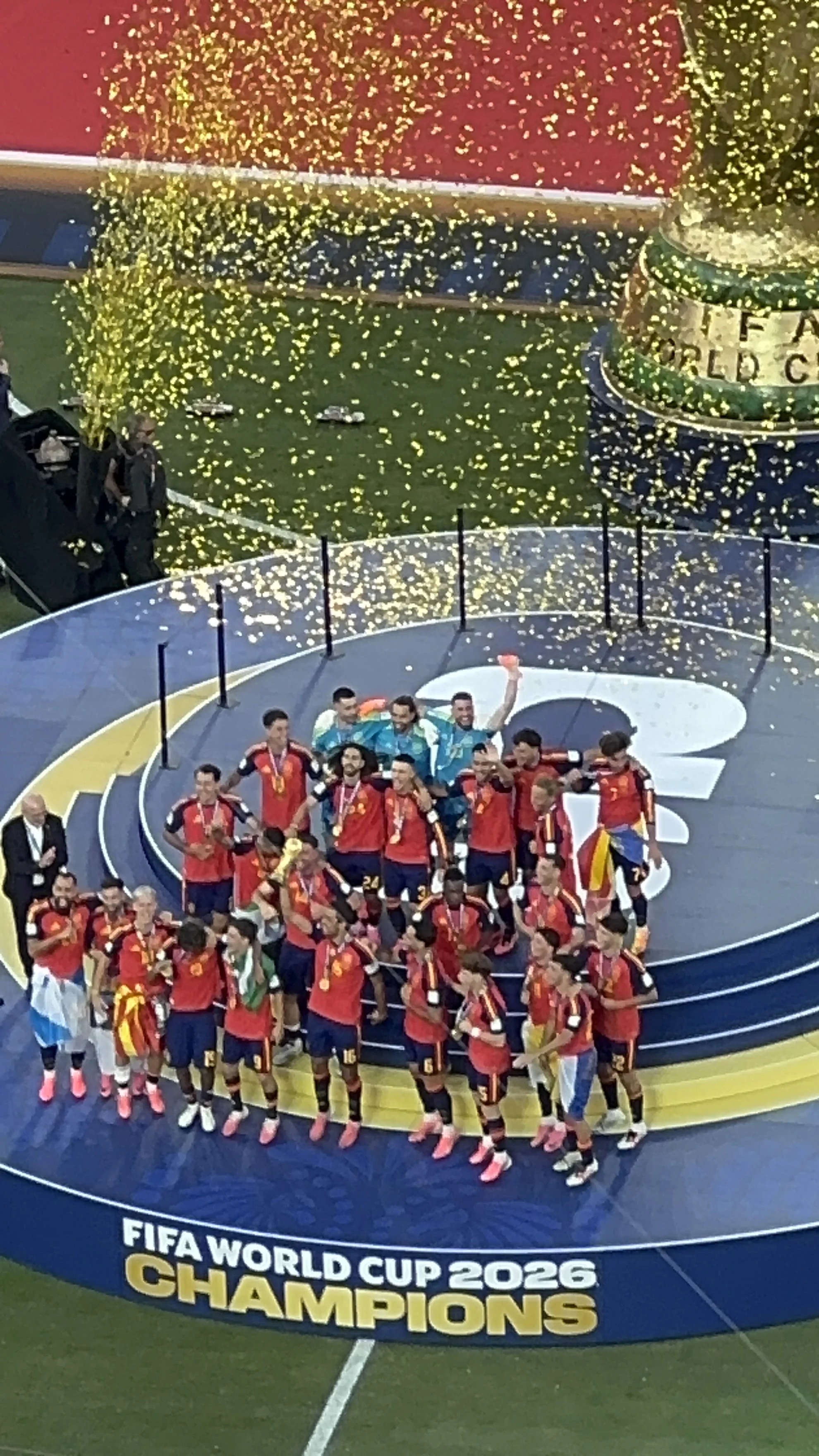
Spain are thoroughly deserving world champions.
They were the tournament's best team from start to finish.
Yet their coronation and trophy presentation became memorable for a different reason.
U.S. President Donald Trump, who presented the trophy, lingered on the podium long after the ceremony should have belonged to Spain's players, while FIFA President Gianni Infantino appeared to urge him repeatedly to step aside.
Trump, who throughout the tournament appeared eager to use the World Cup for political gain—including his controversial intervention surrounding Folarin Balogun's red card—seemed determined to remain the center of attention.
The loud boos that greeted him when he appeared on the pitch suggested that, despite the extraordinary ticket prices that kept many supporters away, the American president's popularity remains limited, and the World Cup did little to improve it.
The 2026 World Cup—an enormous tournament and perhaps the biggest global cultural event ever staged—came to an end with a Final that never quite lived up to its billing.
But it crowned an outstanding Spanish team and delivered one final reminder that, in football, compelling stories are not enough.
You have to win matches, and above all, you have to keep the ball out of your own net.






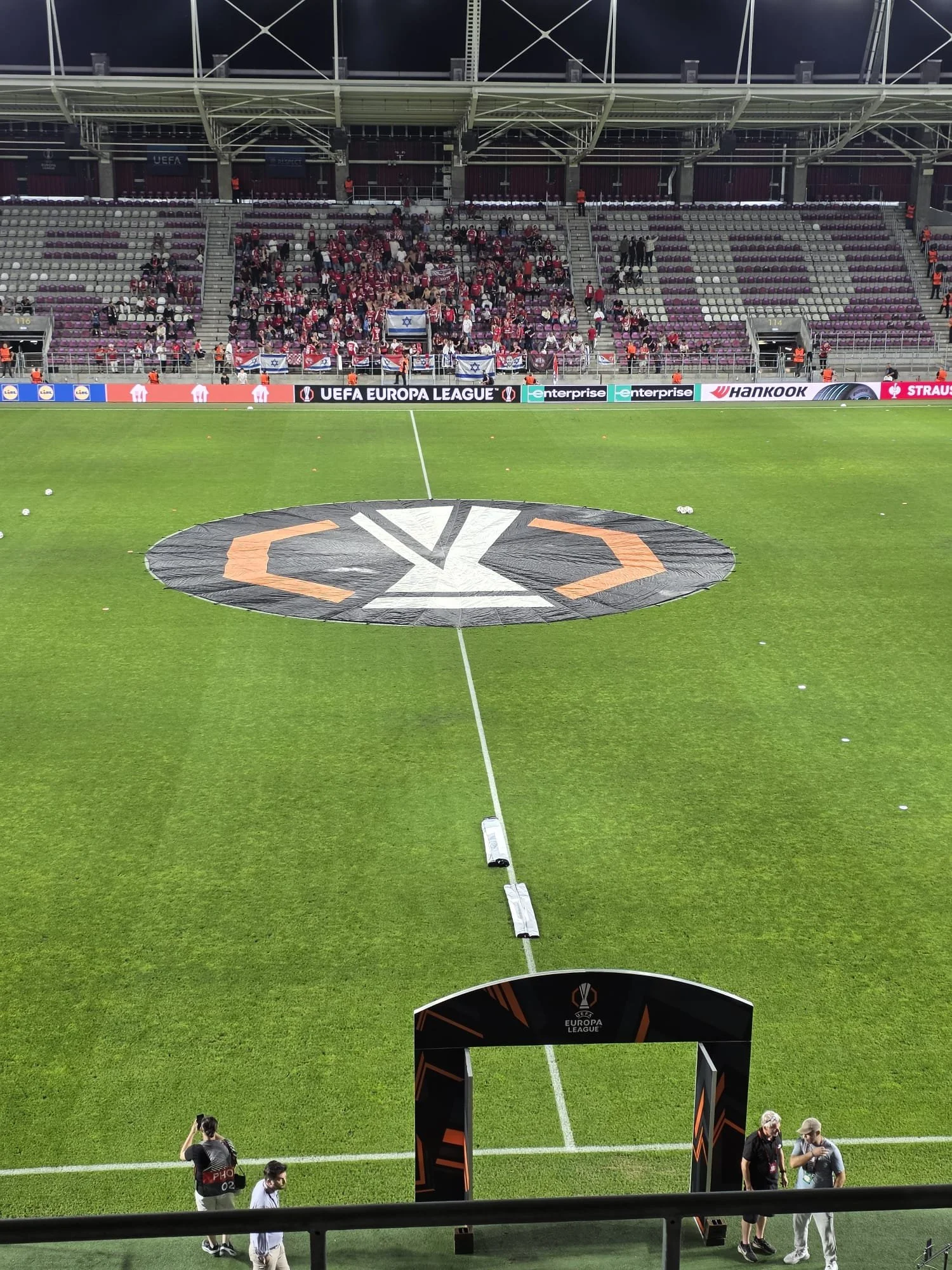
Hapoel Be'er Sheva drew 0-0 at Dinamo Zagreb to open their Europa League return, ahead of a brutal schedule and no home matches this season.