The first Tel Aviv derby of the 2026/27 season took place at Bloomfield Stadium on Monday night, and for the first time in years, both Maccabi Tel Aviv and Hapoel Tel Aviv arrived in form, sitting at the top of the Israeli Premier League table.
The Tel Aviv derby is the biggest game Israeli football has to offer nowadays in terms of rivalry, atmosphere, and sporting competition.
Historically, this rivalry has everything: ideological differences, local and continental prestige, a battle for dominance, and a true fight for titles and championships.
The roots of the rivalry go back even before the days of the British Mandate in Palestine. Maccabi represented the upper-middle class of the Jewish population, with strong connections to the international Maccabi movement, while Hapoel was the club of the Histadrut — the Hebrew labor movement. The two clubs fought for the city's prominence, but also for political influence, as they tried to establish more and more Hapoel and Maccabi clubs across the country.
Both clubs also won the Asian Champions League in its early years, with Hapoel winning the inaugural tournament in 1967, while Maccabi won the 1969 edition and the 1971 one — the latter after Iraq's Al-Shorta refused to play against an Israeli opponent. In the years that followed, more and more Middle Eastern and West Asian teams would refuse to play Israeli opponents, a trend that would eventually push Israel out of the Asian football confederation.
The beginning of the millennium belonged to Hapoel. They won the double in 1999/00 and again in 2009/10. At the same time, Maccabi was enduring one of the worst eras in its history, save for a championship in 2003/04 and a Champions League campaign the following season.
But everything changed when Maccabi was bought by Mitch Goldhar, a Canadian billionaire, who hired Jordi Cruyff as technical director — a move that transformed Maccabi and Israeli football dramatically. Maccabi went on to a three-peat, winning three championship titles with tremendous dominance, and later added two more titles under coach Vladimir Ivic.
These years were difficult for Hapoel. They were relegated twice and hadn't won a derby in 14 years. That streak came to an end last season, when Hapoel won dramatically 2-1 after coming from behind in the final minutes.
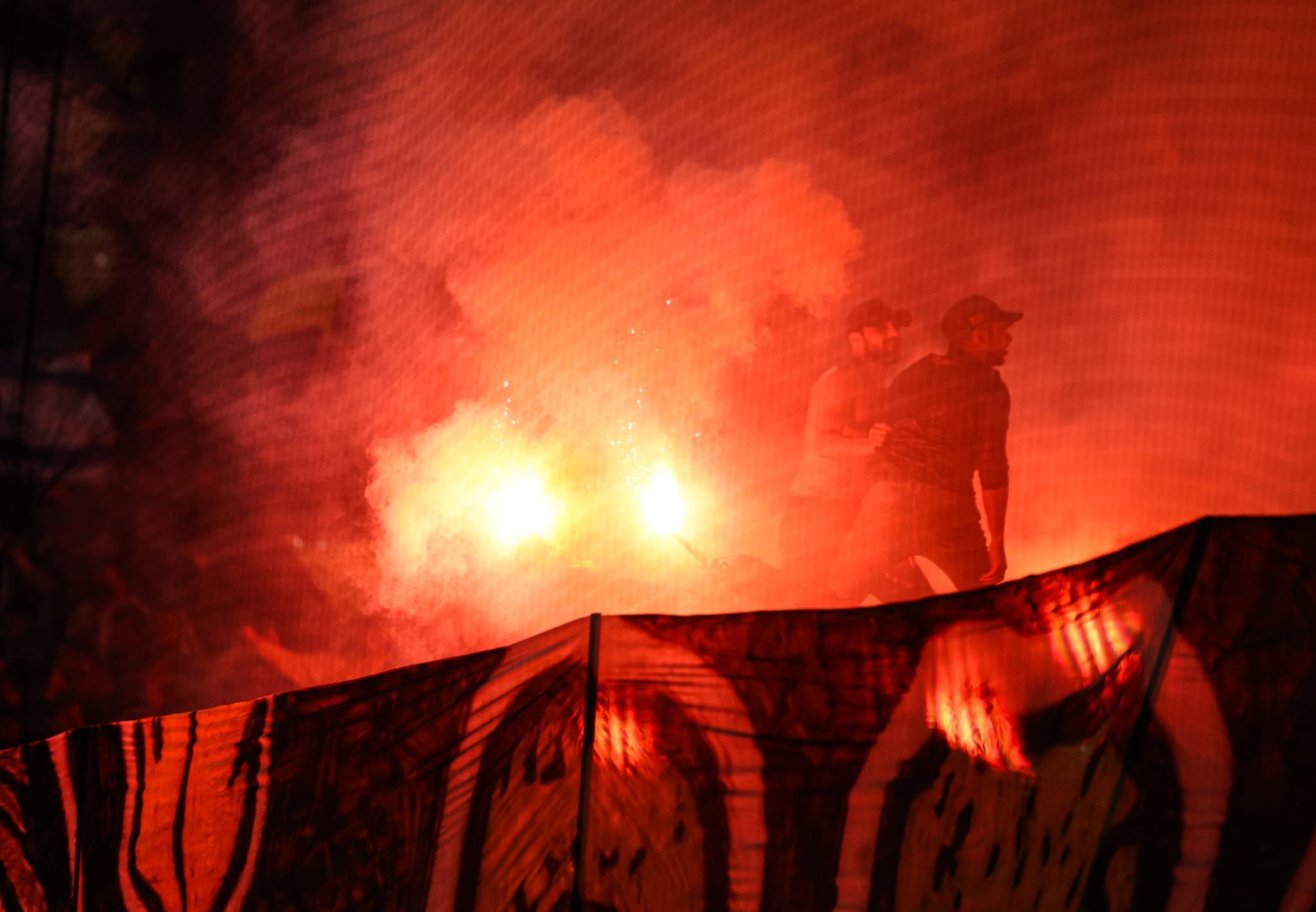
Beyond the results, this fixture has always delivered spectacular choreographies, pyro shows, and atmosphere. In recent years, it has been interrupted several times and even abandoned once, after a fan stormed the pitch and fought with a player. This game was heavily influenced by a heavy police presence in Jaffa in the hours before kick-off.
Match Report
As is tradition, the derby's opening moments were interrupted by pyrotechnics, and this time was no different. Both sets of fans — Ultras Hapoel and the Maccabi Fanatics — set off heavy pyrotechnics that delayed the start of play. 28,846 fans almost filled the Bloomfield stadium terraces.
After exactly eight minutes, Maccabi Tel Aviv broke the deadlock through an impressive diving header from captain Dor Peretz.
Hapoel Tel Aviv equalised in the 32nd minute with a sublime goal from Stav Turiel, who finished off a counterattack with a shot from outside the box into the left side of the goal — a beautiful equaliser that lifted the atmosphere further.
It took Maccabi less than three minutes to restore their lead. A counterattack found Ester Sokler in the box, who squared the ball to Osher Davida — an ex-Hapoel player — who fired it into the top corner to make it 2-1 to the Yellows.
After scoring, Davida celebrated in front of Gate Five, home to Hapoel's most fervent supporters, with a shooting gesture. The celebration struck a nerve with the Reds, as the gesture is infamously associated with Eran Zahavi, the former Hapoel star who went on to retire as a Maccabi legend.
Davida's celebration sparked chaos on the pitch between players from both sides, with Turiel picking up a yellow card for pushing him.
In the 44th minute, Maccabi came close to a third. A superb counterattack found Davida again in the box; he flicked the ball on with his head to beat the Hapoel defence, and Sokler — his provider for the second goal — converted. The goal was ruled out by VAR for offside.
Deep into first-half stoppage time, Turiel picked up a second yellow card and was sent off, leaving Hapoel with ten men for the remainder of the match. It had been a hectic and thrilling first half.
The second half was comparatively quiet until the 88th minute, when a pair of substitutes changed the picture. Elad Madmon drove with the ball down the line, beat two Hapoel defenders, and squared it for Hisham Layous, who slotted home the third for the Yellows.
Moments before the final whistle, Maccabi broke away once more, and Madmon struck the fourth from inside the box, sealing a 4-1 rout for the Maccabees.
"Four goals, a wonderful performance — especially at home in front of our fans, who pushed us from start to finish," said Maccabi coach Kenny Miller after the match. "I'm very happy. There were a few moments where we dropped back. There were so many good spells of possession in the second half; it was frustrating not to score, but we got it done."
Osher Davida added: "It's the best feeling in the world; we're happy. The 'pew-pew' gesture? That's just what I've been doing lately — it's nothing special, and it's not specific to this match. I can understand why they'd call it a provocation. Fair enough."
"The coach told us all week to stick to the game plan, no matter what happened. Because we saw it through to the end, we managed to score two more goals. After the first goal, we seized the momentum and pushed forward. I believe we'll keep winning, game after game."
From the losing side, coach Elyaniv Barda addressed the reasons for the defeat: "You can't overlook Turiel's sending-off; it had a critical impact on the match and on our style of play," Barda said after the game. "Even though we conceded, we started well — the first half-hour was good. Maccabi scored from their first two chances, capitalising on our mistakes. We were doing just fine, but then the 2-1 goal and the red card completely changed the complexion of the match."
The Tel Aviv derby is probably the greatest city derby Israeli football has to offer in terms of history, rivalry, passion, and atmosphere. The first edition of 2026/27 was coloured entirely in yellow and blue on Monday night.
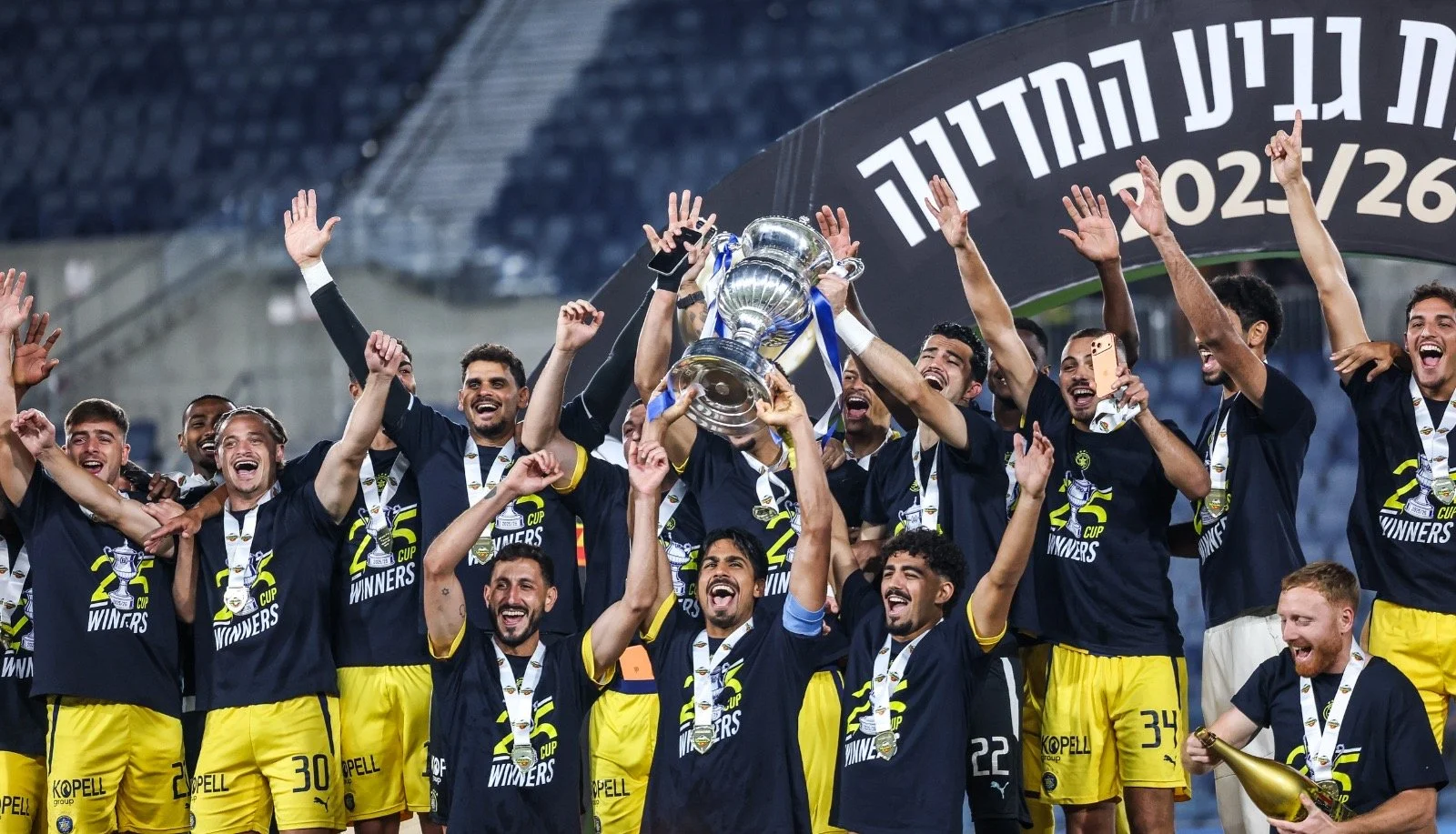







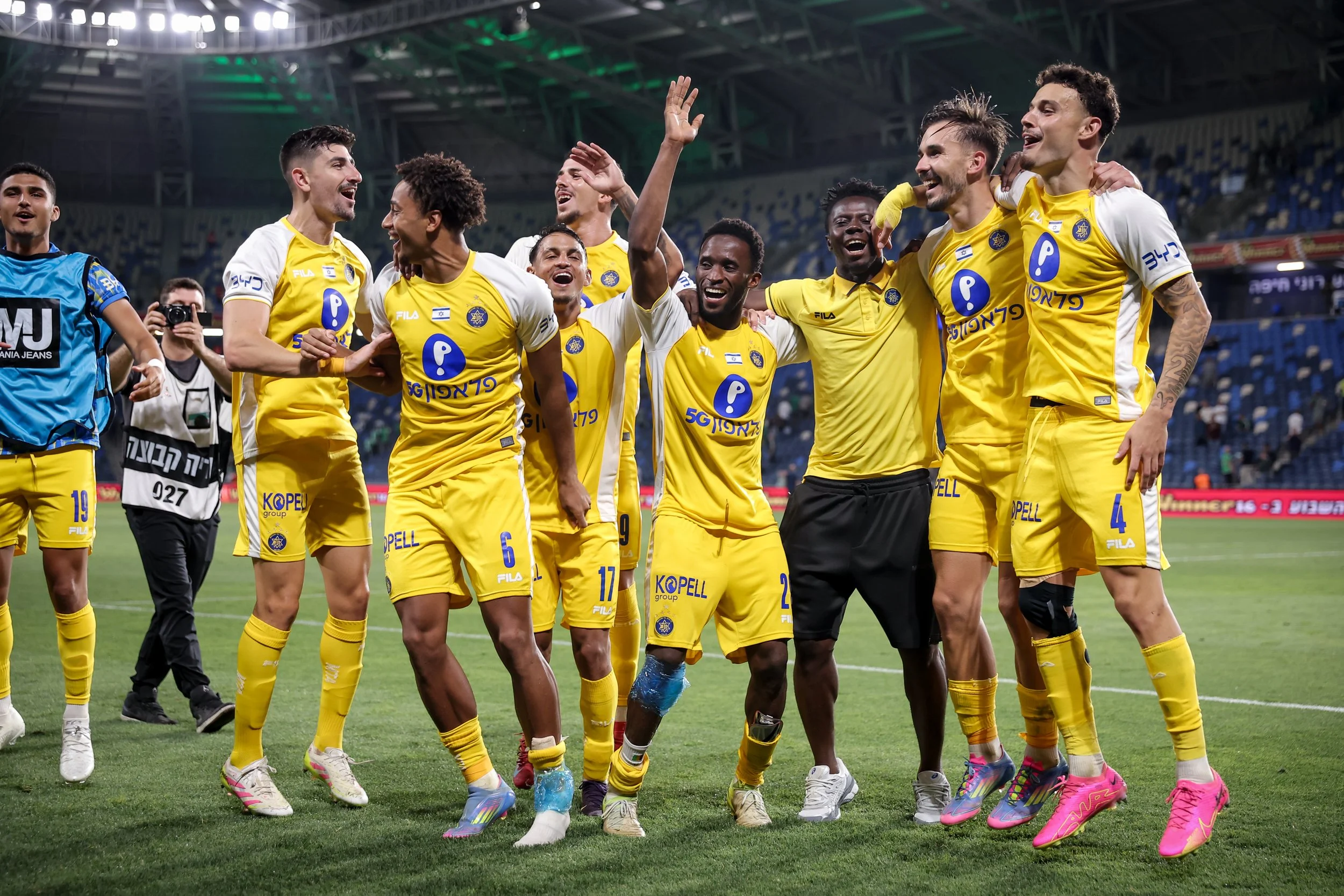


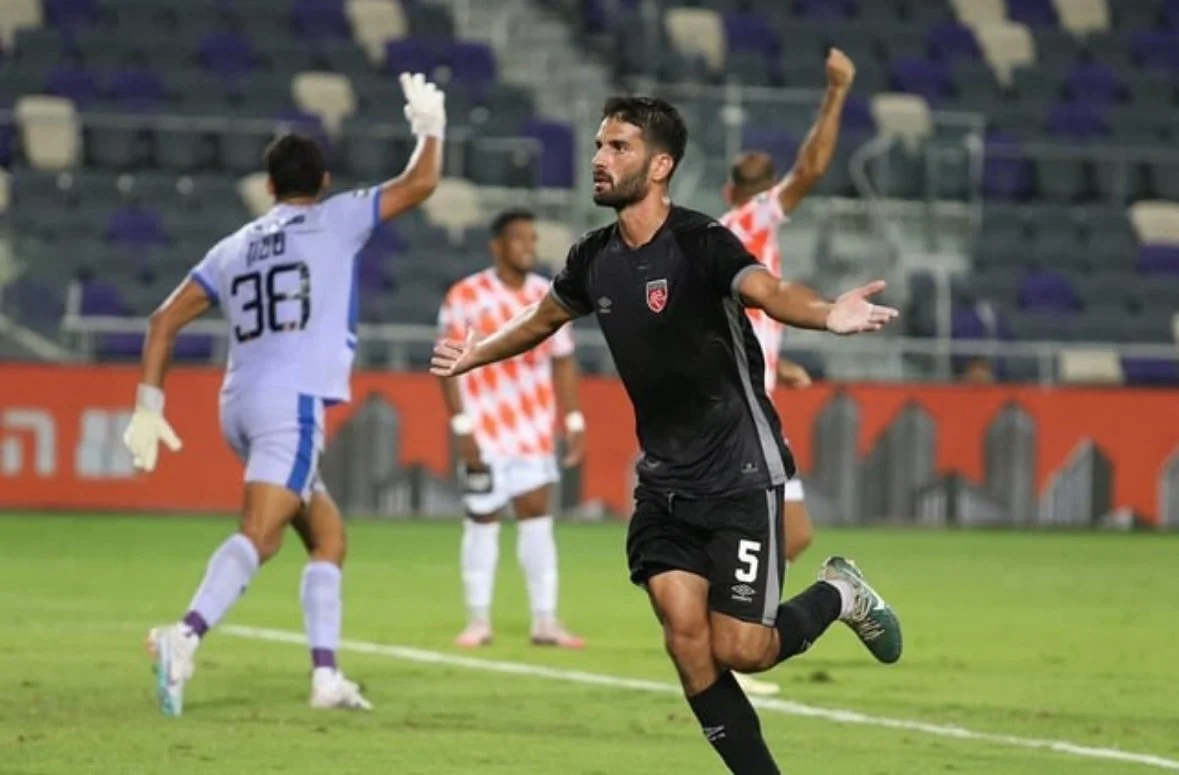
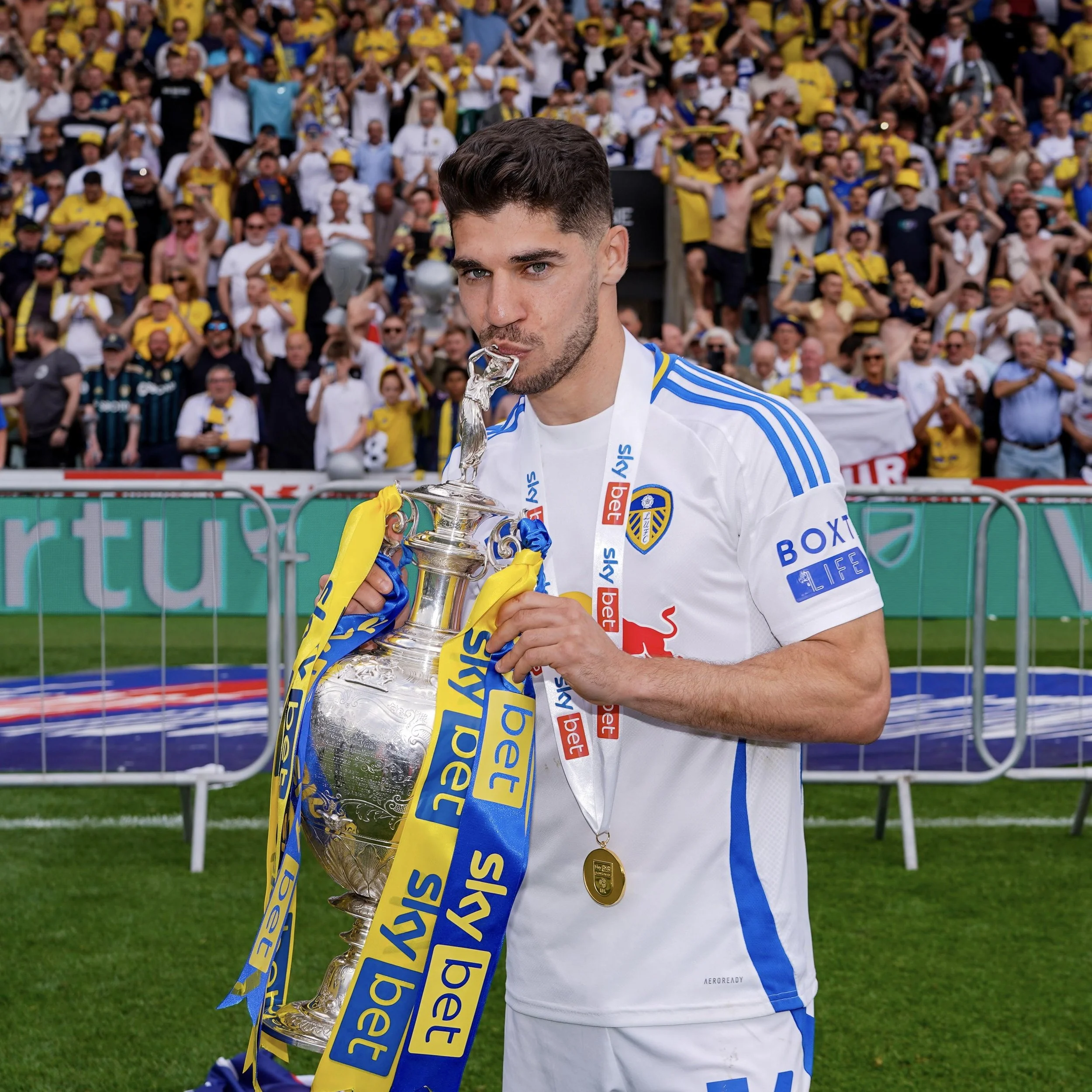
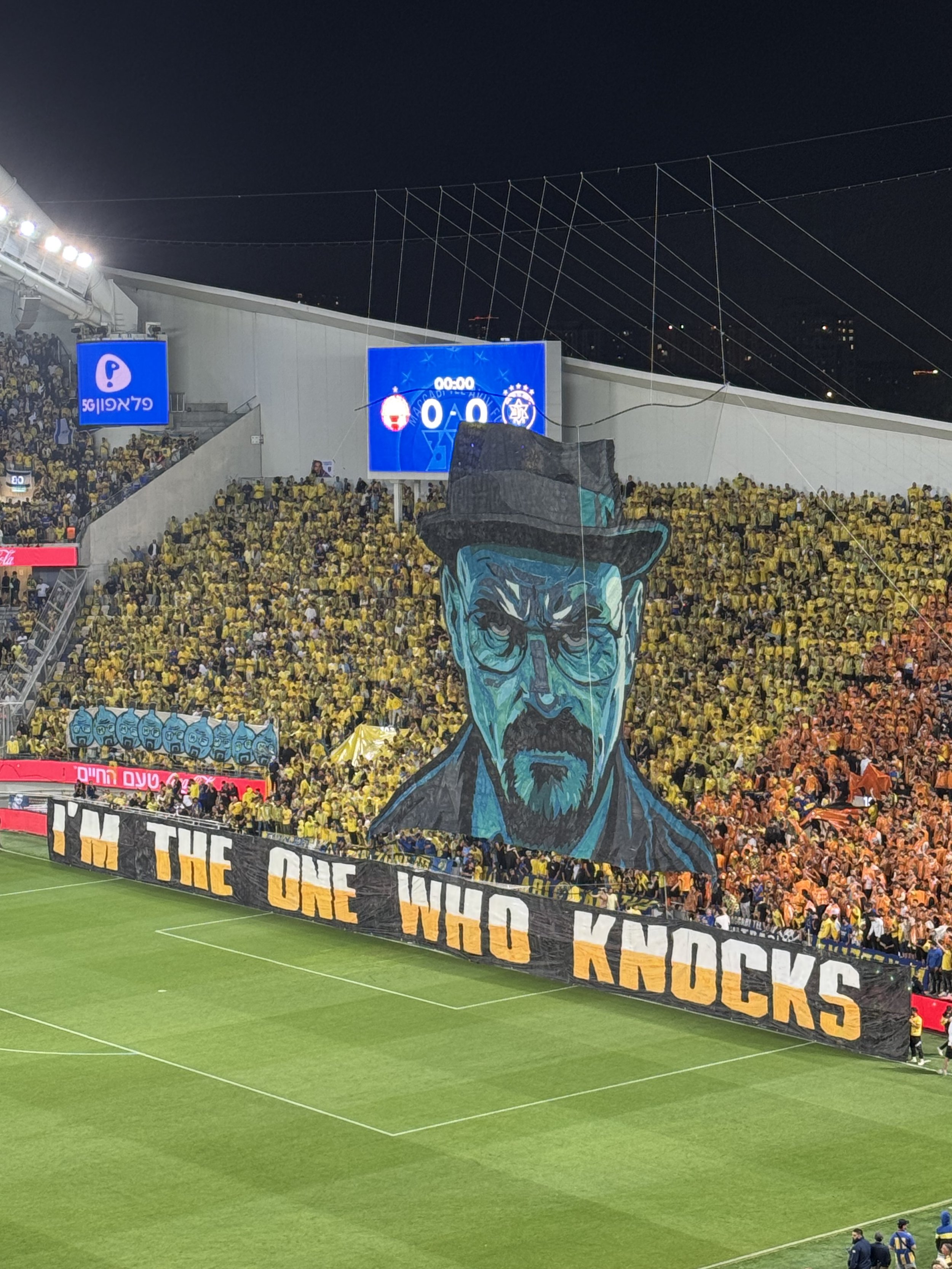
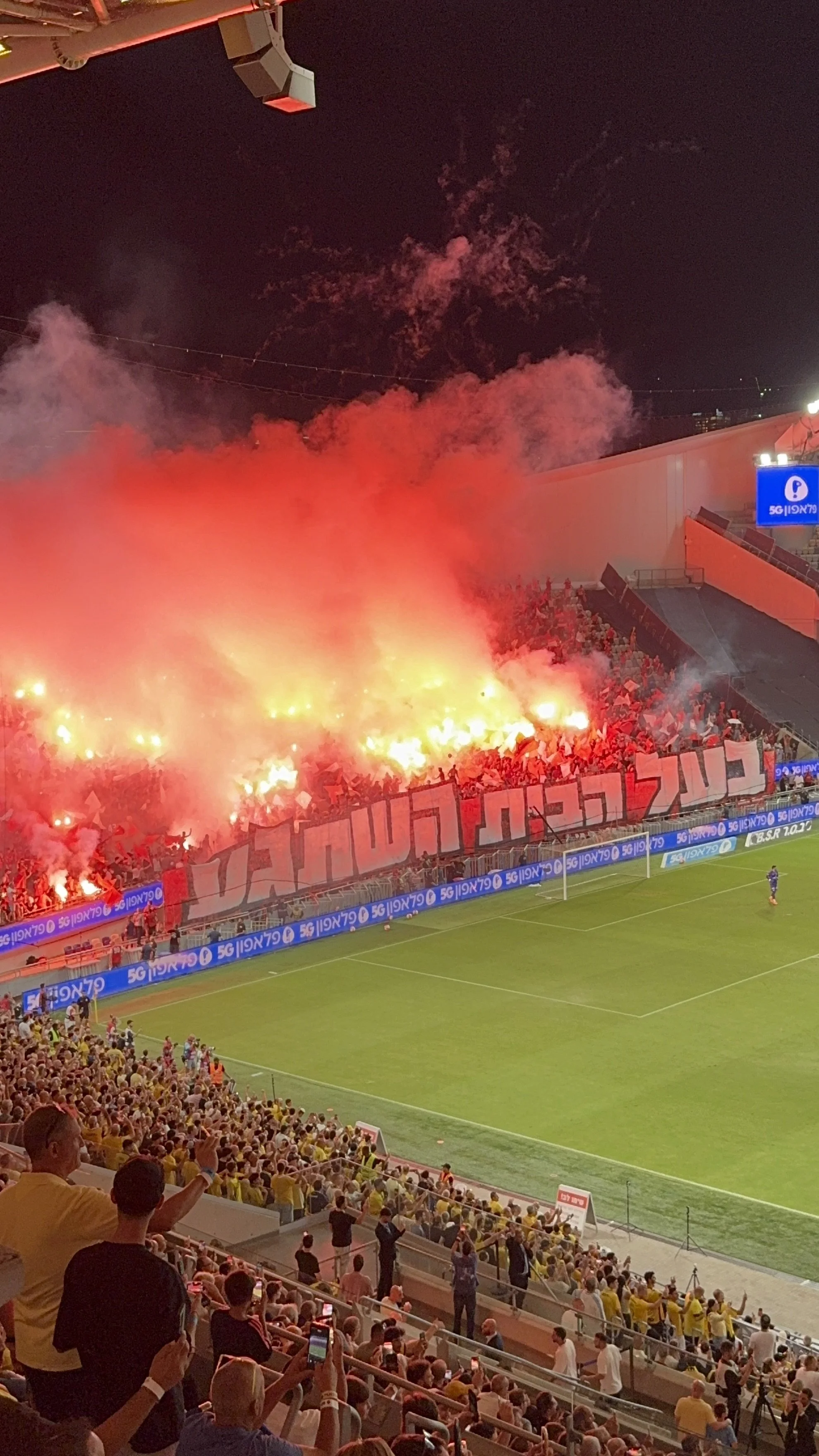




Maccabi Tel Aviv routed ten-man Hapoel 4-1 at Bloomfield, in a fiery derby marked by red cards and pyro chaos.