
RABAT — Crazy, unhinged, embarrassing, humiliating, astonishing, infuriating, beautiful, ridiculous, emotional, addictive. Every one of these superlatives fits the description of the 2025 Africa Cup of Nations final, played last night in Rabat, Morocco.
“It was a Hitchcock script,” said Morocco head coach Walid Regragui when asked how he would define the evening. “Absolute madness. But that’s football.” Regragui, who minutes earlier had suffered the most dramatic defeat of his career, did not smile. Nor was he wrong. History will remember this final as one of the most insane football matches of recent years.
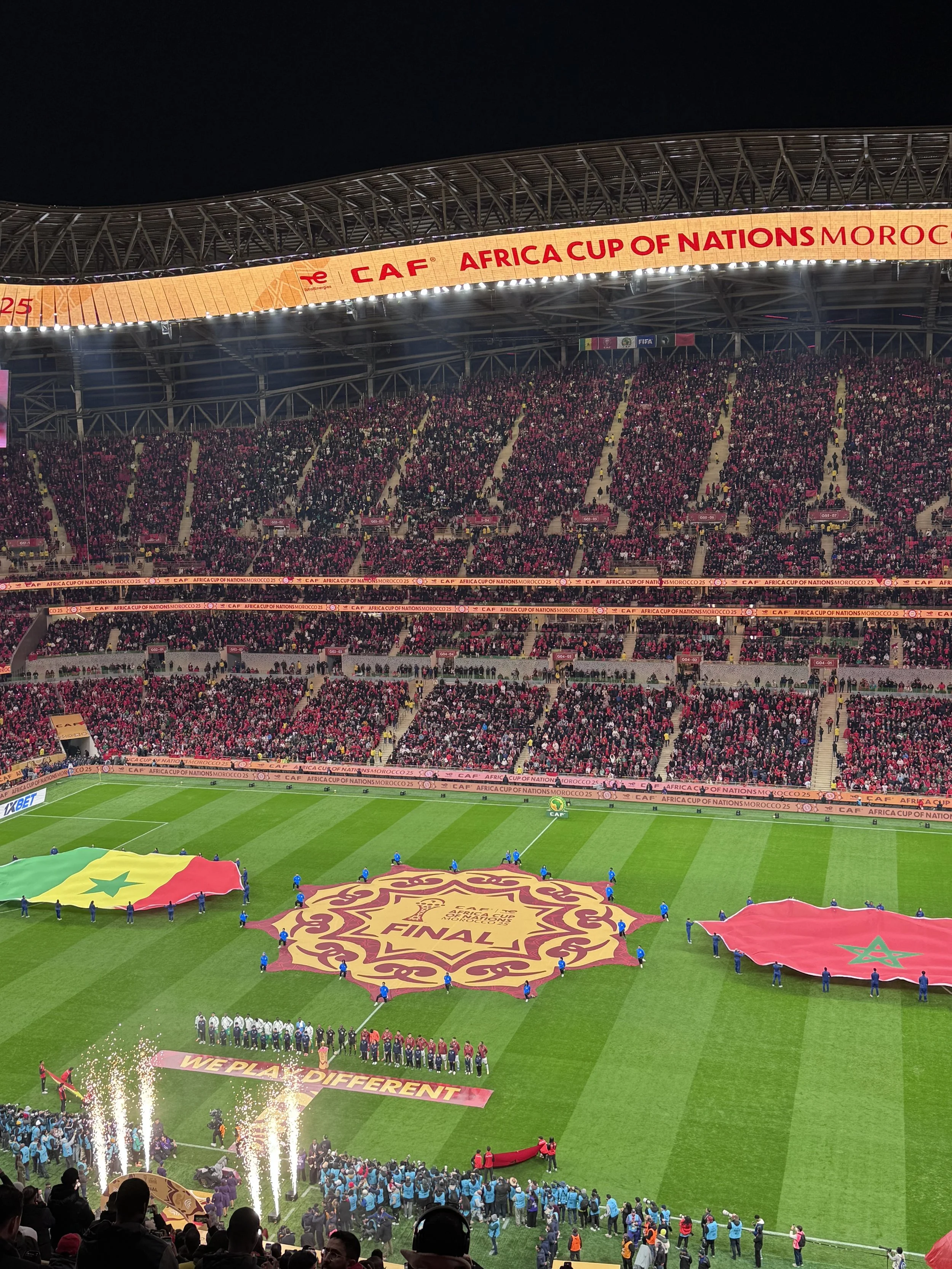
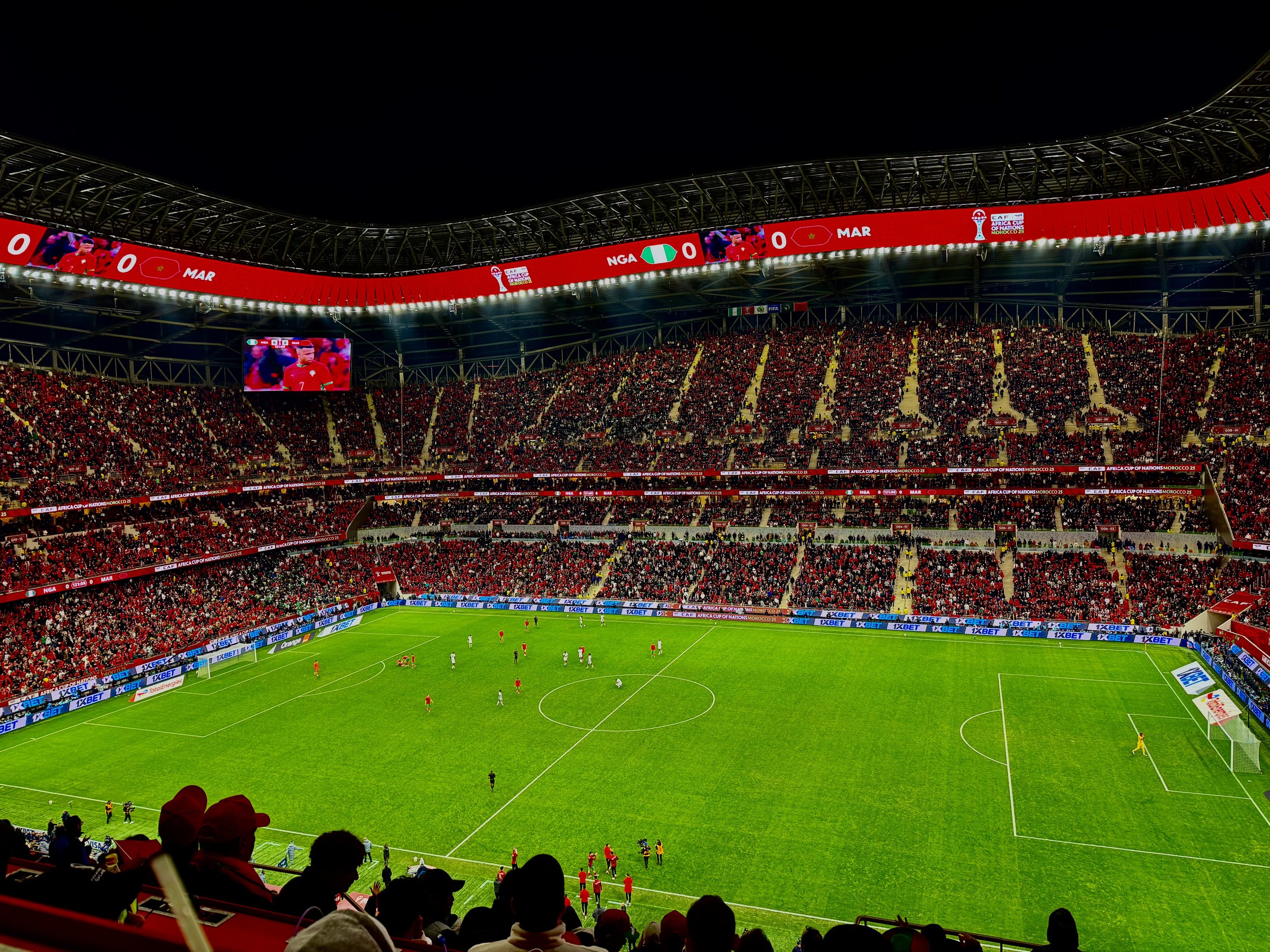
Everything was set for a perfect Moroccan celebration. Nearly 67,000 fans filled the stands of the Prince Moulay Abdellah Stadium in the Moroccan capital, many of them arriving from the Moroccan diaspora in Europe. Over the past month, Morocco had delivered an almost flawless tournament, with modern, impressive stadiums and an atmosphere that barely resembled traditional African football. It was clean, polished, “European”. Perhaps even too much so.
The King and Crown Prince did not attend the final, but Prince Moulay Rachid, brother of King Mohammed VI, was present. Alongside him sat FIFA president Gianni Infantino and CAF president Patrice Motsepe. The three dignitaries were preparing for a final that was supposed to end in a Moroccan victory and a national celebration. But the gods of African football had other plans, and none of the honored guests could have imagined how the night would look two hours later.
THE MATCH
It was a high-quality, intense football match between the two best national teams on the continent and in the tournament. On one side stood Morocco, the hosts, disciplined, organized, defensively solid. On the other, Senegal, athletic, intelligent, confident. Many Senegalese live in Morocco, having come in search of a better life. Some are deported, some find work but are treated as second-class citizens, only a few truly integrate. Beyond the clash between Africa’s two highest-ranked teams in the FIFA rankings, this was also a meeting that symbolized something deeper for many.
Moroccan fans created a very hostile atmosphere, unleashing deafening boos every time the ball reached the feet of the Lions of Teranga. The first half was relatively balanced, with slight Senegalese dominance. Moroccan goalkeeper Yassine Bounou saved his team twice, including a huge one-on-one stop against Everton’s Iliman Ndiaye just minutes before halftime.
In the second half, Morocco started stronger. In the 58th minute, Ayoub El Kaabi missed from point-blank range a chance that felt almost certain to be a goal. From that moment, it was clear the match was beginning to turn into something else. A little bizarre. A little extreme.
Moroccan midfielder Neil El Aynaoui of Roma suffered a serious head injury and was bleeding heavily, yet remained on the pitch after receiving bandaging. Ten minutes before the end, both teams made several substitutions. For Senegal, Abdoulaye Seck, the Maccabi Haifa center-back, came on. Seck would soon play a central role in the madness that followed.
THE CHAOS
The match entered eight minutes of stoppage time. In the 93rd minute, Seck powered a header onto the post, and from the rebound Senegal scored what appeared to be the opening goal. Shock swept through the stadium. But moments later, Congolese referee Jean-Jacques Ndala Ngambo blew his whistle for a foul by Seck, who had pushed a Moroccan defender with both hands. The goal was disallowed. Senegal’s players erupted in fury, while tens of thousands in the stands celebrated wildly.
At that point, the madness reached another level. In the very next attack, Morocco surged forward and Brahim Díaz was brought down in the penalty area. He demanded a penalty. After a minute, the referee went to the VAR screen, reviewed the incident, and pointed to the spot.
The Senegalese reaction was explosive. Players raged. Head coach Pape Thiaw instructed them to leave the pitch. In the stands, around 1,500 Senegalese fans, who had danced throughout the match, began ripping out seats and barriers and throwing them onto the pitch, along with bottles, clashing violently with Moroccan security forces.
These were long, excruciating minutes of surreal embarrassment. A real disgrace to the occasion, and to an entire month of exemplary organization by the Moroccan FA and CAF, aimed at showing FIFA that Morocco is ready and worthy of hosting the 2030 World Cup. The world watched the African final, and the result was a severe blow to the reputation of the game on the continent.
Amid the chaos, the man who insisted Senegal would not abandon the match was Sadio Mané. Senegal’s biggest star, playing his final AFCON match before the upcoming World Cup and his retirement from international football, pleaded with his teammates to stay. He called them back onto the pitch, and as befits a team listening to its undisputed leader, they obeyed. The match resumed while Senegalese fans attempted to invade the pitch behind the far goal, were stopped, and forcibly removed. In the press tribune, Moroccan and Senegalese supporters exchanged blows.
Achraf Hakimi initially held the ball as if he would take the penalty, but then handed it to Brahim Díaz, the star of Morocco’s tournament. With five goals, leadership, and outstanding performances, Díaz had become the face of Regragui’s young Morocco. There was no more fitting player to end a 50-year AFCON title drought. Then came the astonishing and foolish moment: Díaz attempted a weak Panenka down the middle. Senegal goalkeeper Édouard Mendy caught it with ease. Still 0–0. After eight minutes of stoppage time and thirteen minutes of chaos, the final went to extra time.
Four minutes into extra time, Senegal launched a counterattack that worked to perfection. A backheel from Mané, a brilliant pass from Idrissa Gana Gueye to Pape Gueye, who skipped past one defender, then another, and unleashed a stunning rocket into the far top corner. 0–1 Senegal. The team that had been better throughout the match, felt wronged, and suddenly silenced tens of thousands in the stands, and across Morocco.
From there, it was hard for Morocco to recover. They tried, hit the crossbar, missed golden chances. A stunned Díaz, whom some even accused of missing the penalty on purpose, was substituted, but it made no difference. Moroccan fans began leaving the stadium, which emptied rapidly with minutes still to play. After three more minutes of added time, the referee blew the final whistle. Senegal were crowned African champions for the second time in five years.
THE HERO: SADIO MANÉ
Sadio Mané lifted his second AFCON trophy, having eliminated his great rival Mohamed Salah in the semifinals, and etched his name in golden letters into the history of African football. “He is a legendary player who deserves everything, including this victory, and I congratulate him on the title,” said Regragui in the post-match press conference. Once again, Regragui was right. It is time to speak of Sadio Mané in the same terms as continental icons like Mohamed Aboutrika, Didier Drogba, and Samuel Eto’o. Mané is a natural winner, a living legend of African football, and the defining star of an entire generation. His legacy at the Africa Cup of Nations is historic.
“It was important to me that we came back and played,” Mané explained to several journalists, including the writer of this column, after the match. Asked by BabaGol how he convinced his teammates to return to the pitch, he said: “I simply told them the match had to end no matter what. I prefer to lose than for something like this to happen in football. It would have given a very bad image if we had not played. I did not agree with leaving, and I’m happy everyone listened to me, because this was our last chance to win this title.” He said it briefly, then returned to the celebrations on the team bus.
As Senegal collected their medals, it was hard not to notice the grim expression on the face of FIFA president Gianni Infantino. He understood that there is still a long road ahead for Morocco, and for African football as a whole, after the madness that unfolded in the final minutes before extra time.
MOROCCO MARCH ON
On one hand, his concern is understandable. Yet Morocco, as a host nation, delivered an almost perfect tournament, and for one month made the world believe that Africa can host a truly World Cup-level event, perhaps even one that surpasses Europe. And then came the final. Senegal, another great football nation, enjoying a golden decade and more, grabbed Morocco by the throat and dragged them back to something inseparable from the essence of football on the continent: chaos. Wild, astonishing, sickening, painful, but also beautiful in its own way. And addictive.
“This Moroccan team is young. It will continue to grow, to lead, and to be a major force in African football,” Regragui concluded, after enduring harsh criticism from local journalists. “The future is good. We just need to keep reaching these stages and be ready for the 2030 World Cup.” Behind him hung an image of the Moroccan king and the kingdom’s red flag, as if waiting for the end of decades of drought without an African title.

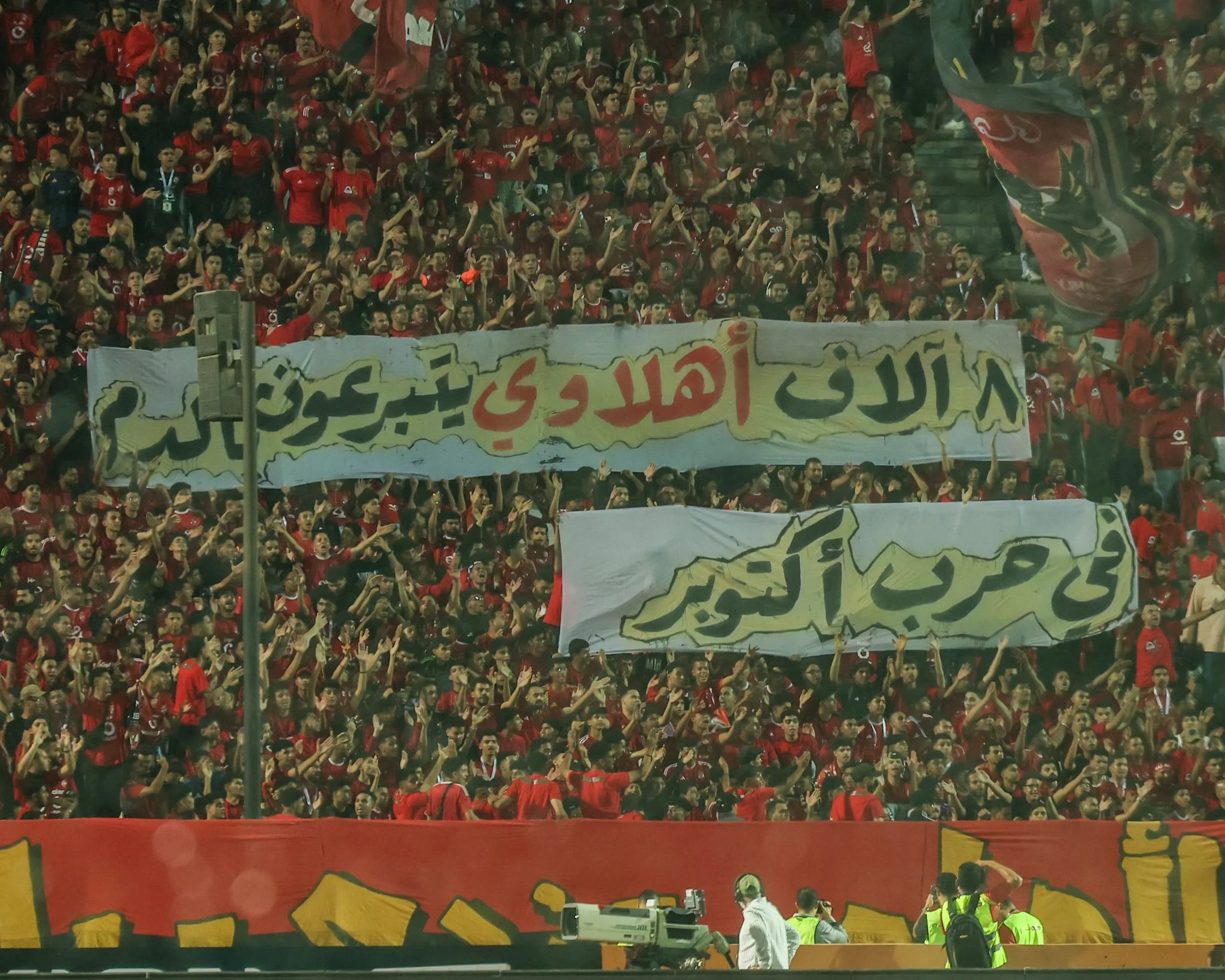







Cairo’s derby drew a record number of crowd for the first time in years, as Al Ahly and Zamalek fans united in October War banners and Israel chants.