
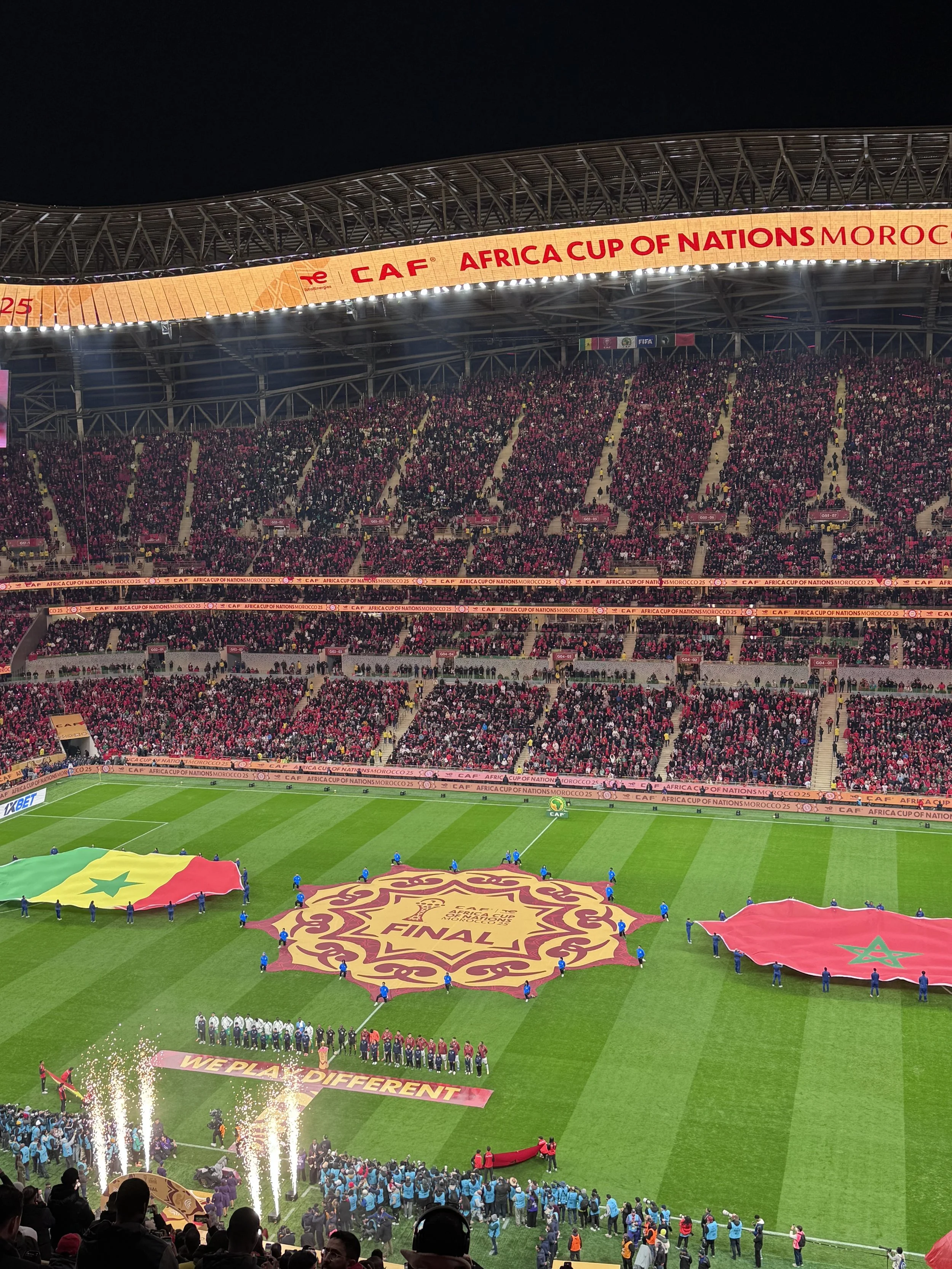
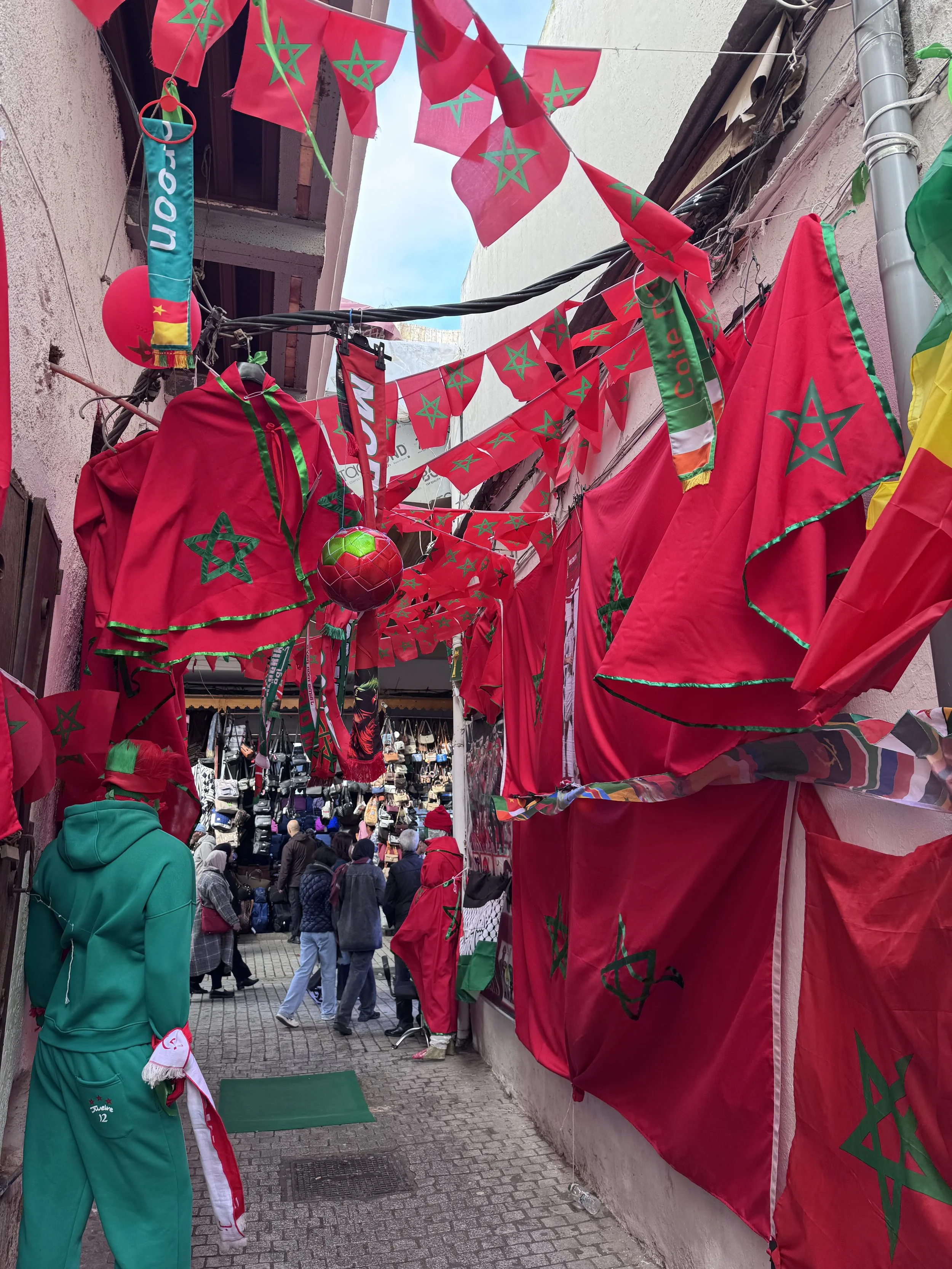
RABAT — Anyone arriving in Morocco for the 2025 Africa Cup of Nations final between hosts Morocco and Sadio Mané’s Senegal immediately encounters something extraordinary. Football is everywhere.
There is hardly a public space in Morocco where football does not play a role. Everything is connected to the game. From billboards and train stations to cafés and even the National Library, which has opened an entire bibliographic collection dedicated to football and made it accessible to the public. Yes, football in the library.
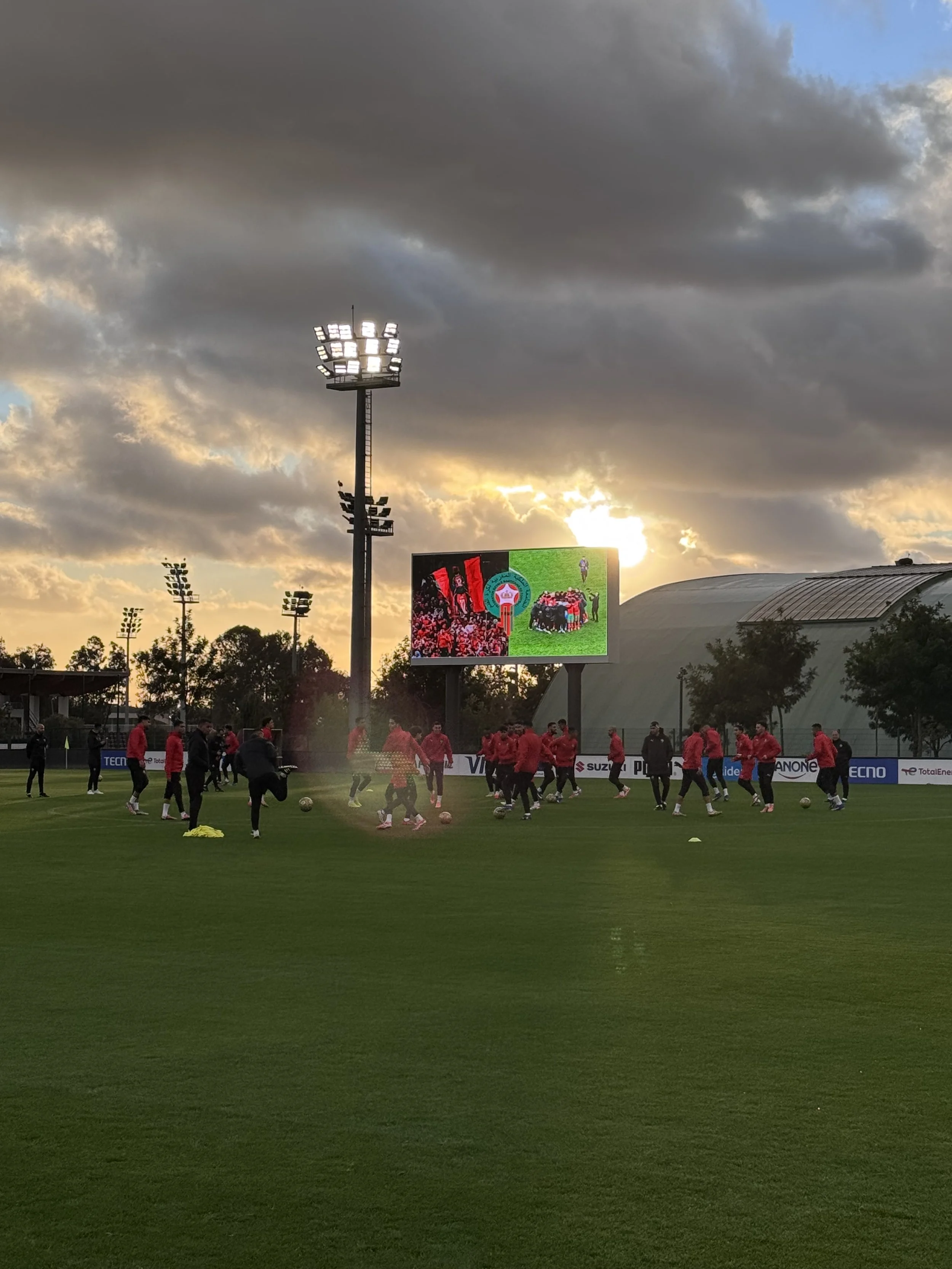
Morocco’s final training session at the Mohammed XI Complex in Salé. (Photo courtesy: Uri Levy/BabaGol©)
Rabat Wakes Up: A Capital Caught in Celebration
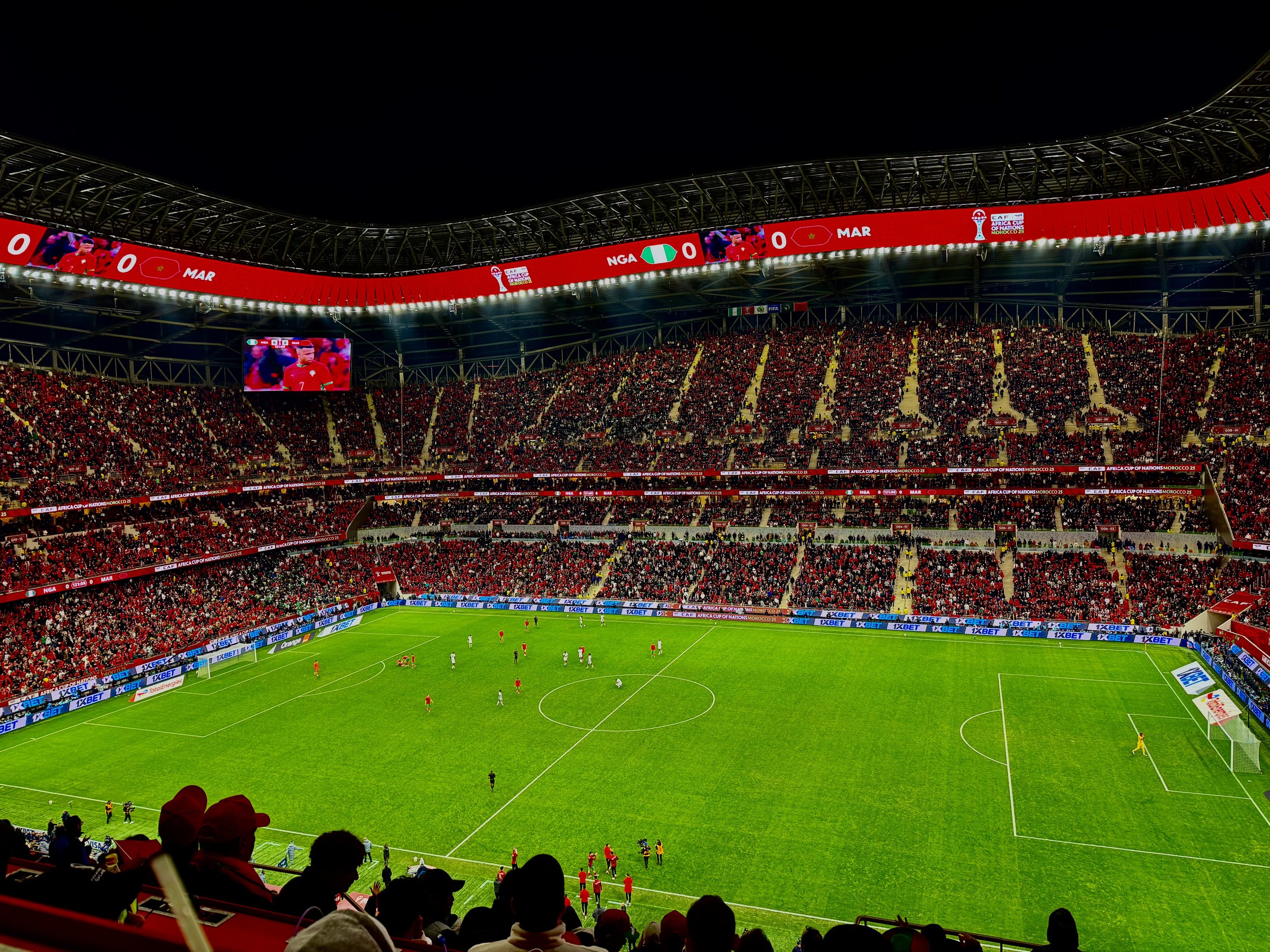
Rabat is usually considered a calm and relatively quiet capital, especially compared to buzzing Marrakech or bustling Casablanca. But last Wednesday night, after Morocco’s dramatic penalty shootout victory over Nigeria in the semifinals, even Rabat erupted. The celebrations continued deep into the night.
That win sent Morocco to its first AFCON final since 2004, with a chance to lift the trophy for the first time in 50 years. The entire country was glued to screens, while tens of thousands packed the stunning new Prince Moulay Abdellah Stadium, creating an electric home atmosphere. With a World Cup level pitch, infrastructure more advanced than several Qatar 2022 stadiums, and a deafening wall of boos every time Nigeria touched the ball, the experience felt like a bridge between football’s past and its future. Old school passion inside stadiums built for tomorrow. It was electrifying. And scorching hot.
The Rise of a Football Superpower
The Moroccan football surge of the past three years, unfolding before the world’s eyes, is one of the most fascinating and significant stories in African, Arab, and global football.
Since finishing fourth at the 2022 World Cup, Morocco has dominated across age groups, in both the men’s and women’s games. Bronze at the Paris 2024 Olympic football tournament. Victory at the African Nations Championship with a locally based squad. A quarterfinal appearance at the U17 World Cup. A FIFA Club World Cup title at youth level, capped by a 2–0 win over Argentina with a squad of which 70 percent was born and developed in Morocco. Add the 2025 Arab Cup triumph in Qatar, achieved with a squad that did not include a single player from the current AFCON roster. Add to that Achraf Hakimi being named African Player of the Year, and Ghizlane Chebbak winning the women’s African Player of the Year award. It is staggering.
For Arab and African football, this is undeniably the Moroccan era. They are favorites in every tournament, and they are doing almost everything right.
The Kingdom of Football as a National Project
Nearly 40 million people live in Morocco, and in recent years football has become the country’s language, medium, and national project. The slogan “The Kingdom of Football” now decorates the six cities hosting this AFCON: Rabat, Casablanca, Marrakech, Tangier, Agadir, and Fez. The stadiums, especially the four in Rabat, are architectural and acoustic masterpieces, without question among the best in the world today.
Yet there is also something new. The crowd filling these stadiums is not the traditional Moroccan fan base that regularly follows the country’s biggest clubs. These are not the famous ultras of Wydad Casablanca, the Winners, or Raja Casablanca, the Eagles and Green Boys. The atmosphere reflects that difference.
Leading supporter groups had a dispute with head coach Walid Regragui several months ago and have chosen not to support the national team from inside the stadiums. The result is visible. They watch from outside, while inside the stands feel different. More families, more fans from higher socioeconomic backgrounds, and many Moroccans from abroad. In fact, the initial bulk of ticket sales for Morocco’s matches in this tournament began overseas, in Moroccan diaspora hubs across France, Spain, the Netherlands, and Belgium.
“Ticket prices are very high,” explains Said Mustafa, a reporter and editor at Morocco’s Arriyadiah sports channel. “The average Moroccan usually cannot afford them. He watches the match in a café with close friends, or at home with his grandmother, his mother, and the whole family.”
The Other Side of the Dream
This tournament is part of Morocco’s massive investment ahead of the 2030 World Cup, which it will co-host with Spain and Portugal. FIFA officials are touring the country, inspecting everything. Significant investments are also flowing in from the United Arab Emirates and Saudi Arabia, into stadiums, hospitals, universities, and innovation centers, aiming to position Morocco as a leading force in Africa and a strong partner in the Arab world.
“We are hosting a historic tournament for Africa,” says Azem Anas, a media officer at both the African and Moroccan football federations, speaking to Israel Hayom. “This is the result of vision, investment, and organization. The credit goes to the King, who has taken football and turned it into an engine for growth and development.”
Not everyone is fully satisfied with Morocco’s football frenzy. “Life here is not simple,” says Haitham Al-Rawani, a 21-year-old Moroccan. “You work two jobs and earn 7,000 dirhams a month. A normal apartment for you and your partner costs 7,000 dirhams. Nothing is left. You can compromise and live somewhere for 4,000, but then you are stuck there. Football is great, and we all want to win AFCON, but there are still things that need to be fixed.”
Many young people share Haitham’s feelings. Ahead of the tournament, protests took place, focusing mainly on education and the healthcare system, following a case in which a woman died in an emergency room due to a series of medical failures and claims of inadequate equipment and staffing. “We want a future, not football stadiums,” protesters chanted.
Mustafa tries to put things into perspective. “The protests followed the death of a woman due to medical error. I protested too, because improvement is necessary. But it is important to understand that this is natural. We love our country and our culture and want things to be better. This changes nothing regarding the national team. On Sunday night, there will not be a single Moroccan in the world who does not support the team.”
“This Is Rabat”: Regragui’s Message to Senegal
He may be right. Rabat, usually sleepy, is filling with fans. It feels as if tonight the entire country, along with millions of Moroccans across the diaspora in France, Spain, the Netherlands, Belgium, and beyond, will hold its breath.
In the days leading up to the final, Rabat has been anything but quiet, and psychological warfare has already begun. “We are playing against the best team in the tournament, and reaching the final itself is a huge achievement,” Regragui said after the win over Nigeria.
Senegal, for its part, filed an official complaint with the African Confederation late Friday night, citing a lack of security, poor accommodation arrangements, the absence of a proper training ground, and a shortage of tickets for Senegalese fans. On Friday, Senegal’s team arrived at Rabat Agdal station and players were left without an escort, leading to chaos as hundreds of travelers surrounded them in an attempt to take selfies. Abdoulaye Seck of Maccabi Haifa is expected to start after captain Kalidou Koulibaly received a yellow card and will miss the final.
“The organization here is excellent, but what happened yesterday must not happen,” said Senegal head coach Pape Thiaw. Speaking about what is expected to be Sadio Mané’s final AFCON match, he added: “He is a role model for every African player and a tremendous ambassador for Africa to the world. His education, his approach to people, his humility. He is a special human being, and we are all with him and for him tomorrow.”
Regragui was asked what would happen if Morocco fail to win the final. “The question is not only about tomorrow’s match,” he said. “It is about the next tournament, and the one after that. Morocco had not reached a final for more than 22 years. We need to build a tradition of finals, like Senegal, who reached the final in 2019, won in 2021, and are now here again. The atmosphere tomorrow will be different and difficult for Senegal. This is not Dortmund, not Marseille, not the Parc des Princes. This is Rabat, Morocco. From the first moment, they will feel it. It can motivate them, but they need to be careful. It will not be easy.”
“We are at the peak of a development process,” Mustafa concludes. “By the 2030 World Cup, new railways will be built, new hospitals, everything. Football is the locomotive, but the train has many carriages. We are on the way.”
Morocco’s challenges on the road to 2030 are clear. Improving basic infrastructure, preserving the natural passion Moroccans have for football, and connecting local fans even more to the extraordinary success already achieved. And of course, winning a first Africa Cup of Nations title in 50 years.






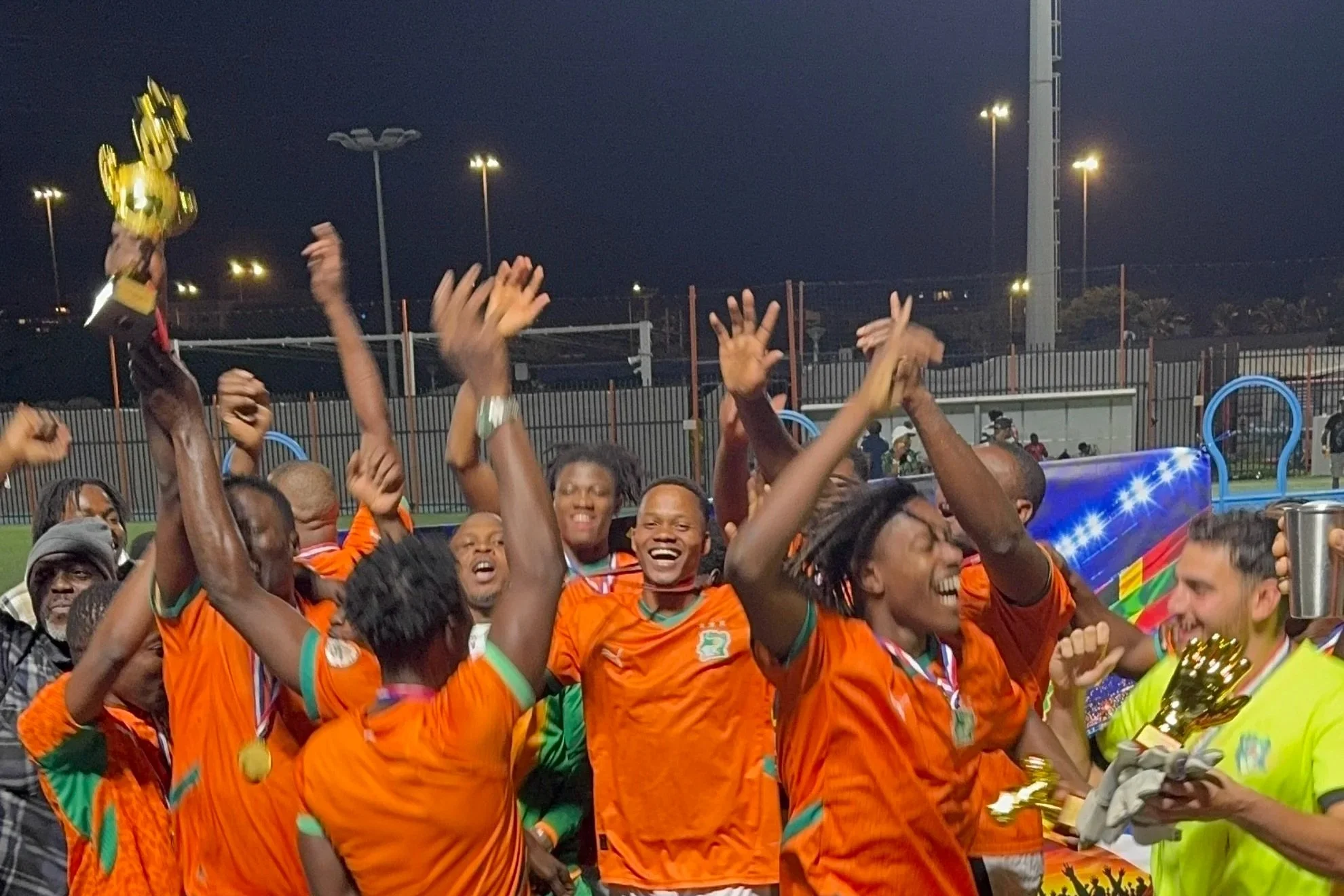
Ivory Coast edged Nigeria 3-2 in the final of a solidarity tournament among eight African teams, organised by Sudanese refugees in Tel Aviv.