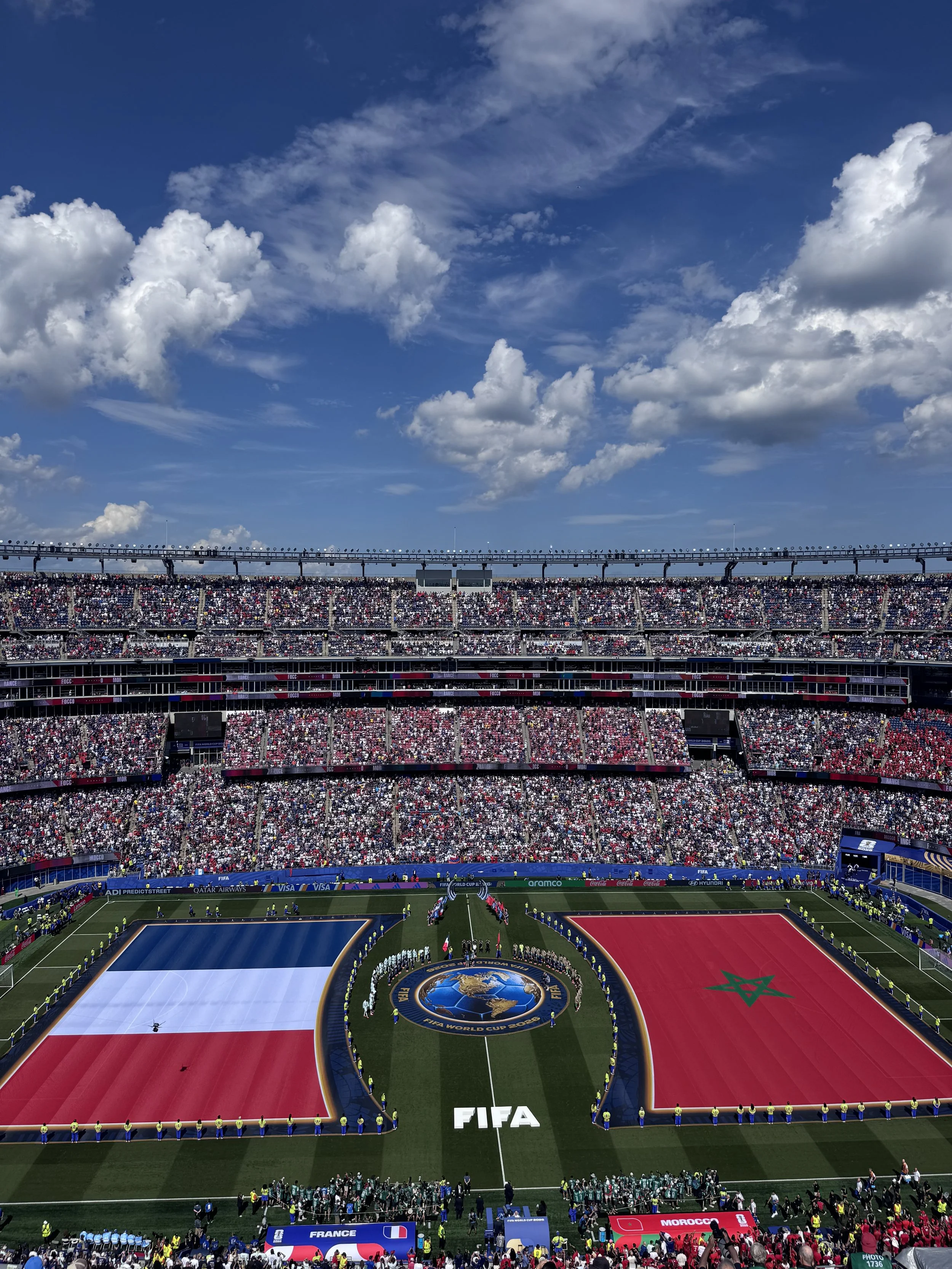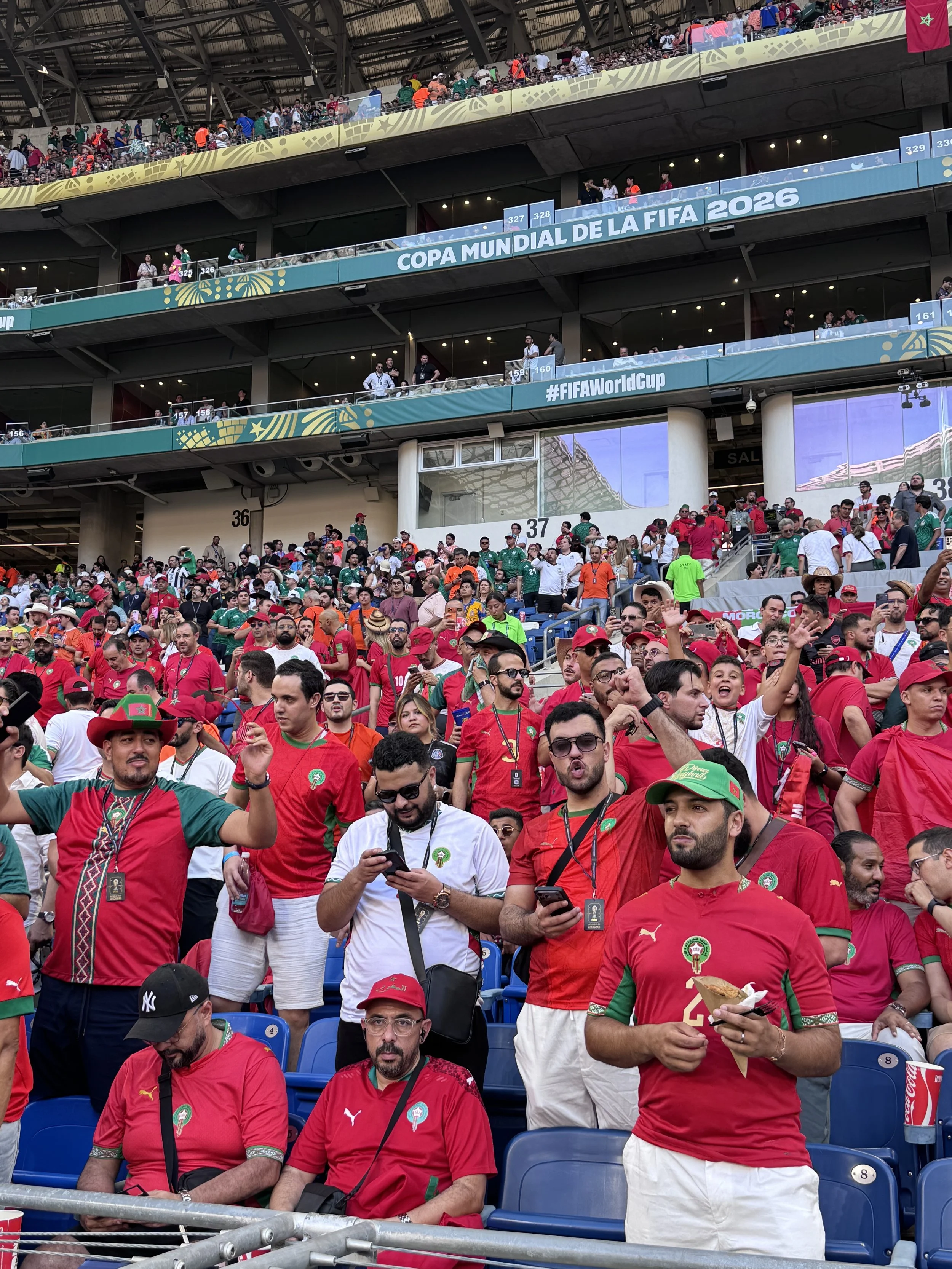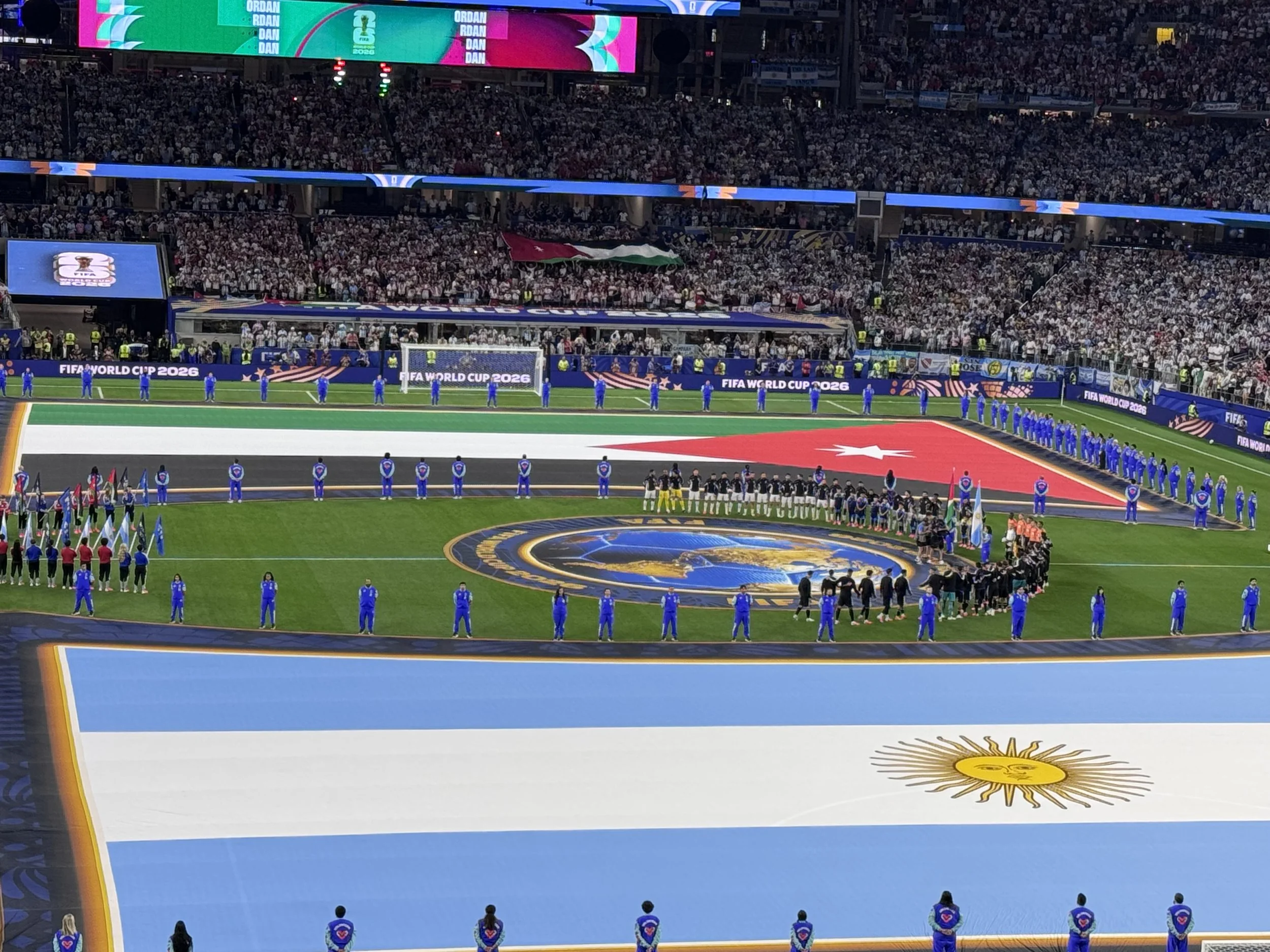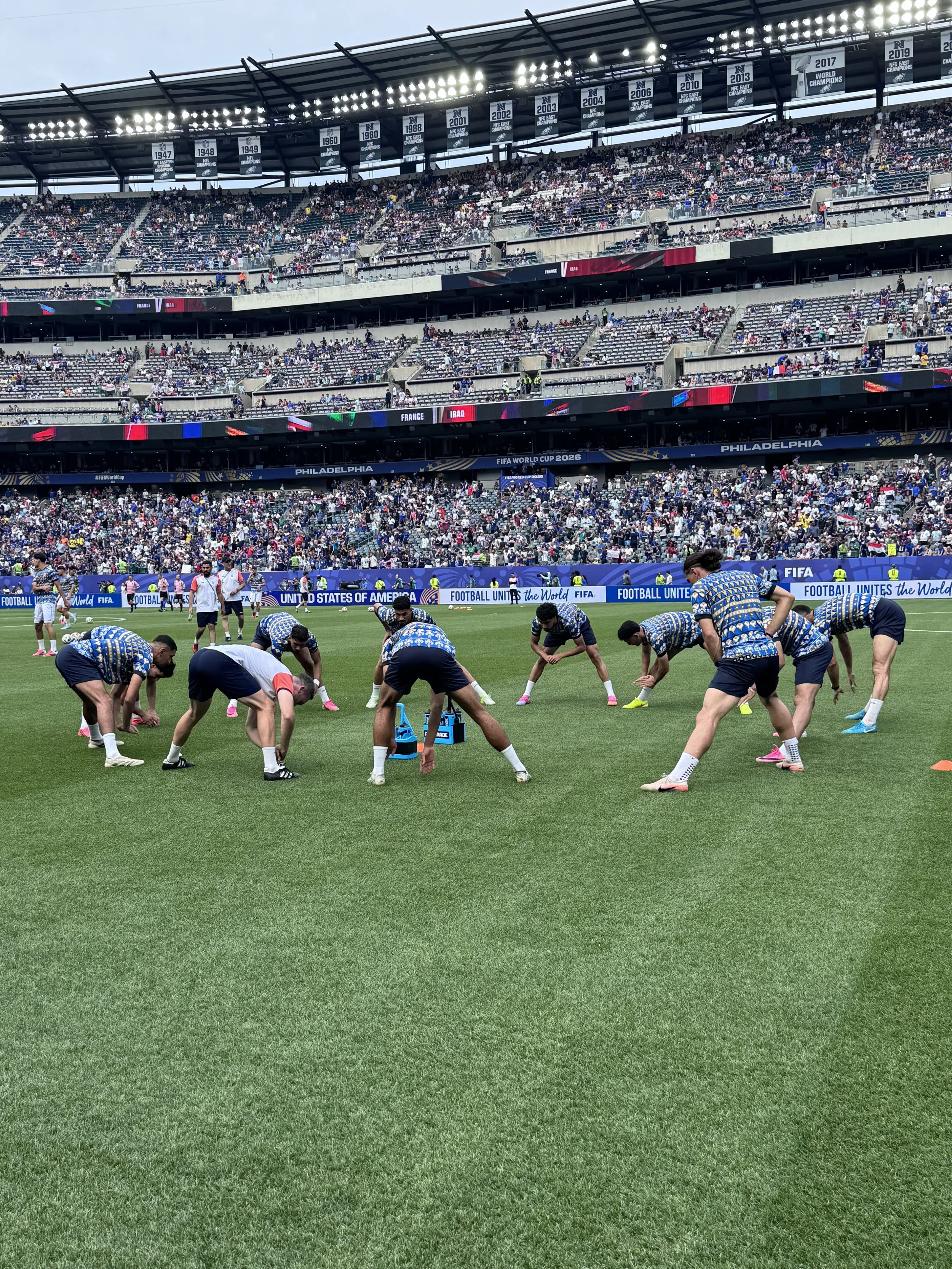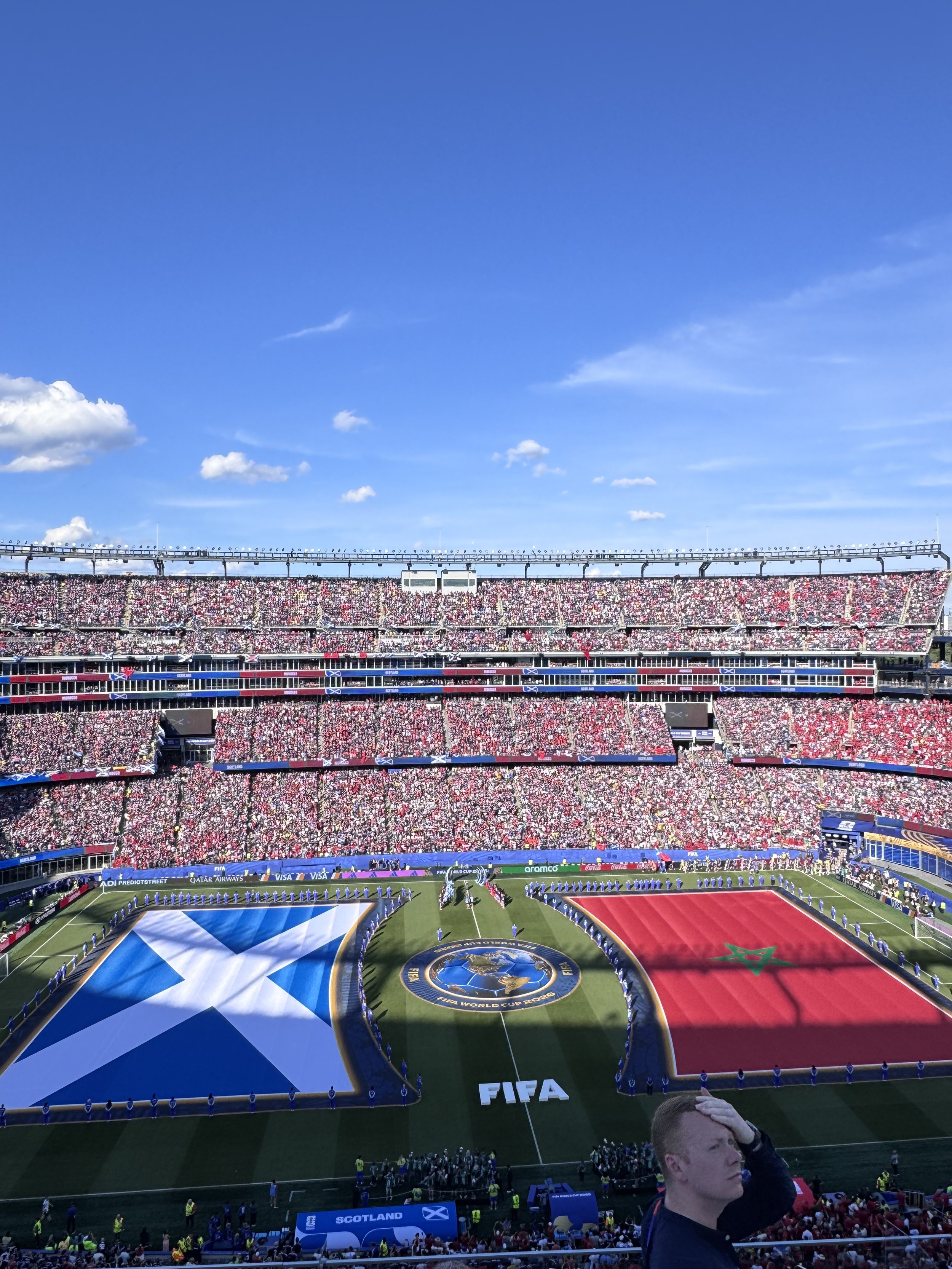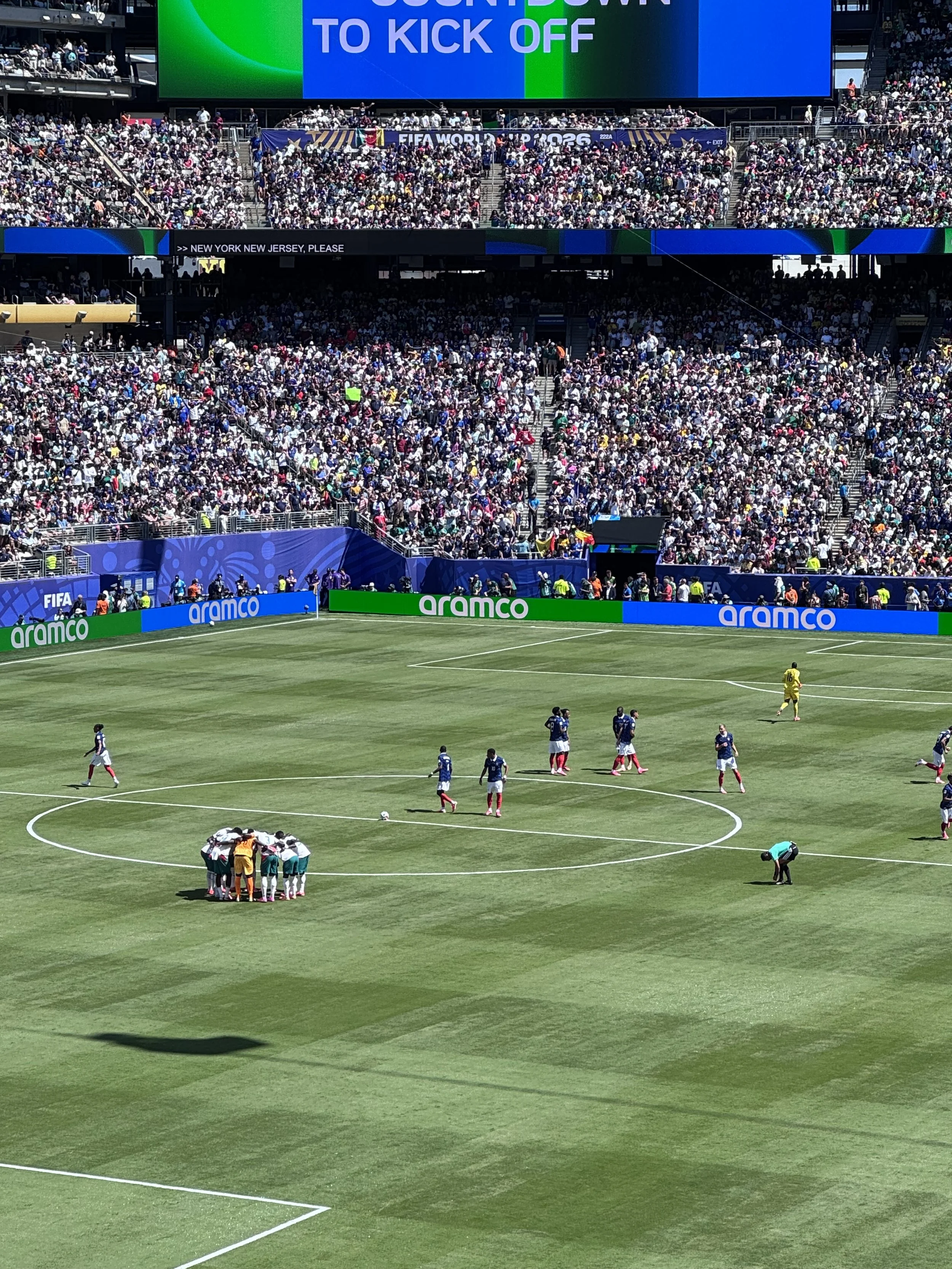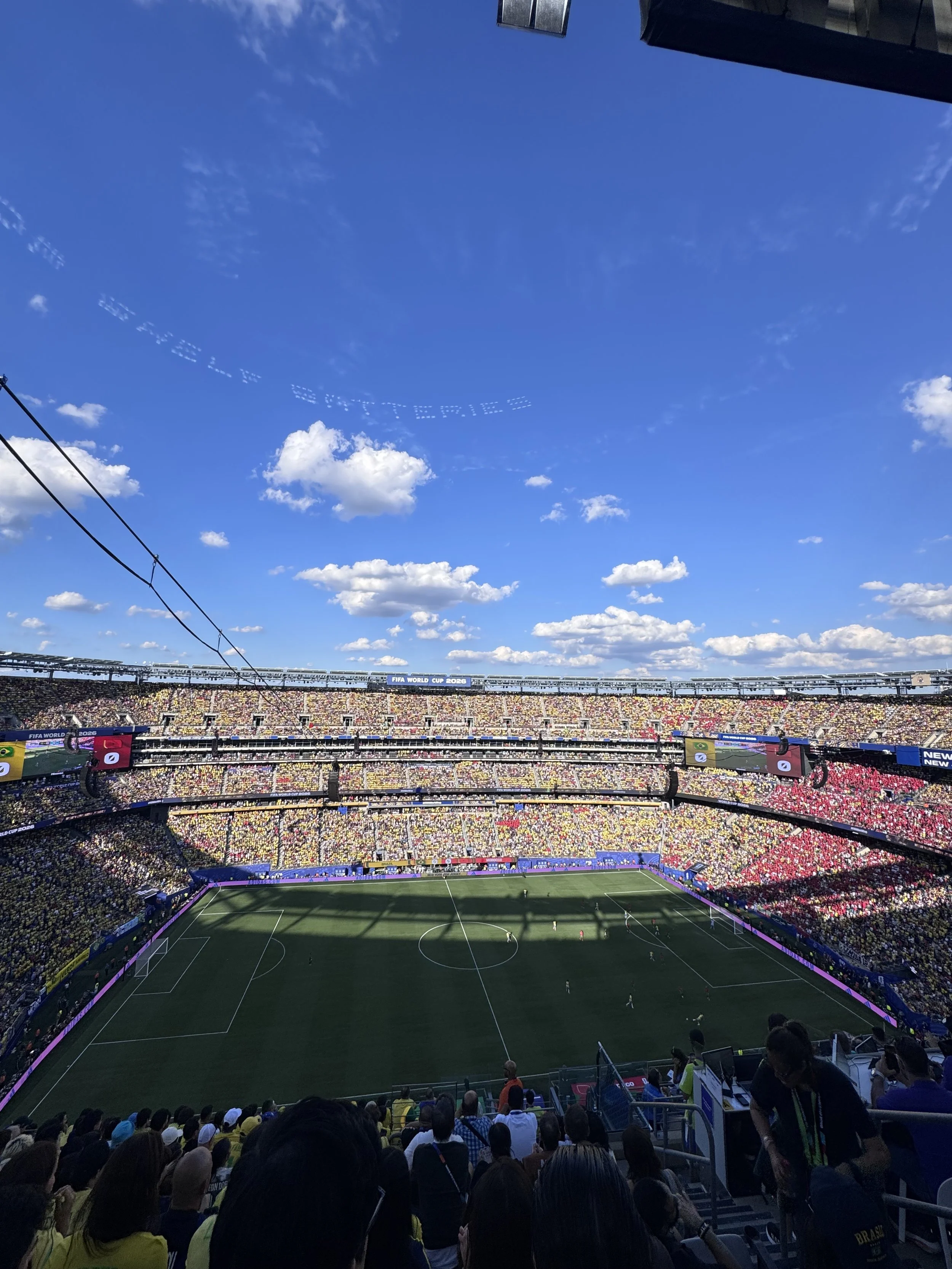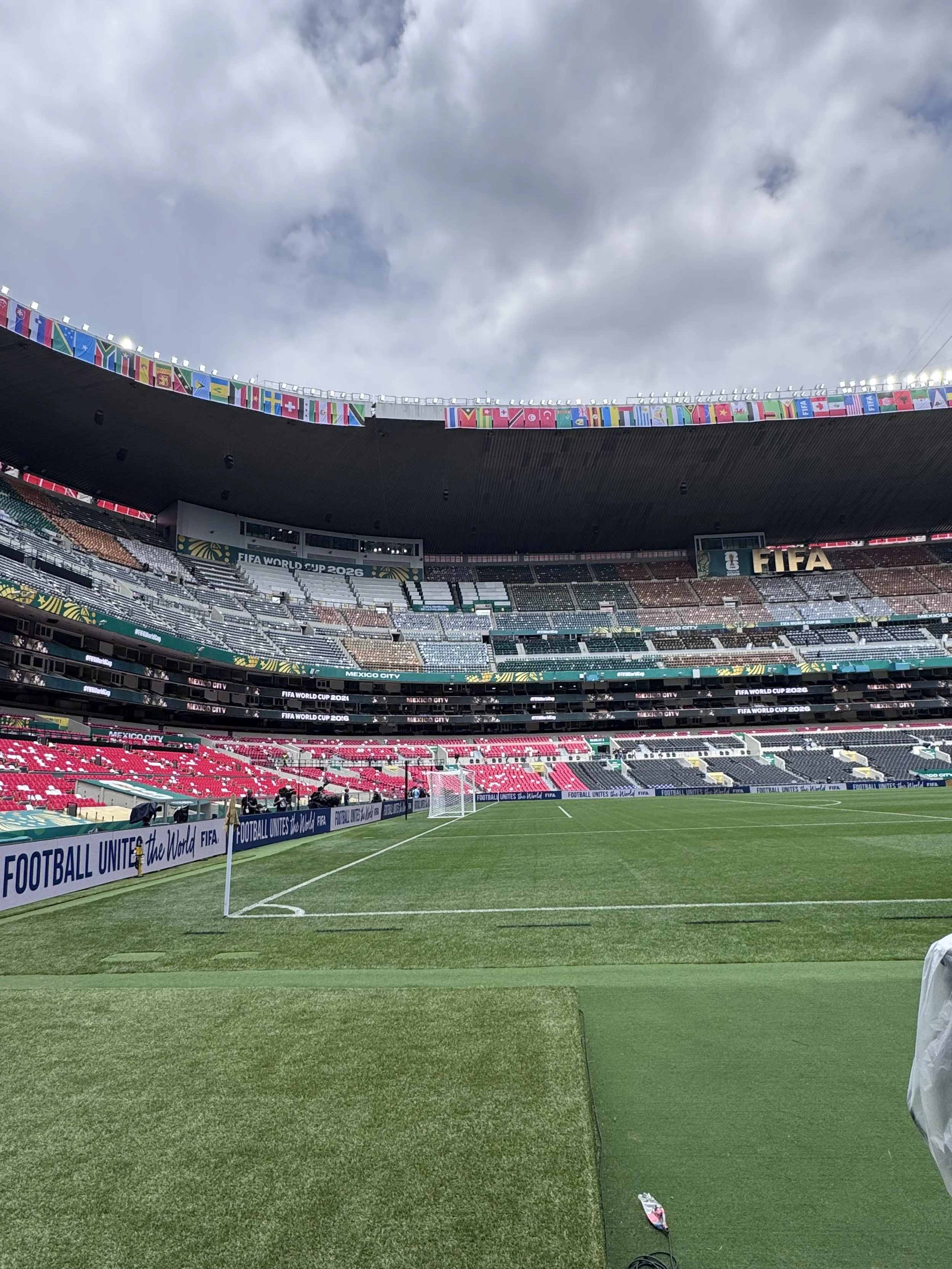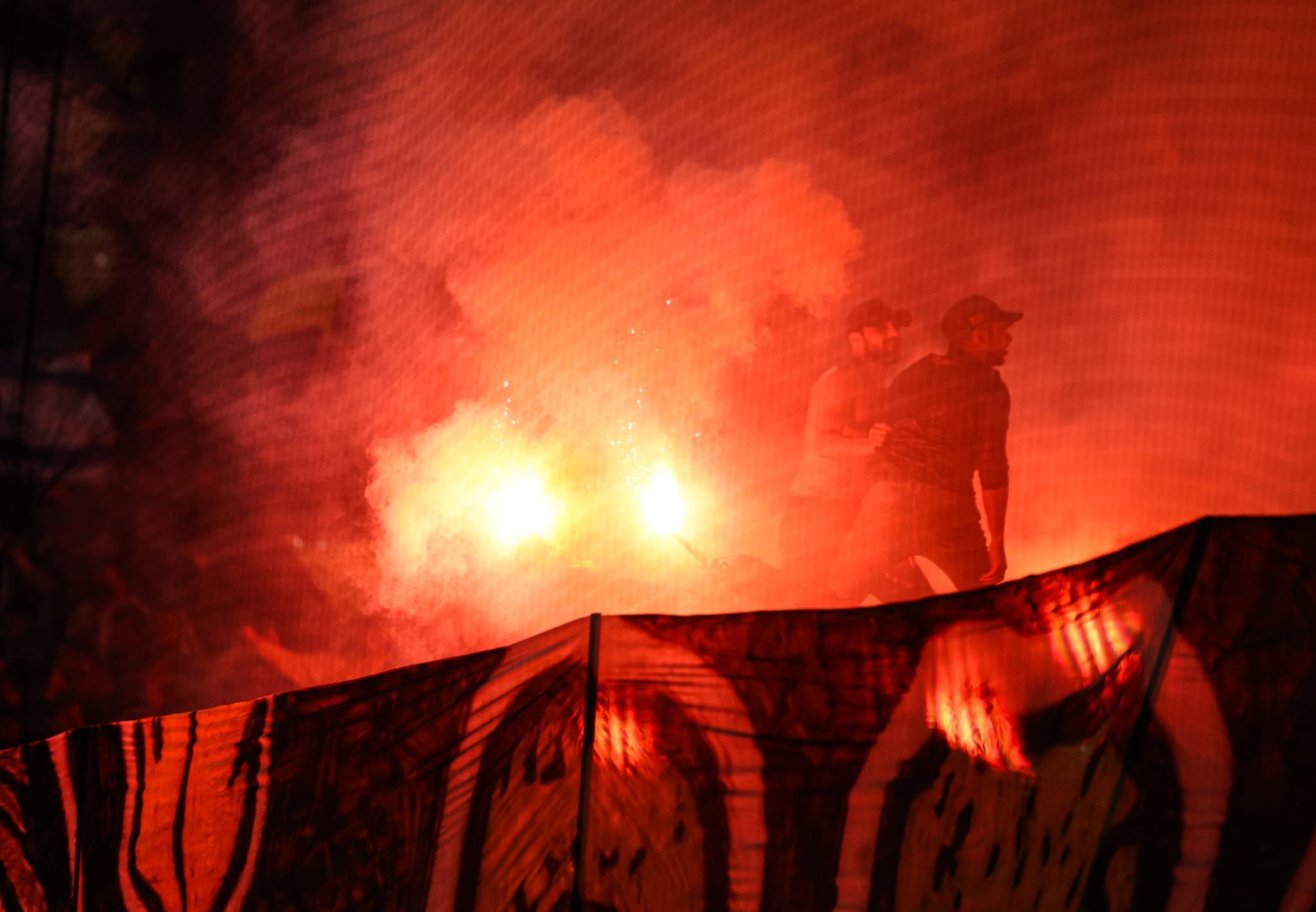
BOSTON — The first quarter-final of the 2026 World Cup, between France and Morocco in Boston, was a football match with layers far deeper than another game between two national teams — one from Europe, one from Africa. In many ways, this was the derby of the double identity.
"Today it's a match between the suburbs of Paris and the suburbs of Europe!" jokes Soufiane, a Moroccan supporter, before kick-off. "What can you do? Just as the two countries are intertwined, so are the two teams. The players sometimes know each other from pitches in the same neighbourhood. That's something powerful."
And Soufiane is right. The bond between France and Morocco runs deep. The two countries share a rich colonial past — the memory of the 44 years during which Morocco was a French protectorate in the first half of the twentieth century. After King Mohammed V led the Moroccan independence movement in 1952, ties between the two countries remained strong, and to this day France and Morocco are closely connected across trade, diplomacy, and above all, society — with around one and a half million Moroccans living in France. From that community, a significant number of footballers have emerged, growing up and developing within the French football system, some even representing France. Those who don't, cross over to represent the Moroccan national team.
Morocco has become a leading force in the art of passport scouting, and at this tournament they made history by fielding an entire starting eleven born outside the country. The French contingent within the Moroccan squad is particularly strong: no fewer than six players in the squad were born in France, grew up there, developed through the French football system, and several even represented France at youth level. Defender Issa Diouf, midfielder Neil El Aynaoui of Roma, and bench players Redwan Halhal, Samir El-Mourabit, and Jassim Yassine are all French citizens — but the symbol and face of the double-identity phenomenon is Ayoub Bouaddi, the Moroccan sensation of this World Cup.
Eighteen-year-old Bouaddi is a remarkable story. An extraordinary talent, an outstanding student of mathematics and science, and a key player — even captain — for France's youth national teams, until just three months ago. In May, he opened an Instagram account for the first time in his life and posted a photo of himself wearing a Morocco shirt from the 2018 World Cup in Russia, announcing that he had decided to represent the Moroccan national team. "I am very excited to put on the red shirt of Morocco," he wrote. His choice came straight from the heart. "I am grateful to France, and I am proud to have worn France's colours, but I am also Moroccan. That is who I am, and I am very proud of my double identity."
At this World Cup, Bouaddi has been a revelation, and his story has become a symbol of Morocco's rise as a footballing power that now attracts genuine talent — not only players who failed to break into the French senior side, but gifted footballers who actively choose to represent Morocco.
Bouaddi justified his decision from the very first minute. He impressed in every match: against Brazil, Scotland, Haiti, the Netherlands. The confidence, the composure, and the quality of his play over the past month have made him look like a seasoned senior professional. He was a vital part of Morocco's run to the quarter-finals. As fate would have it, his quarter-final opponent was the very team he had been expected to shine for as a senior player — and who also happen to be the tournament's main favourites to go all the way.
His decision, and the dual identity it embodies, was at the centre of every pre-match conversation. In the first half in Boston, Morocco held firm. Bouaddi, who knows the French players well — his best friend is Ethan Mbappé, Kylian's younger brother — was an important link in a Moroccan side that absorbed wave after wave of French pressure.
Bouaddi made history in the match, becoming, at 18 years and 280 days, the second-youngest player ever to feature in a World Cup quarter-final. Before him stood only one name: a certain Pelé, who did it aged 17 years and 239 days, with Brazil at the 1958 World Cup.
His quality, combined with Yassine Bounou's penalty save in the 28th minute, was enough to keep Morocco in it for one half. The second half fell apart.
Without the injured Ismaïl Saibari, the Atlas Lions struggled to threaten the French goal, and above all they seemed to afford France far too much respect. The final scoreline of 0-2 was, in truth, kind to Morocco.
At the final whistle, Bouaddi was asked in the mixed zone how it felt to face the team he had been destined to play for, and whether he regretted his decision. "I am very proud of my choice, and very proud of our team. We've been on an incredible journey, and what matters is continuity. Maybe this World Cup is over, but the journey doesn't end here."
Outside the stadium, Morocco's supporters were disappointed. "We didn't show up for the match. Our best players weren't at their best, or were injured, and there's nothing you can do — France are the best team in the tournament," summed up Mohamed, a Moroccan fan living in Kansas City.
"It's fine. Reaching the quarter-finals is a great achievement," said Mounir, another Moroccan supporter. "Morocco has so much more to offer world football. We're hosting the World Cup in 2030, and everything you've seen here will only continue to grow. We're not stopping here, and we've brought a great deal of pride to Morocco at this tournament."
In that sense, both the fan and Bouaddi are right. Morocco's journey has only just begun, and the team of double identities will continue to raise Morocco's name in world football in the years ahead — with players who, despite having grown up within the excellent French football system, will choose to place their Moroccan heritage, the identity of their parents, at the very top of the podium.
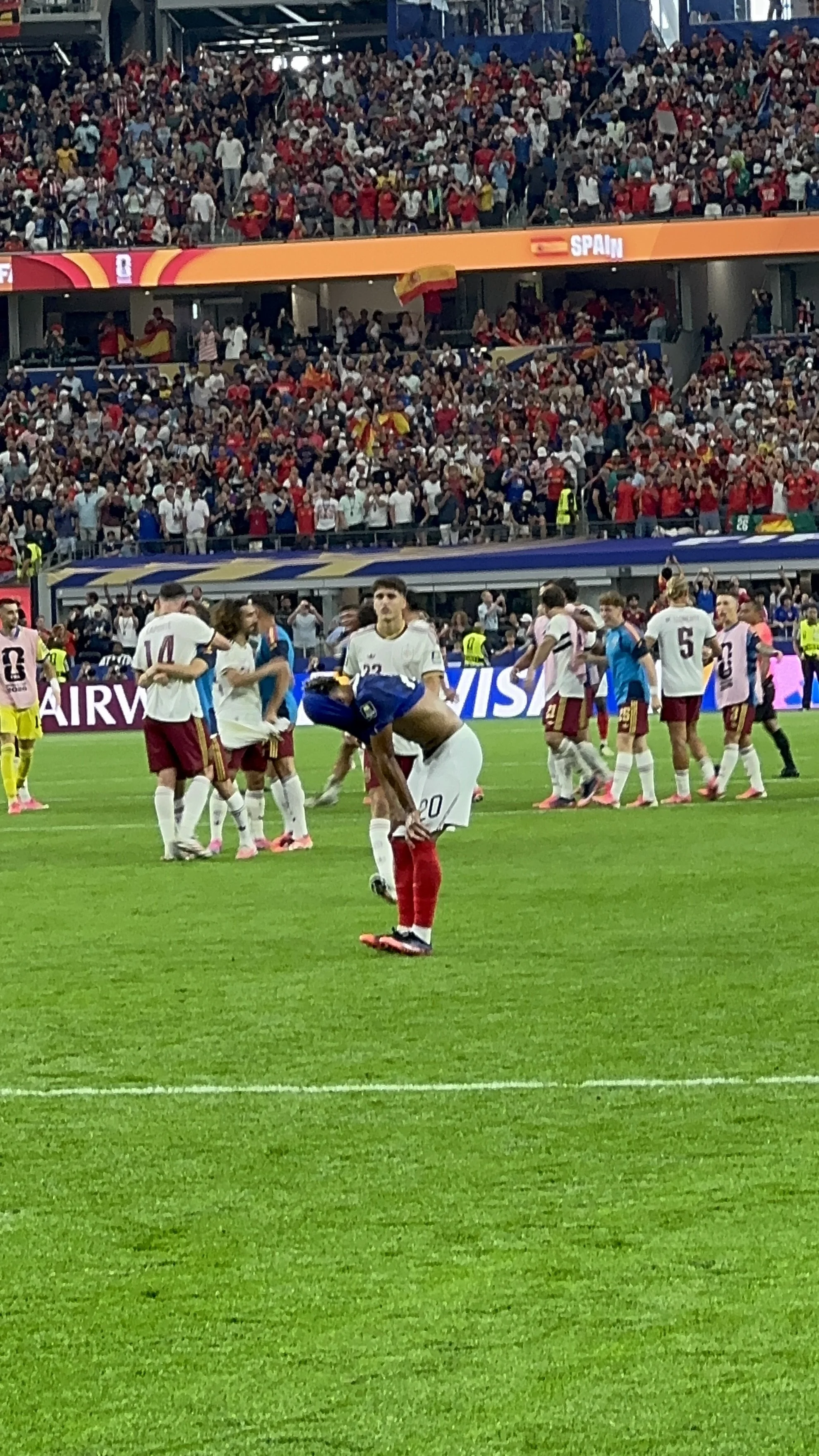
Spain were ruthless in Dallas as Oyarzabal and Dani Olmo starred, leaving France's Bastille Day to end in deep disappointment for Deschamps.
Norway outplayed England for most of a sweltering Miami classic, but two Bellingham strikes in extra time sent the Three Lions to the semis.
Ayoub Bouaddi chose Morocco over France at 18 and lit up a quarter-final about colonial history, dual identity, and what it means to belong.
Egypt pushed Argentina to the limit in a 3-2 World Cup thriller, but left the pitch furious at the referee and convinced justice was denied.
Merino's late goal gave Spain a 1-0 win over Portugal as Ronaldo left the World Cup stage in tears in what many believe was his final match.
Egypt beat Australia on penalties in Dallas to reach the last 16 for the first time, with Salah's Panenka the highlight of a historic night.
Diop headed Morocco level in the 91st minute and Saibari slotted the winner in the shootout as Morocco reached the World Cup quarter-finals.
Messi and the Jordanian Messi both scored as Argentina beat Jordan 3-1 in Arlington, with records broken and keffiyehs flying in the stands.
France beat Iraq 3-0 in Philadelphia, but the two-hour lightning delay stole the show, making it officially the longest World Cup game ever.
Saibari scored inside two minutes as Morocco beat Scotland 1-0 in Boston, leaving the Scots on the very brink of 2026 World Cup elimination.
Senegal relived their legendary 2002 magic for an hour, but Kylian Mbappe struck twice to sink them and seal France's 3-1 win in New Jersey.
Qatar stole a last-gasp draw from Switzerland and Morocco held Brazil 1-1 — two results that announced Arab football’s full arrival at 2026.
Azteca stadium hosts its third World Cup as Mexico City buzzes with pride, protest, and the deep belief that football has always lived here.
With tensions easing, Iran’s 2026 World Cup participation remains uncertain, as FIFA, politics, and regional dynamics collide.
From geopolitics to spectacle, Trump looms over World Cup 2026—reshaping football, power, and culture in the biggest tournament ever.
From Trump’s World Cup to wars, revolutions and fairy tales – the football stories that shaped 2025 in the Middle East and beyond.
In an in-depth interview with BabaGol, Alexi Lalas shares bold takes on the USMNT’s goals, 2026 World Cup impact, and soccer’s identity in America.
FIFA confirms a 48-team Women’s World Cup from 2031 and enacts strict anti-racism measures in major reforms announced by its Council.
FIFA names eight Brazilian cities as hosts for the 2027 Women’s World Cup, marking the tournament's first edition in South America.
FIFA and Global Citizen unveil a $100M initiative to fund global education and football access for children through donations and partnerships.
FIFA announces a record $1B prize for Club World Cup 2025 and major expansions for women's competitions, including a new Club World Cup.
Kurdish football embodies identity and struggle, with clubs worldwide symbolizing resilience, history, and hope on and off the pitch.
FIFA slashes Club World Cup ticket prices amid weak demand, with all matches still available. Sales struggle as criticism mounts.
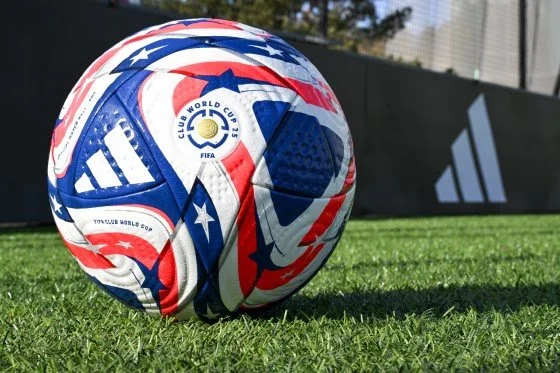
FIFA Club World Cup Official Match Ball unveiled. All the details on the technology, design are here.
500 days to FIFA World Cup 2026! Get ready for 48 teams, 16 cities, and a global celebration of football across Canada, Mexico, and the USA.
Football in 2024: A Year of Conflict, Resilience, and Triumph. From Middle Eastern struggles to global milestones, explore the stories that shaped football this year.
Uzbekistan hosts FIFA Futsal World Cup 2024, featuring 24 teams. First-time Central Asian venue promises thrilling action and global broadcasts.
FIFA received a complaint from Palestine FA against Israel. Despite rumors, FIFA unlikely to suspend Israel in October due to complex geopolitical issues.
Saudi Arabia has submitted its proposal to host the 2034 FIFA World Cup, a move with significant implications for the Middle East.
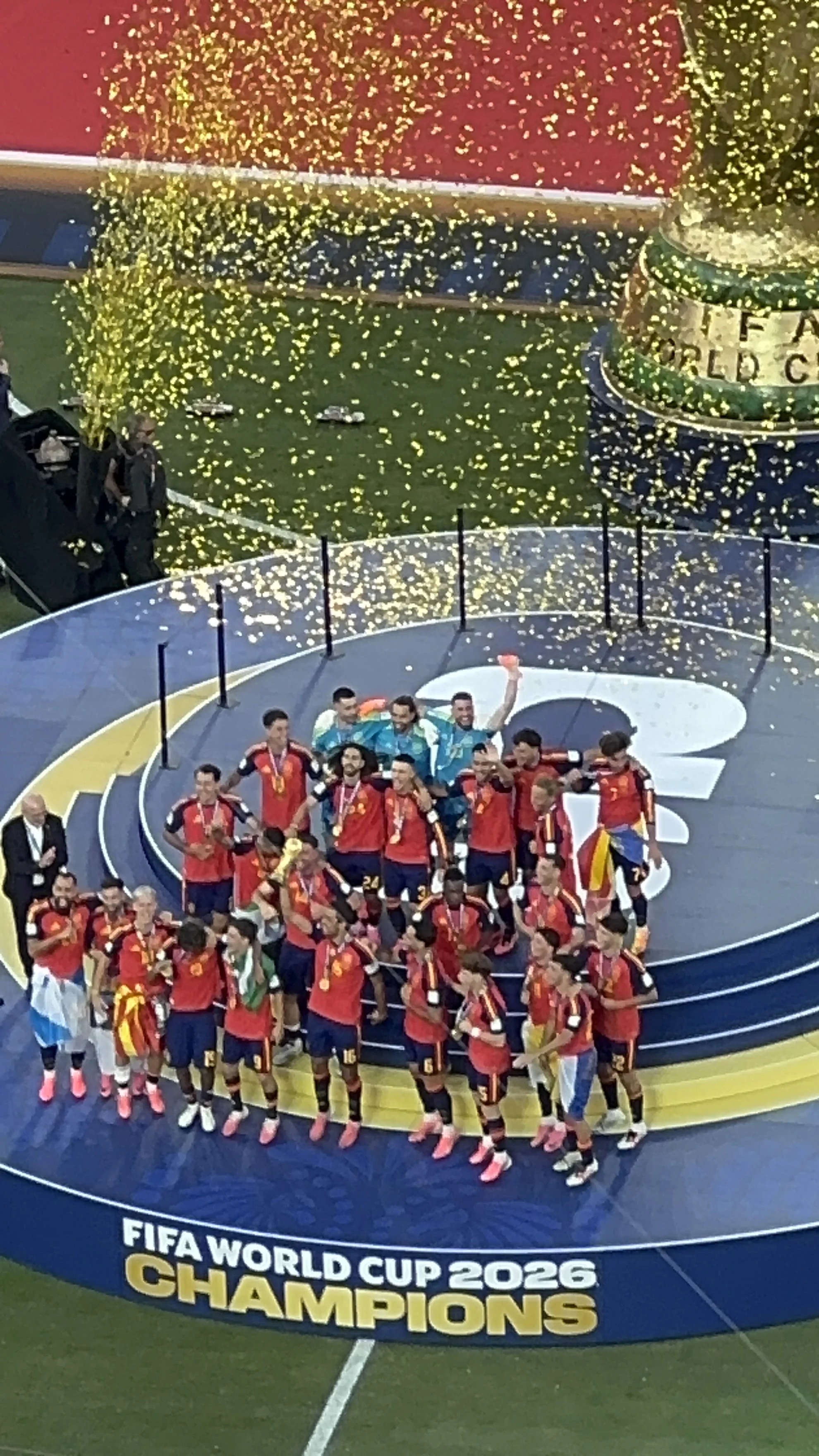
Spain defeated Argentina 1-0 in the 2026 World Cup Final, ending Lionel Messi's dream World Cup with heartbreak.
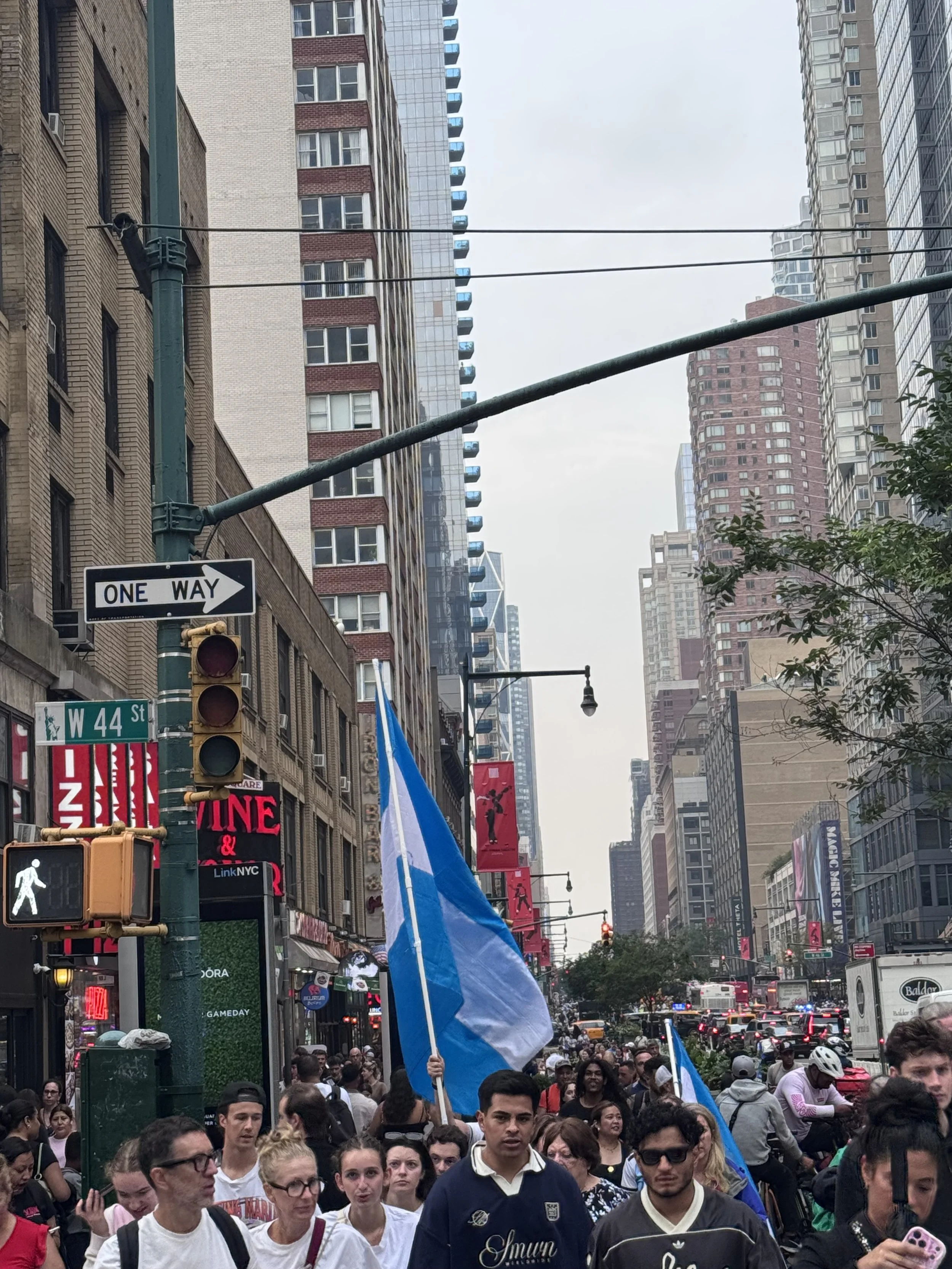
Thousands of Argentina fans transformed Times Square before the 2026 World Cup final, all united to thank Lionel Messi.
Spain were ruthless in Dallas as Oyarzabal and Dani Olmo starred, leaving France's Bastille Day to end in deep disappointment for Deschamps.
Norway outplayed England for most of a sweltering Miami classic, but two Bellingham strikes in extra time sent the Three Lions to the semis.
Ayoub Bouaddi chose Morocco over France at 18 and lit up a quarter-final about colonial history, dual identity, and what it means to belong.
Egypt pushed Argentina to the limit in a 3-2 World Cup thriller, but left the pitch furious at the referee and convinced justice was denied.
Merino's late goal gave Spain a 1-0 win over Portugal as Ronaldo left the World Cup stage in tears in what many believe was his final match.
Egypt beat Australia on penalties in Dallas to reach the last 16 for the first time, with Salah's Panenka the highlight of a historic night.
Diop headed Morocco level in the 91st minute and Saibari slotted the winner in the shootout as Morocco reached the World Cup quarter-finals.
Messi and the Jordanian Messi both scored as Argentina beat Jordan 3-1 in Arlington, with records broken and keffiyehs flying in the stands.
France beat Iraq 3-0 in Philadelphia, but the two-hour lightning delay stole the show, making it officially the longest World Cup game ever.
Saibari scored inside two minutes as Morocco beat Scotland 1-0 in Boston, leaving the Scots on the very brink of 2026 World Cup elimination.
Senegal relived their legendary 2002 magic for an hour, but Kylian Mbappe struck twice to sink them and seal France's 3-1 win in New Jersey.
Qatar stole a last-gasp draw from Switzerland and Morocco held Brazil 1-1 — two results that announced Arab football’s full arrival at 2026.
Azteca stadium hosts its third World Cup as Mexico City buzzes with pride, protest, and the deep belief that football has always lived here.
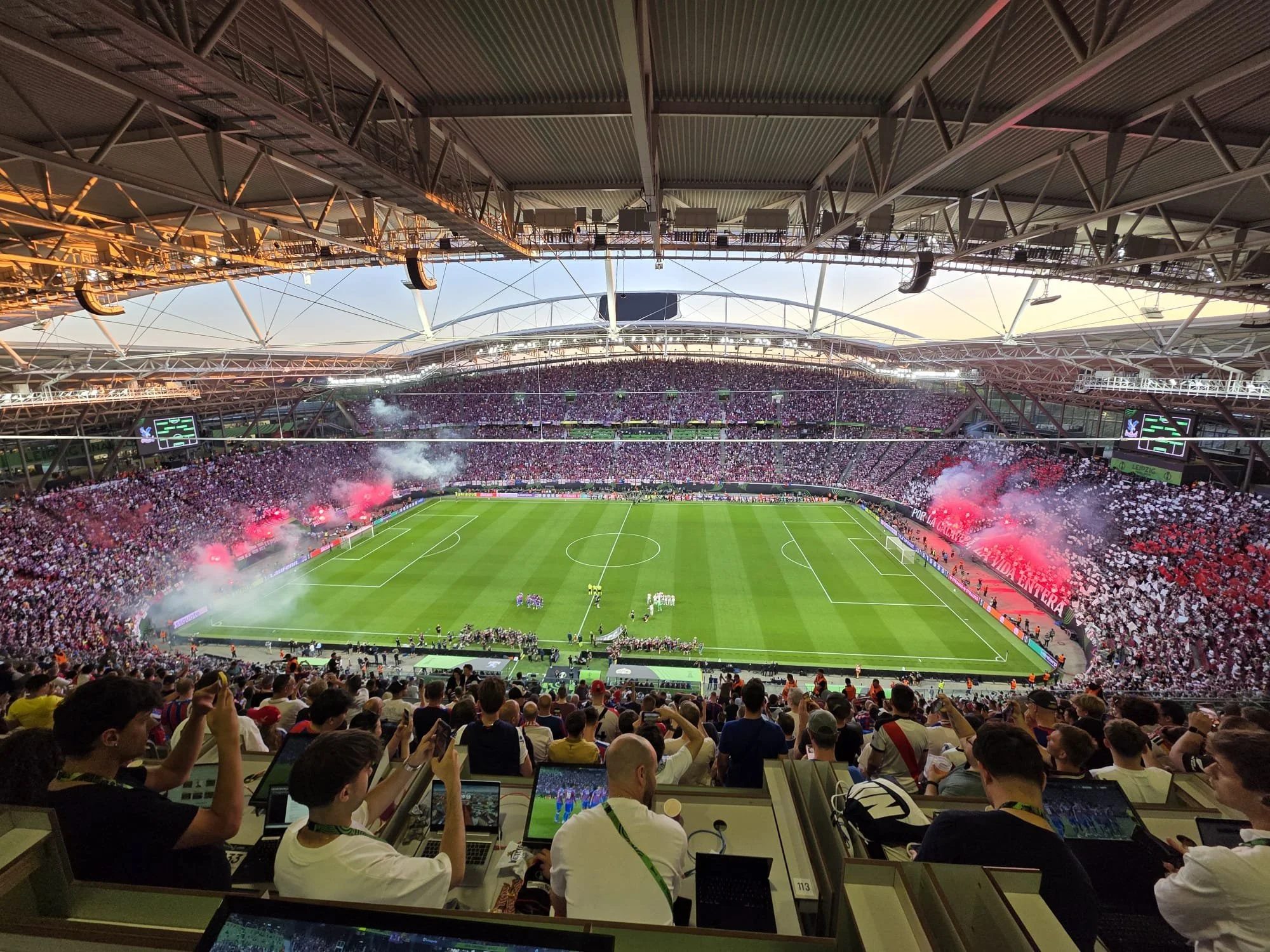
Crystal Palace beat Rayo Vallecano in Leipzig to win the Conference League in the most romantic underdog final in European football history.
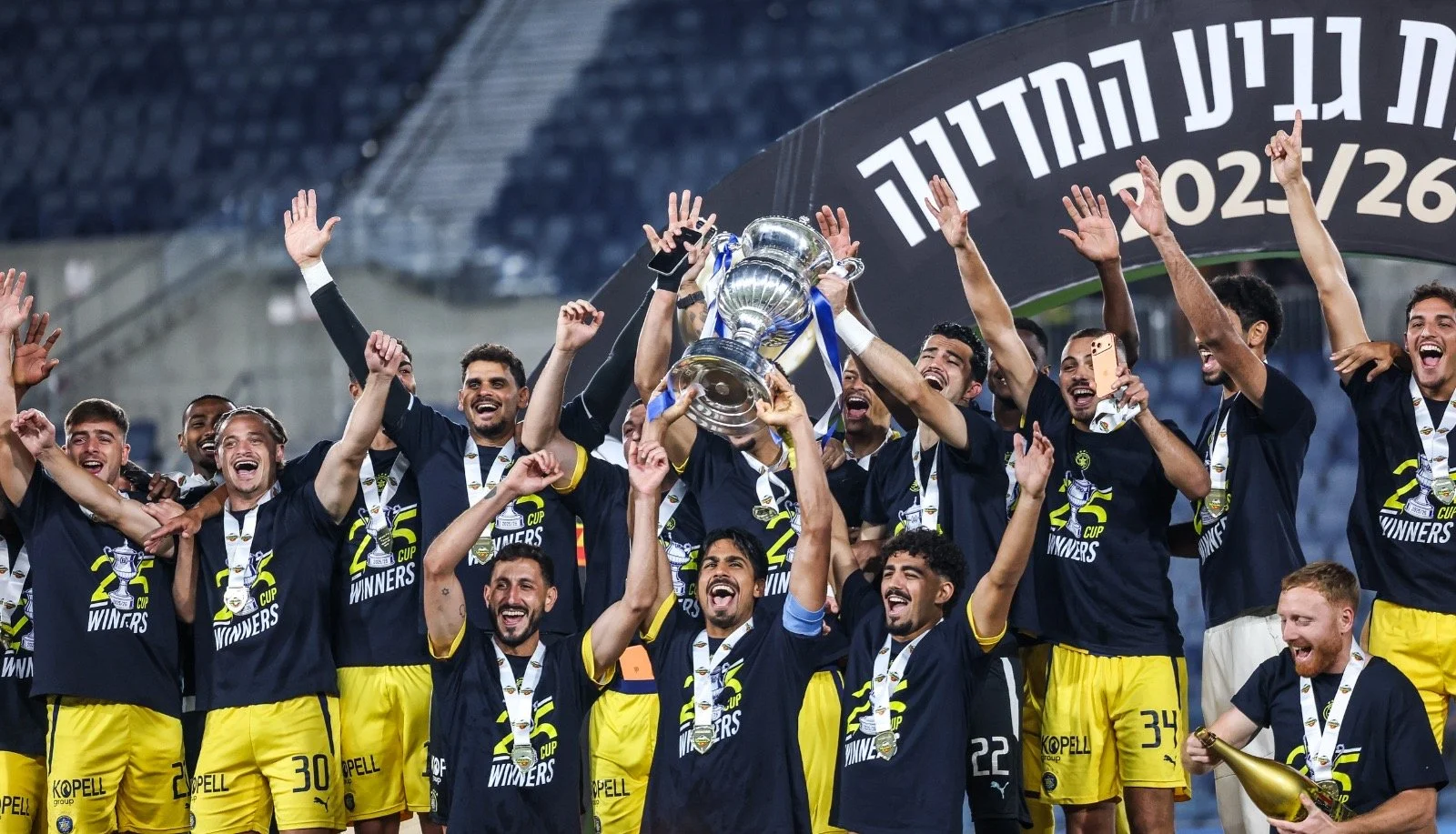
Maccabi Tel Aviv edge Hapoel Be'er Sheva 2–1 in a dramatic Israeli Cup Final at Teddy Stadium, denying the champions a historic Double.
With tensions easing, Iran’s 2026 World Cup participation remains uncertain, as FIFA, politics, and regional dynamics collide.
CAF shocks African football by stripping Senegal’s title and awarding Morocco the AFCON crown after a chaotic final decision.
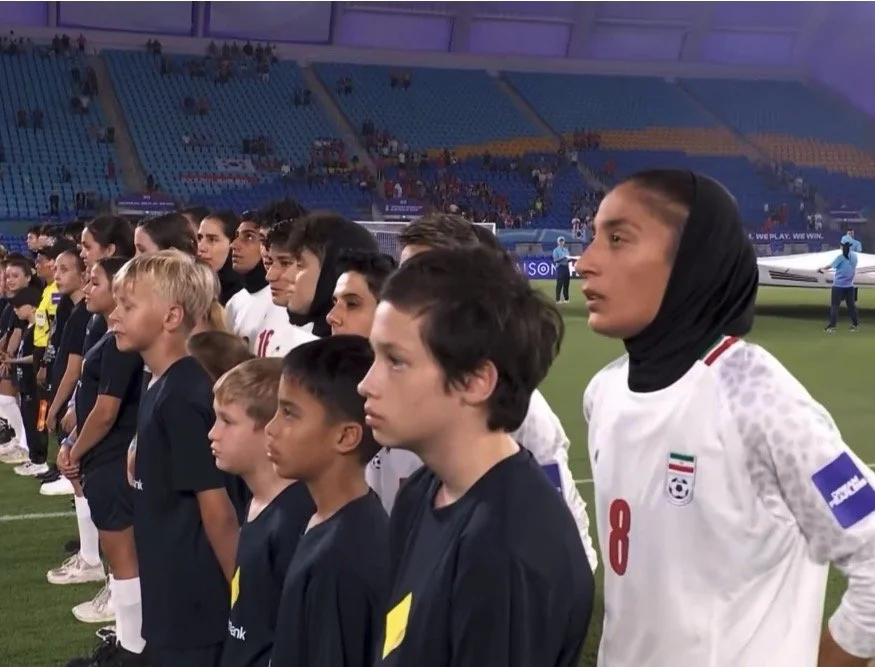
From silent protests to daring escapes, Iran’s women footballers turned a tournament into a global story of courage, politics, and survival.
Iran’s women’s team protested, faced threats, and signaled SOS in Australia—now their fate is uncertain amid calls for asylum.
From geopolitics to spectacle, Trump looms over World Cup 2026—reshaping football, power, and culture in the biggest tournament ever.
FIFA joins Gaza rebuilding plans, restoring stadiums, pitches, and youth programs, supporting football and hope in the Strip.
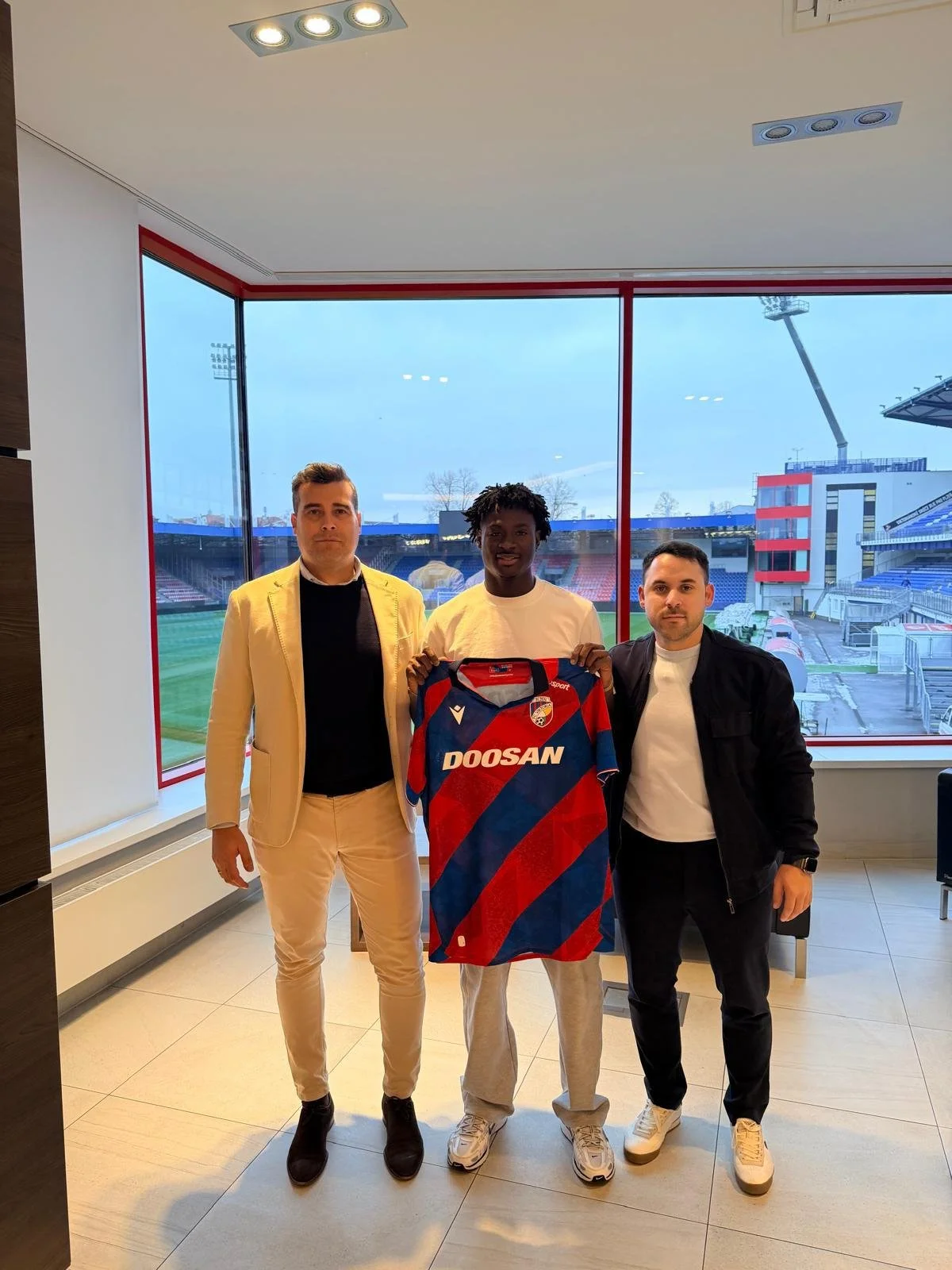
From Nigeria’s Mavlon academy to Viktoria Plzeň and the Europa League dream: Salim Fago’s journey is just beginning in Europe.
From Benzema’s shock move to Ronaldo’s protest, a chain reaction in Saudi football is shaking the entire project and the global game.
A Hitchcock-style AFCON final in Rabat saw chaos, controversy and brilliance as Senegal stunned Morocco to claim their second African title.
From libraries to stadiums, Morocco lives football. As AFCON 2025 nears its climax, passion, politics, and ambition collide nationwide.
From rain-soaked Rabat to a deafening semifinal night, Morocco edge Nigeria on penalties and stand 90 minutes from an AFCON title.
As protests spread across Iran, footballers are turning goals, silence and visibility into acts of resistance and solidarity with the people.


Spain defeated Argentina 1-0 in the 2026 World Cup Final, ending Lionel Messi's dream World Cup with heartbreak.