As the ceasefire between Iran, the United States, and Israel entered its second day - while Israel continues strikes in Lebanon and developments unfold across multiple fronts - a question that dominated the early weeks of the war resurfaces: will Iran's national team participate in the 2026 World Cup as planned?
During the first weeks of the US, Israel-Iran War, Iran's Minister of Sports, Ahmad Donyamali, and the head of the Iranian Football Federation, Mehdi Taj, addressed the issue directly, stating that as long as the war continued, "there is no chance Iran will participate in the tournament" or "play in a country that murdered our president and our citizens."
These statements sparked false reports claiming Iran had officially withdrawn from the World Cup. In reality, Iranian officials were working behind the scenes to convince FIFA to relocate their matches from the United States to Mexico. The proposal was even welcomed by Mexican President Claudia Sheinbaum, but was ultimately rejected by FIFA following internal discussions.
Trump casts doubt, Infantino reassures
On the other side, U.S. President Donald Trump posted on Truth Social that he was unsure whether it would be "safe for Iran's national team players to arrive in the United States" for the World Cup—further fueling speculation that Iran might withdraw.
In an effort to ease tensions, FIFA President Gianni Infantino personally visited Iran's training camp in Antalya, Turkey, during the March international break, where the team played friendlies against Nigeria and Costa Rica.
During the visit, Infantino stated: "FIFA and the entire global football community stand with Iran during this difficult time. FIFA is committed to supporting Iran and will do everything possible to ensure the Iranian national team fulfills its fixtures in the upcoming World Cup and participates as planned."
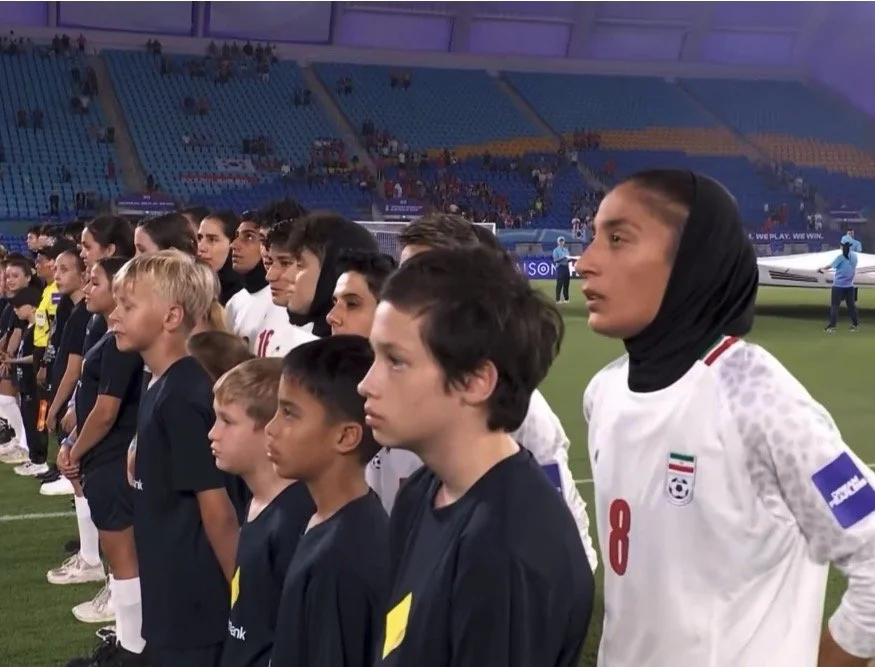
In the match Infantino attended, Iran's players stood during the national anthem holding photographs of schoolgirls from Minab who were killed in bombing attacks during the early days of the war.
Iran was drawn into Group G alongside Belgium, Egypt, and New Zealand. The team is scheduled to play two matches in Los Angeles—a city with a large Iranian diaspora community expected to turn out in strong support—and a third in Seattle against Egypt. That match was, somewhat ironically, designated in advance as the tournament's "Pride Game," before the competing teams were even known.
The designation has since become a point of contention, with both the Iranian and Egyptian federations requesting its removal, citing "unreasonable branding considerations."
A possible hint
Will Iran participate in the World Cup or not? A possible clue may emerge from next week's AFC Champions League fixtures. Due to the war, the West Region Round of 16 was postponed and consolidated into a centralized knockout tournament set to take place in Saudi Arabia.
Tractor Sazi, the Iranian club from Tabriz, was drawn to face Shabab Al-Ahli Dubai. In recent weeks, the club had requested a venue change on safety grounds, claiming it was "not safe for an Iranian team to travel and play in Saudi Arabia." However, on Saturday evening—following several hours of ceasefire—the club confirmed it would travel to Saudi Arabia as planned.
A club, of course, is not a national team. But given the deep hostility between Iran and its Gulf neighbors, the prospect of an Iranian team playing in Saudi Arabia against an Emirati side once seemed unthinkable. Now, it is happening.
Is this a sign of things to come regarding Iran's World Cup participation? Possibly—but the answer remains far from simple.
From the Iranian federation's perspective, as long as the ceasefire holds, there is no formal obstacle to participating as planned—even accounting for the earlier statements from the sports minister and federation chairman. Moreover, potential sanctions, fines, and lasting damage to Iran's standing within FIFA could prove more harmful to Iranian football than any negative press generated by showing up.
"All teams have confirmed their arrival"
"From FIFA's perspective, there are no changes to the match schedule. All teams have confirmed their participation, and Iran is one of them," a senior FIFA official told BabaGol.
A source within the tournament's organizing committee added: "At this stage, we have received no indication that Iran will not arrive in the United States or set up its base camp in Tucson, Arizona, as planned. Like everyone else, we are monitoring developments around the ceasefire and are in contact with FIFA, the White House, and all relevant parties. The situation is being continuously evaluated, and the halt in fighting naturally creates a different atmosphere."
All efforts to ensure Iran's participation
Throughout the US, Israel-Iran War, football has been deeply affected—at times even serving as a symbolic battleground reflecting the broader tensions between Iran, the United States, and Israel.
From the controversy surrounding Iran's women's team at the AFC Women's Asian Cup in Australia, to the suspension of leagues and tournaments across the Middle East; from the dismissal of national team star Sardar Azmoun after he posted support for Dubai's ruler following Iranian missile strikes on the emirate, to the bombing of the Azadi Sports Complex in Tehran—and even the renaming of a street that once honored Iranian legend Ali Daei, due to his perceived "lack of support for the war effort."
Whether the ceasefire between Iran, the United States, and Israel holds or not, further developments regarding Iran's World Cup participation are expected in the coming days. But as long as the fighting remains paused, it appears that all parties involved will do everything in their power to ensure Iran's national team arrives in the United States and competes at the 2026 World Cup.
CAF shocks African football by stripping Senegal’s title and awarding Morocco the AFCON crown after a chaotic final decision.
From silent protests to daring escapes, Iran’s women footballers turned a tournament into a global story of courage, politics, and survival.
Iran’s women’s team protested, faced threats, and signaled SOS in Australia—now their fate is uncertain amid calls for asylum.
From geopolitics to spectacle, Trump looms over World Cup 2026—reshaping football, power, and culture in the biggest tournament ever.
FIFA joins Gaza rebuilding plans, restoring stadiums, pitches, and youth programs, supporting football and hope in the Strip.
From Nigeria’s Mavlon academy to Viktoria Plzeň and the Europa League dream: Salim Fago’s journey is just beginning in Europe.
From Benzema’s shock move to Ronaldo’s protest, a chain reaction in Saudi football is shaking the entire project and the global game.
A Hitchcock-style AFCON final in Rabat saw chaos, controversy and brilliance as Senegal stunned Morocco to claim their second African title.
From libraries to stadiums, Morocco lives football. As AFCON 2025 nears its climax, passion, politics, and ambition collide nationwide.
From rain-soaked Rabat to a deafening semifinal night, Morocco edge Nigeria on penalties and stand 90 minutes from an AFCON title.
As protests spread across Iran, footballers are turning goals, silence and visibility into acts of resistance and solidarity with the people.
From Trump’s World Cup to wars, revolutions and fairy tales – the football stories that shaped 2025 in the Middle East and beyond.
A dramatic 107th-minute penalty sends Iraq to the intercontinental playoff—now just one game from a first World Cup since 1986.
Nigeria fell to DR Congo on penalties and missed another World Cup, exposing deep structural issues holding back the once-mighty Super Eagles.
Ireland and other European FAs are joining efforts to push UEFA to suspend Israel over settlement clubs and racism allegations.
Aston Villa overcame Maccabi Tel Aviv 2–0 in a Europa League night marked by police protests, fan bans, and off-field political tension.
Maccabi Tel Aviv arrive in Birmingham under political tension, facing Aston Villa without fans in a key Europa League test.
Erling Haaland’s hat-trick powered Norway past Israel 5–0, as protests and tension surrounded the World Cup qualifier in Oslo.
Israel coach Ran Ben Shimon dons a kippa and prays for hostages in an emotional Oslo press conference before facing Norway.
Ahead of Norway–Israel, FA president Lise Klaveness urges respect, transparency, and dialogue, discussing her efforts in bringing change that will see Israel banned from international football.
Tense atmosphere in Oslo ahead of Norway vs. Israel, with protests, politics, and a World Cup dream on the line.
As Israel visits Oslo for a key World Cup qualifier, Norway braces for protests, politics, and a tense weekend on and off the pitch. Uri Levy reports from Oslo.
Despite rising protests and political pressure, Israel’s suspension from UEFA remains improbable due to regulations and key leadership stances.
As soccer surges in Canada, Forge FC and Atlético Ottawa's 1-1 draw highlights CPL's growth.
Despite growing calls amid the Gaza war, UEFA sources stress there’s no legal basis for suspending Israel at this stage.
Despite war, isolation and setbacks, Israeli footballers hit a record in transfers abroad during the summer 2025 window. A market analysis.
Beram Kayal reflects on a remarkable career from Maccabi Haifa to Celtic and Brighton, and his new mission to impact Arab football youth.
After months of war, the Palestinian Football Association may revive league play—if minimum safety, infrastructure, and funding can be secured.
With tensions easing, Iran’s 2026 World Cup participation remains uncertain, as FIFA, politics, and regional dynamics collide.
CAF shocks African football by stripping Senegal’s title and awarding Morocco the AFCON crown after a chaotic final decision.
From silent protests to daring escapes, Iran’s women footballers turned a tournament into a global story of courage, politics, and survival.
Iran’s women’s team protested, faced threats, and signaled SOS in Australia—now their fate is uncertain amid calls for asylum.
FIFA joins Gaza rebuilding plans, restoring stadiums, pitches, and youth programs, supporting football and hope in the Strip.
From Benzema’s shock move to Ronaldo’s protest, a chain reaction in Saudi football is shaking the entire project and the global game.
A Hitchcock-style AFCON final in Rabat saw chaos, controversy and brilliance as Senegal stunned Morocco to claim their second African title.
From libraries to stadiums, Morocco lives football. As AFCON 2025 nears its climax, passion, politics, and ambition collide nationwide.
As protests spread across Iran, footballers are turning goals, silence and visibility into acts of resistance and solidarity with the people.
From Trump’s World Cup to wars, revolutions and fairy tales – the football stories that shaped 2025 in the Middle East and beyond.
A dramatic 107th-minute penalty sends Iraq to the intercontinental playoff—now just one game from a first World Cup since 1986.
Ireland and other European FAs are joining efforts to push UEFA to suspend Israel over settlement clubs and racism allegations.
Aston Villa overcame Maccabi Tel Aviv 2–0 in a Europa League night marked by police protests, fan bans, and off-field political tension.
Maccabi Tel Aviv arrive in Birmingham under political tension, facing Aston Villa without fans in a key Europa League test.
Erling Haaland’s hat-trick powered Norway past Israel 5–0, as protests and tension surrounded the World Cup qualifier in Oslo.
Israel coach Ran Ben Shimon dons a kippa and prays for hostages in an emotional Oslo press conference before facing Norway.
Ahead of Norway–Israel, FA president Lise Klaveness urges respect, transparency, and dialogue, discussing her efforts in bringing change that will see Israel banned from international football.
Tense atmosphere in Oslo ahead of Norway vs. Israel, with protests, politics, and a World Cup dream on the line.
As Israel visits Oslo for a key World Cup qualifier, Norway braces for protests, politics, and a tense weekend on and off the pitch. Uri Levy reports from Oslo.
Despite rising protests and political pressure, Israel’s suspension from UEFA remains improbable due to regulations and key leadership stances.
Despite growing calls amid the Gaza war, UEFA sources stress there’s no legal basis for suspending Israel at this stage.
Despite war, isolation and setbacks, Israeli footballers hit a record in transfers abroad during the summer 2025 window. A market analysis.
Beram Kayal reflects on a remarkable career from Maccabi Haifa to Celtic and Brighton, and his new mission to impact Arab football youth.
After months of war, the Palestinian Football Association may revive league play—if minimum safety, infrastructure, and funding can be secured.
Palestinian striker Wessam Abou Ali overcame cardiac collapse and broken ribs to become Club World Cup star, attracting top European clubs.
From dominant wins to political fallout, a look back at the intense football rivalry between Israel and Iran before geopolitics ended it all.
At 37, Bibars Natcho delivers his best season yet. In a BabaGol interview, he opens up on legacy, Israel, Partizan, and what comes next.
Mehdi Taremi grounded in Iran, Ali Karimi slams regime, and regional sports grind to a halt as Israel-Iran war disrupts the Middle East.


With tensions easing, Iran’s 2026 World Cup participation remains uncertain, as FIFA, politics, and regional dynamics collide.