
OSLO — On the eve of Norway's World Cup qualifier against Israel, Lise Klaveness, president of the Norwegian Football Federation, called for respect, transparency, and humanity — insisting that football must remain a safe and unifying space even amid global tensions.
"Football makes a difference," Klaveness said in Oslo ahead of Saturday's match. "We have a responsibility to ensure the stadium remains a safe place for everyone who comes. It's a football match — very important for both associations. The background is unique and familiar to all of us (the war in Gaza and the ongoing Israeli-Palestinian conflict), but I expect respect, a good and friendly atmosphere, and no hostility from the roughly 20,000 people I hope will fill the stadium."
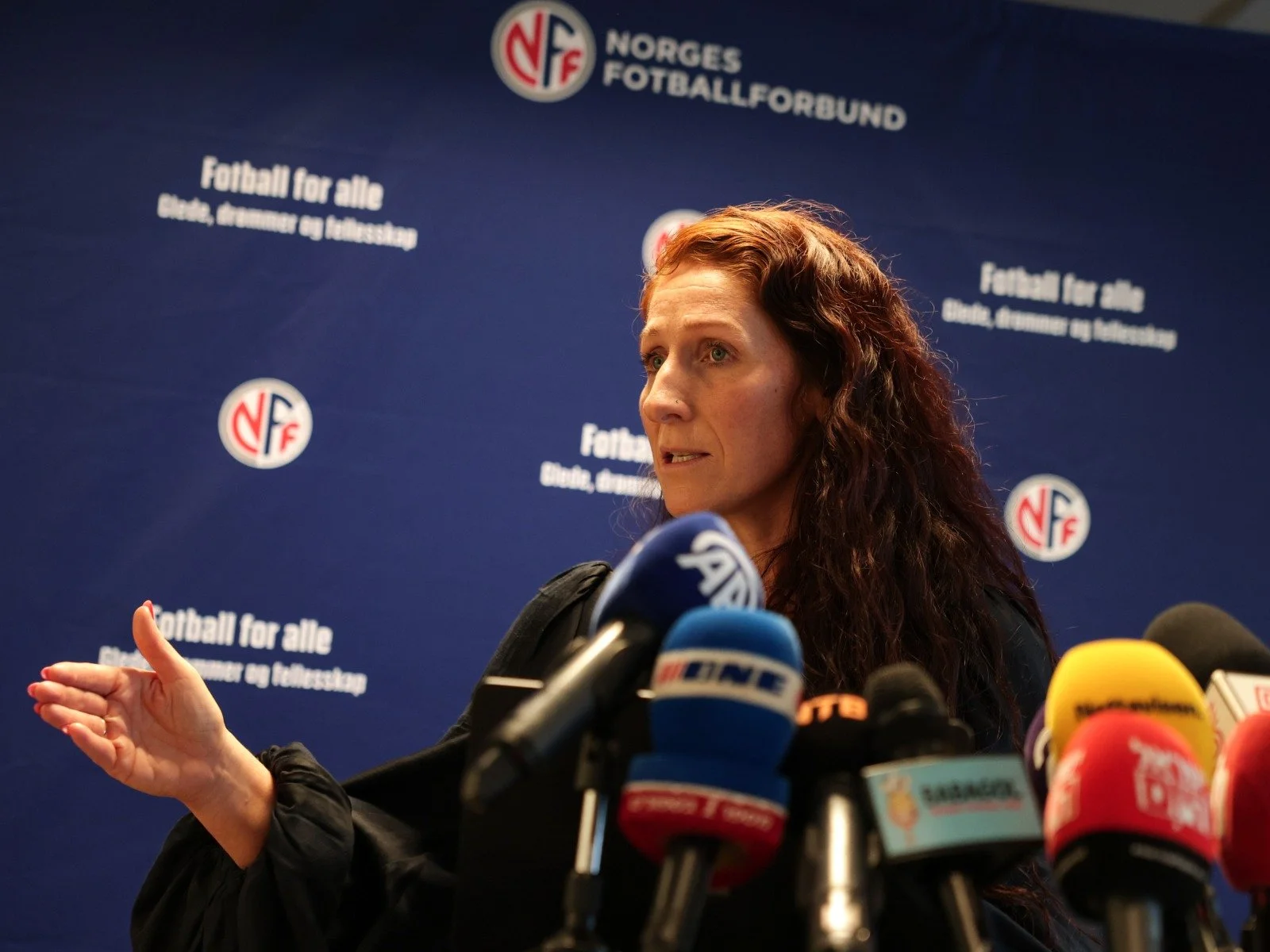
Lise Klaveness in a special brief with local and international media. A rare ocassion of transpiracy, honesty and discussion between a UEFA official and Executive Committee member to the media. (Photo courtesy: Shaul Greenfeld/BabaGol)
The fixture takes place during a symbolic week in the Norwegian capital — coinciding with the Nobel Peace Prize ceremony, the opening of parliament, and after the first phase of the US President's peace plan has begun. 32 years since the Oslo Accords , the Norwegian capital role as a center of dialogue and peace, once again prevailed..
Klaveness confirmed that all matchday proceeds will be donated to Doctors Without Borders to help address the humanitarian crisis in Gaza. "We began a strategic partnership with Doctors Without Borders two years ago," she said. When shes was asked by BabaGol why only this match’s income will be donated to an organization that operates in Gaza, and not the rest of the campaign’s home games, she said: "We want people to come to the match, fill the stadium, and cheer for Norway — but also to direct the proceeds toward humanitarian purposes rather than profit from the game. We are countries that act transparently and freely; it felt natural to donate to such a humanitarian cause."
She added: "We don't do things behind the scenes. Everything we do is public and transparent. We work hard on human rights issues. We have no intention of entering political matters — only taking clear humanitarian positions. I was elected also to uphold humanitarian values and to protect the sport itself."
When asked about international calls to suspend Israel, Klaveness clarified Norway's stance: "There was momentum to ban Israel, but it was up to FIFA to take it forward. For Norway, it was never an aim to expel or ban anyone, but to improve how football handles these cases. I am interested in discussing FIFA and UEFA statutes — how we ensure they are applied consistently and fairly."
She also drew a clear distinction between Israel's situation and that of Russia, which was banned from international competitions following its invasion of Ukraine: "I do not make a comparison between the Israeli case and the Russian case," Klaveness said. "These are different contexts, and football's response must be measured carefully."
Reflecting on October 7, she spoke with empathy and conviction: "I condemned the October 7 attacks wholeheartedly. I cannot comprehend the trauma that others went through, but as a mother, as a woman, I was horrified by the terrible events of that day. We condemn the horrific attack, though they do not need financial assistance."
Klaveness also noted her ongoing dialogue with Israel FA chairman Shino Zuaretz: "I won't speak to Moshe through the media — we'll talk today and meet tomorrow. He's a colleague I speak with often. But it's important to correct what's been said: I wrote him a heartfelt message on October 7, and he even replied kindly and warmly. I also wrote to him on the first and second anniversaries of October 7."
Still, she extended her humanitarian concern to both peoples: "I understand that October 7 is a very deep trauma. I have only respect for that. But just as I cannot grasp the trauma of October 7, I also cannot imagine the trauma of the Palestinian population after October 7. Our humanitarian message gained weight because the bombardment of Gaza continued for such a long time."
As Norway prepares for its most important and most politically sensitive home match in decades, Klaveness hopes football can still provide perspective and peace: "I try to be considerate of emotions, but overall I hope the future will bring respect for international law — and that the world will be a better place."







Israel opens a homeless Nations League campaign against Austria, Kosovo, and Ireland, with the Gaza conflict looming over every match played.