What is happening in Iran right now cannot be separated from football.
In fact, football has once again become one of the clearest mirrors of Iranian society, reflecting its pain, its anger and its demand to be heard.
Over the past days, as protests across Iran have intensified and expanded, more and more athletes have stepped into the public arena. Footballers in particular. In Iran, they are not just sports stars. They are cultural icons and, in many cases, social leaders. In a country where the relationship between the authorities and the public is fragile and tense, their actions carry weight far beyond the pitch.
The current wave of protests began last week at Tehran’s central bazaar, a place that has been the socio-economic heartbeat of Iran for centuries. Triggered by the deepening economic crisis, the demonstrations quickly spread. The situation inside the Islamic Republic, especially since the Twelve-Day War, has only worsened everyday life for millions of citizens. Prices are rising, opportunities are shrinking, and patience has run out. For many Iranians, the message is now clear: enough.
The regime attempted to calm the streets by announcing food subsidies of around seven dollars per person per month. For the protesters, this was seen as an insult rather than a solution. A symbolic gesture that felt like a thin bandage placed over a deep and open wound.
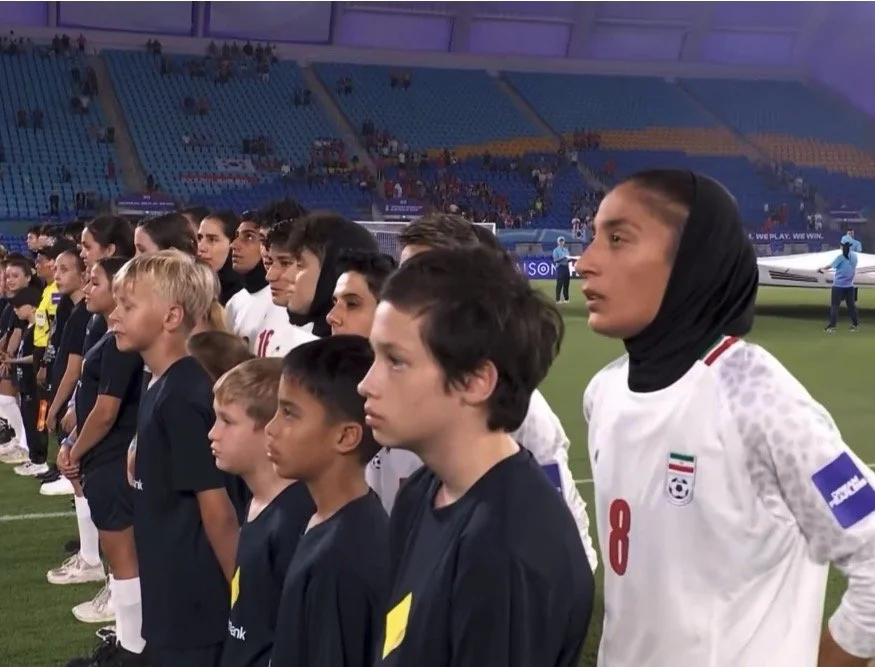
Last weekend, Iran’s under-23 national team offered one of the most visible acts of protest so far. Before their opening match at the Asian Cup against South Korea, the players refused to sing the national anthem. It was a quiet moment, but a powerful one. A direct protest against the Ayatollahs’ regime and its violent response to the demonstrations.
The momentum grew quickly. Former national team player Voria Ghafouri announced that he was closing the chain of cafes he owns, openly declaring his solidarity with the protesters. Pro-regime media outlets responded aggressively, accusing him of spreading chaos and endangering innocent lives. The message was familiar. Any act of dissent is framed as a threat.
In the early stages, videos and voice recordings continued to emerge from Iran, documenting what was happening on the streets. In recent days, however, the authorities escalated their response. Internet access across the country was heavily restricted or shut down entirely. The ability to document, report and communicate was taken away. In today’s world, cutting off the internet is not just censorship. It is a way of making people disappear. According to reports coming out of Iran, the regime has already executed around 200 protesters.
With almost no internet access inside the country, much of the public criticism online has come from Iranian footballers past and present, many of whom play abroad. Like millions of Iranians living in exile, they are using their platforms to speak when others cannot. Ali Daei, Sardar Azmoun, Masoud Shojaei and several others have publicly voiced their support for the protests.
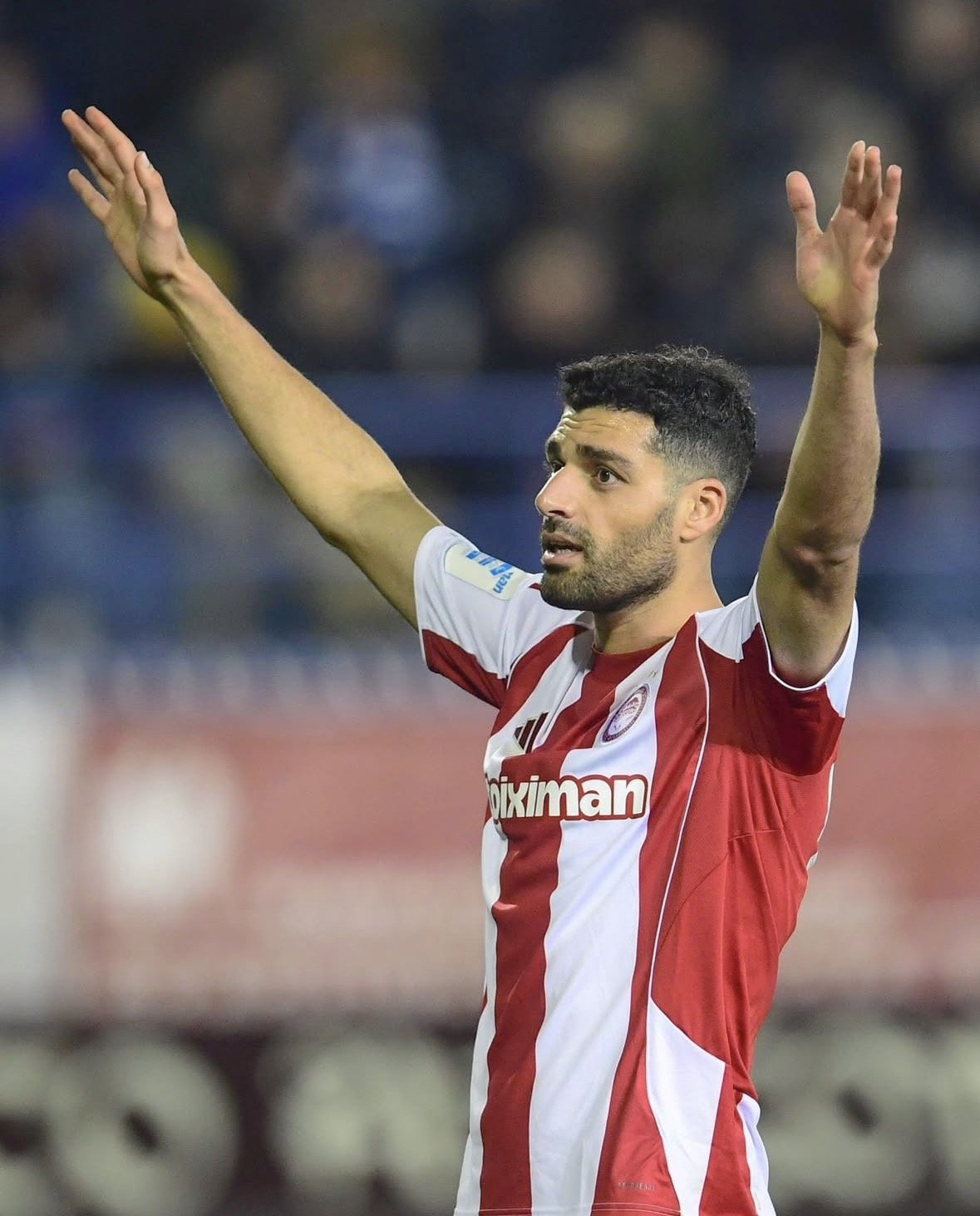
On Sunday, Mehdi Taremi, currently the most high-profile Iranian footballer, scored for Olympiacos in Greece and chose not to celebrate. Afterwards, he explained that the decision was intentional. A sign of solidarity with the protesters and with what is happening back home. The moment resonated deeply, not least because Taremi was once perceived as a supporter of the regime. Years spent abroad and life in Europe appear to have reshaped his perspective.
Today, like many others, he seems to understand a simple truth. There is no substitute for freedom, and everyone deserves a voice. Especially those living under a system that suppresses them and, when threatened, shuts down their ability to exist online at all.
The protesters in Iran will not bring down Khamenei’s regime on their own. That reality is clear. Change will require pressure, support and attention from outside.
What is certain is that Iranian football has once again aligned itself with the people. Not for the first time, and probably not for the last. It underlines the unique social role football plays in Iran, as a space where resistance, identity and solidarity can still find expression. They play, and they score, for those who have no voice.
A dramatic 107th-minute penalty sends Iraq to the intercontinental playoff—now just one game from a first World Cup since 1986.
After months of war, the Palestinian Football Association may revive league play—if minimum safety, infrastructure, and funding can be secured.
Palestinian striker Wessam Abou Ali overcame cardiac collapse and broken ribs to become Club World Cup star, attracting top European clubs.
From dominant wins to political fallout, a look back at the intense football rivalry between Israel and Iran before geopolitics ended it all.
Eleven groups drawn as 44 teams begin the road to Saudi Arabia 2026. Qualifiers kick off this September across Asia.
From Rabah Madjer to Mohamed Salah, a look at the MENA players who’ve made history in the Champions League — and those ready to add their names.
Wuhan Jiangda edge Melbourne City on penalties to claim the inaugural AFC Women’s Champions League title and book FIFA Women’s Champions Cup spot.
On-loan striker Oday Dabbagh scores the winning penalty as Aberdeen defeat Celtic in a dramatic shootout, ending a 35-year Scottish Cup drought.
Postecoglou led Tottenham to their first European title since 1984, silencing doubters and making history in Bilbao with a composed, proud triumph.
Firas Ben Arbi and Marcus Meloni secure Sharjah’s 2-1 win over Lion City Sailors in a dramatic AFC Champions League Two final.
Turki Al Alshikh sells UD Almería to SMC Group-led investors; El Assy to stay on as CEO as strategic investments planned.
Al Ittihad sealed their 10th league championship by beating Al Raed, marking their first title since 2023 in a dominant display.
Altymyrat Annadurdyyew struck late in extra time as FC Arkadag defeated Svay Rieng to win the inaugural AFC Challenge League.
Ex-Socceroos boss Graham Arnold takes over Iraq's national team for final two 2026 World Cup qualifiers against South Korea and Jordan.
Shabab Al Ahli secure their ninth UAE Pro League title, with Dabbur and Azmoun's partnership exemplifying unity beyond borders.
Tractor Sazi make history with first Persian Gulf Pro League title, sparking celebration in Tabriz and across Iran’s Azeri community.
Kawasaki beat Ronaldo's Al-Nassr 3-2 in Jeddah to reach the AFC Champions League Elite final in a thriller full of drama and late goals.
Al-Ahli Jeddah defeated Al-Hilal 3-1 in the AFC Champions League semifinal to book a spot in the final for the first time since 2012.
Kawasaki Frontale beat Al Sadd 3-2 after extra time to become the only East Asian club in the AFC Champions League Elite semifinals.
Al-Nassr beat Yokohama Marinos 4-1 as Duran scored twice and Ronaldo hit his 935th career goal to seal a spot in the AFC Champions League semis.
Al-Hilal, Al-Ahli Jeddah, and Al-Nassr cruise into AFC Champions League semis with dominant wins over Gwangju, Buriram, and Yokohama.
Al-Nassr’s shock loss dents ACL hopes as Al-Ittihad go top, Al-Hilal held in derby, and Al-Ahli thrash Al-Fayha in Saudi Pro League drama.
Asia’s top clubs, led by Al Hilal and Al Sadd, clash in Jeddah as the ACL Elite Finals 2025 promise drama, history, and a new champion.
Oday Dabbagh nets a 118th-minute winner as Aberdeen edge 9-man Hearts 2-1 to reach the Scottish Cup final for the first time since 1990.
Tractor tops Persian Gulf Pro League after win over Malavan, edging closer to first title.
Arkadag advances to AFC Challenge League final, maintaining perfect home record and eyeing historic continental triumph.
Asia's top eFootball players to battle in Jeddah as the AFC eChampions League Elite debuts alongside the ACL Elite Finals.
Sharjah FC stuns Al-Taawoun with two stoppage-time goals to reach the AFC Champions League Two final.
Cristiano Ronaldo nets two for Al-Nassr as Al-Ittihad win again to stay top of the Saudi Pro League after Round 27.
As protests spread across Iran, footballers are turning goals, silence and visibility into acts of resistance and solidarity with the people.
From Trump’s World Cup to wars, revolutions and fairy tales – the football stories that shaped 2025 in the Middle East and beyond.
A dramatic 107th-minute penalty sends Iraq to the intercontinental playoff—now just one game from a first World Cup since 1986.
Nigeria fell to DR Congo on penalties and missed another World Cup, exposing deep structural issues holding back the once-mighty Super Eagles.
Ireland and other European FAs are joining efforts to push UEFA to suspend Israel over settlement clubs and racism allegations.
Aston Villa overcame Maccabi Tel Aviv 2–0 in a Europa League night marked by police protests, fan bans, and off-field political tension.
Maccabi Tel Aviv arrive in Birmingham under political tension, facing Aston Villa without fans in a key Europa League test.
Erling Haaland’s hat-trick powered Norway past Israel 5–0, as protests and tension surrounded the World Cup qualifier in Oslo.
Israel coach Ran Ben Shimon dons a kippa and prays for hostages in an emotional Oslo press conference before facing Norway.
Ahead of Norway–Israel, FA president Lise Klaveness urges respect, transparency, and dialogue, discussing her efforts in bringing change that will see Israel banned from international football.
Tense atmosphere in Oslo ahead of Norway vs. Israel, with protests, politics, and a World Cup dream on the line.
As Israel visits Oslo for a key World Cup qualifier, Norway braces for protests, politics, and a tense weekend on and off the pitch. Uri Levy reports from Oslo.
Despite rising protests and political pressure, Israel’s suspension from UEFA remains improbable due to regulations and key leadership stances.
As soccer surges in Canada, Forge FC and Atlético Ottawa's 1-1 draw highlights CPL's growth.
Despite growing calls amid the Gaza war, UEFA sources stress there’s no legal basis for suspending Israel at this stage.
Despite war, isolation and setbacks, Israeli footballers hit a record in transfers abroad during the summer 2025 window. A market analysis.
Beram Kayal reflects on a remarkable career from Maccabi Haifa to Celtic and Brighton, and his new mission to impact Arab football youth.
After months of war, the Palestinian Football Association may revive league play—if minimum safety, infrastructure, and funding can be secured.
The 2024 Women's AFCON kicked off with Morocco and Zambia drawing 2-2 in Rabat. Nigeria, South Africa, and Ghana headline a thrilling tournament.
Palestinian striker Wessam Abou Ali overcame cardiac collapse and broken ribs to become Club World Cup star, attracting top European clubs.
From dominant wins to political fallout, a look back at the intense football rivalry between Israel and Iran before geopolitics ended it all.
At 37, Bibars Natcho delivers his best season yet. In a BabaGol interview, he opens up on legacy, Israel, Partizan, and what comes next.
Mehdi Taremi grounded in Iran, Ali Karimi slams regime, and regional sports grind to a halt as Israel-Iran war disrupts the Middle East.
In an in-depth interview with BabaGol, Alexi Lalas shares bold takes on the USMNT’s goals, 2026 World Cup impact, and soccer’s identity in America.
A dramatic night in Tel Aviv saw Hapoel Be’er Sheva beat Beitar Jerusalem to win the Israeli Cup, in a final halted by a Red Alert siren.
Eleven groups drawn as 44 teams begin the road to Saudi Arabia 2026. Qualifiers kick off this September across Asia.
From Rabah Madjer to Mohamed Salah, a look at the MENA players who’ve made history in the Champions League — and those ready to add their names.
The draw for the FIFA U-20 World Cup Chile 2025 will be held May 29 in Santiago. 24 nations await their group fate.
CAF reveals six host venues for the 2024 Women’s AFCON in Morocco, marking a record number of stadiums for the competition.


As protests spread across Iran, footballers are turning goals, silence and visibility into acts of resistance and solidarity with the people.