
“I have a deep anger inside me toward people who are supposed to be like me, born in France, but who clearly couldn’t care less about their French passport, and I’m sure they despise France.”
The speaker is 1998 world champion Emmanuel Petit, the former France midfielder, in a video he posted online after the riots that took place in France on October 17.
Petit, who scored the third goal in that legendary final against Brazil 28 years ago, ranted at the camera for almost three minutes. He voiced his opposition to the recent events, in which masses of young people (about half a million across the country) demonstrated violently, smashed shop windows, looted goods from stores, burned cars and sprayed graffiti.
For the past two weeks France, and Paris in particular, has been on fire. Protests by hundreds of thousands of students, teachers, parents, university students, union members, protest groups, anarchists and others have swept the country. Most are young, many of them minors, from the lower classes. Some are the children of immigrants or of Arab and African descent, wrapping themselves in the flags of Algeria, Morocco, Palestine and others. They are the children of the suburbs.
These events hold up an interesting mirror to France’s complex social situation in the final year of President Emmanuel Macron’s term, as politicians on the French left, such as Jean-Luc Mélenchon, only fan the flames ahead of a highly complex election campaign in April 2027.
That mirror stands in almost complete contrast to the state of French football, which in recent years has experienced a true renaissance, not only in titles and standing but also in producing football talent. Most of that talent, like many of the protesters, comes from tough neighborhoods and lower-class immigrant communities and their descendants: French people of African, Arab and Muslim descent. The children of the suburbs.
This contrast tells the story of France over the past generation, and looking ahead as well.
What Happened in the Protests?
On September 17, at the Antoine de Saint-Exupéry high school in Créteil, a southeastern suburb of Paris, teachers, students and parents blocked the school entrance in protest over overcrowded classes (an average of about 35 pupils per class), teacher shortages, crumbling school buildings, air-conditioning problems and more.
Many underage protesters were arrested, which only enlarged the protest. More demonstrations over the level and quality of education in schools, and over the cost of living in general, flooded the schools of Paris’s suburbs and the city itself, along with other major cities such as Marseille, Lyon and Rennes.
The center of the riots, which in some cases also included property destruction, vandalism, looting, robbery and car burnings, is the République district of Paris and Place de la Bastille, one of the best-known symbols of French democracy, which was born out of a broad social protest against the elites in the eighteenth century, known to us as the French Revolution. It is partly from this that the French public’s passion for, and commitment to, demonstrating derives.
The current wave of protests had its first peak on the weekend of October 17, as noted, but the unrest has continued since then in various hot spots at varying intensity, and is expected to continue in the coming weeks, with an emphasis on this coming weekend and Saturday, October 31. The effects on French football were immediate.
Just last week, the league match between Paris Saint-Germain and Olympique Lyonnais, which was supposed to be played on Sunday evening, was moved to Monday to keep it from coinciding with the protests. The local police, who show very little ability or desire to deal with the protests and the rioters, were busy with an NFL game being played in Paris, and the assessment was that there were not enough forces to handle both events and the anti-government demonstrations at the same time. Matches in the coming round, such as Lyon against Angers and the games of Nice and Lorient, were also moved to other days and will be played in daylight or at quieter evening hours.
It is a phenomenon that emerges from the suburbs and sweeps through all of France. Interestingly, that is exactly what can be said of French football and French sport, which in recent years has experienced a true sporting renaissance that was likewise created in tough neighborhoods on the outskirts of the metropolises.
In under thirty years, France has won the World Cup twice, in 1998 and 2018, reached the final in 2006 and 2022, hosted and reached the final of Euro 2016, and was stopped at the semi-final stage at the most recent Euros and World Cup. France is a superpower of world football. Its strength lies in the fact that it has become an enormous reservoir of talent and one of the world’s leading centers for producing football talent, most of it coming from the suburbs of Paris and the country’s big cities. Perhaps the statistic that illustrates this best is that at the last World Cup, out of 1,248 players, around a hundred were born in France. That is about 8% of all the players in the tournament. Most of them, incidentally, did not represent France at all but the national teams of their parents’ origins. No country produced more players who took part in the last World Cup than France. Interestingly, most of these players were born in Paris and its suburbs.
To understand this connection between the children of the suburbs and the lower classes in France, football and the current wave of protests, we need to dig a little into history, into the suburbs of Paris, and into French success in football over the past generation.
The Suburbs Present: The Face of France Through Football
With all due respect to Marseille and Lyon, France has only one center: Paris. It is a city of almost 3 million people, in a metropolitan region, Île-de-France, of close to thirteen million, the largest in Europe. A true metropolis and a “center,” with everything that implies. In France, everything happens in Paris.
Paris, like other large European cities, is a rich cultural mix that blends classical Europe with West, Central and North Africa, the Middle East, the Caribbean and Asia, all under the same “dream,” the French dream, with the same values, those of the Republic: Liberté, égalité, fraternité (liberty, equality, fraternity).
Even so, Paris, which throughout history has been a global focal point in so many fields, from art through architecture, literature, philosophy, food and more, did not excel at football. In the last generation, that has been changing.
At the end of the Second World War, France was largely in ruins. Cities were destroyed, infrastructure too, and everything had to be rebuilt. The French government recruited cheap labor to rebuild the country. Hundreds of thousands of workers from southern and eastern Europe, from countries such as Poland and Portugal, as well as from France’s North African colonies, Algeria and Tunisia, made their way to the big cities of France. According to French immigration ministry data, in the 1940s and 1950s France took in over a million immigrants, more than any other European country at the time.
In the 1960s, as the colonies broke away and masses of people fled in search of a better future, the economy grew dramatically, and the need for more hands led to another wave of immigration, of more workers. This time they came from the colonies in West Africa, the Middle East and the Caribbean.
Many of these immigrants also came to the big cities. Paris, Marseille and Lyon all became magnets for people from other cultures. The city centers were already crowded and packed, so the government and the labor-supply companies operating at the time settled and housed the workers on the outskirts of those cities, in identical-looking apartment blocks. In the blocks of the suburbs. These areas are called the banlieues.
At the same time, from the 1960s to the mid-1970s, French sport was in acute crisis, especially the national football team. In those decades France failed to qualify for three World Cups and three European Championships. The French federation decided that, to get out of the crisis, it needed to develop a network of academies to nurture football talent.
That is exactly what they did. From the late 1970s, such a network of academies, the first of its kind in Europe, did open, in a collaboration between the government, local municipal authorities, the federation and football clubs. All these bodies cooperated to recruit and train local youngsters with the aim of turning them into professional footballers.
Quite quickly, this system, which also included information sharing, regular updates and tracking, managed to monitor a huge amount of young talent among immigrant populations and their children. If a talented kid was kicking a ball in some remote Paris suburb, the federation knew his name and had his details. In 1988, the National Football Academy opened in the forest in the Paris suburb of Clairefontaine, in what was to become one of the best academies in the world.
Over the years, Clairefontaine educated the best French footballers, who came from all over the country, but quite a few of them came from Paris and its banlieues. Thierry Henry, Nicolas Anelka, Hatem Ben Arfa, Olivier Giroud, and one who is today the face of the phenomenon, Kylian Mbappé. These are just a few examples of top players who were born in the Paris suburbs and represented France. From these suburbs, and from those of other big cities in France, came top footballers who in recent years have represented the national teams of their parents and grandparents: Riyad Mahrez for Algeria, Kalidou Koulibaly for Senegal, Ayyoub Bouaddi for Morocco and others.
Clairefontaine is the jewel in the crown of the rare talent-management system that France, and Paris in particular, built up. The children of the suburbs played football, entered the system, developed, and it delivered results.
In 1998, France hosted a World Cup for the first time in its history. Until then, France had won a single European Championship, in 1984, and the Olympic gold medal in football that same year. Les Bleus were considered a talented but rather unsuccessful team. But that generation marked the revolution. The coach of that team, Aimé Jacquet, handed the reins to a man named Zinedine Zidane, and it paid off. France won the World Cup after an impressive 3-0 victory over the great Brazil of Ronaldo (Nazário) in the final, with a brace from Zidane, the son of Algerian immigrants, born in Marseille. Zidane became the face of French football, and the celebrations swept the country.
At the time, it also seemed like a turning point for the French in relations between the different groups in French society. The fact that the team was made up of players from all the different groups in society gave the France team of that era a “multicultural” layer, one that blurred tensions that had existed for years between whites and blacks, between Muslims and Christians, between rich and poor. Zidane was the face of the team, but not only he. The rest of the squad were also the sons of immigrant families, and a not-insignificant number were even immigrants themselves. They were the face of the new France. The France team was nicknamed “Black-Blanc-Beur” (black-white-Arab, “beur” being back-slang for “Arabe”), a play on “Bleu-Blanc-Rouge” (blue-white-red), the nickname of the French flag after its colors.
This success continued at Euro 2000, and even at the 2006 World Cup, when France reached the final and lost to Italy on penalties. Within eight years, the French team, which included many players from the suburbs, Muslims and players of African origin, had become one of the best in the world.
From Le Pen to Qatar: Not Everything Is Perfect
Alongside the successes and the general rise in football’s popularity in France, not all French people liked it. Politicians from the far right, such as Jean-Marie Le Pen in his day, spoke out against immigrants and Muslims and the fact that they were becoming the “new French heroes.” The success began to crack the delicate social fabric.
Indeed, when things worked less well on the pitch, the harmony, including within the national team, cracked and broke. At the 2010 World Cup, a dressing-room mutiny led by Nicolas Anelka, Patrice Evra and William Gallas, along with France’s collapse in the group stage in a group with hosts South Africa, Mexico and Uruguay, let the ethnic demon of France out of the bottle. “This team doesn’t represent France in any way, and these players don’t deserve to be called French,” said Marine Le Pen, Jean-Marie’s daughter, who, like her father, holds fairly extreme views toward anyone who is not roughly a white Frenchman.
Over the years there were several more affairs and scandals that put French football and French society to the test, such as the case of the underage escort in the national team, or the blackmail affair involving Mathieu Valbuena, orchestrated by friends of national team star Karim Benzema, born in a Lyon suburb to Algerian parents and later considered the best footballer in the world (2022). At the center of these affairs, too, were outstanding footballers, children of the suburbs who became stars and got rich from the game. While the French establishment and mainstream criticized them, young people in those same suburbs admired them.
A year later, Qatar bought Paris Saint-Germain through its sports investment fund, QSI, opening a new era of Gulf principalities’ influence and soft power through football, and doing so in the City of Light. At first Qatar invested billions to bring superstars to Paris, wanting to win the Champions League, put the principality’s name on the European football map and increase its power in the West.
Meanwhile, at national-team level the trend continued. France kept growing as a powerhouse of football talent and a genuine football superpower. It hosted Euro 2016 and lost only to Portugal in the final. The team at that tournament was already made up mostly of players of African and Arab origin. The defeat did not hurt it, and at the 2018 World Cup in Russia France went all the way, with more children of the suburbs at the front. Samuel Umtiti, Paul Pogba and Kylian Mbappé, from the Paris suburb of Bondy, the son of an Algerian mother and a Cameroonian father, as the star of the present and the future.
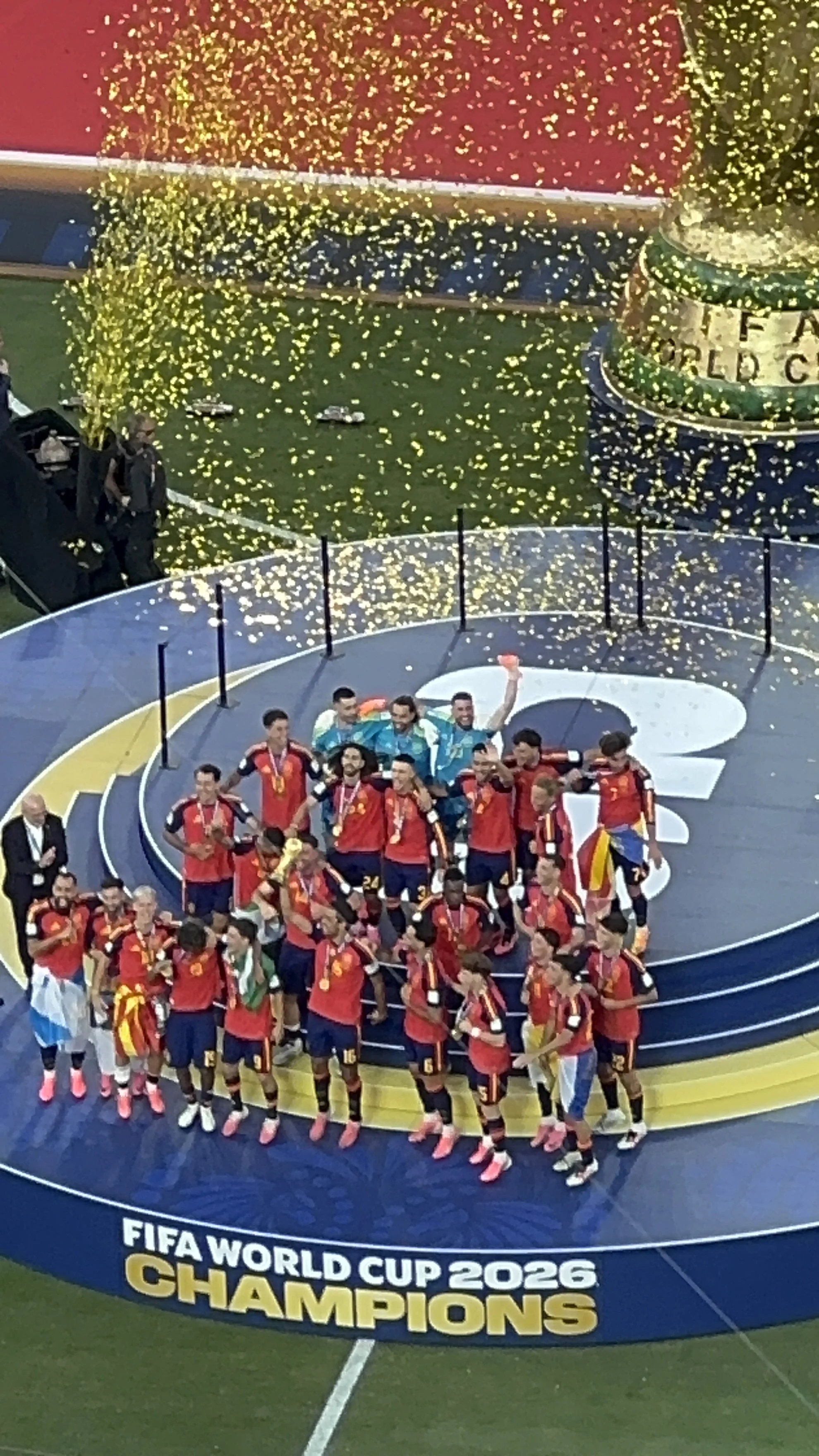
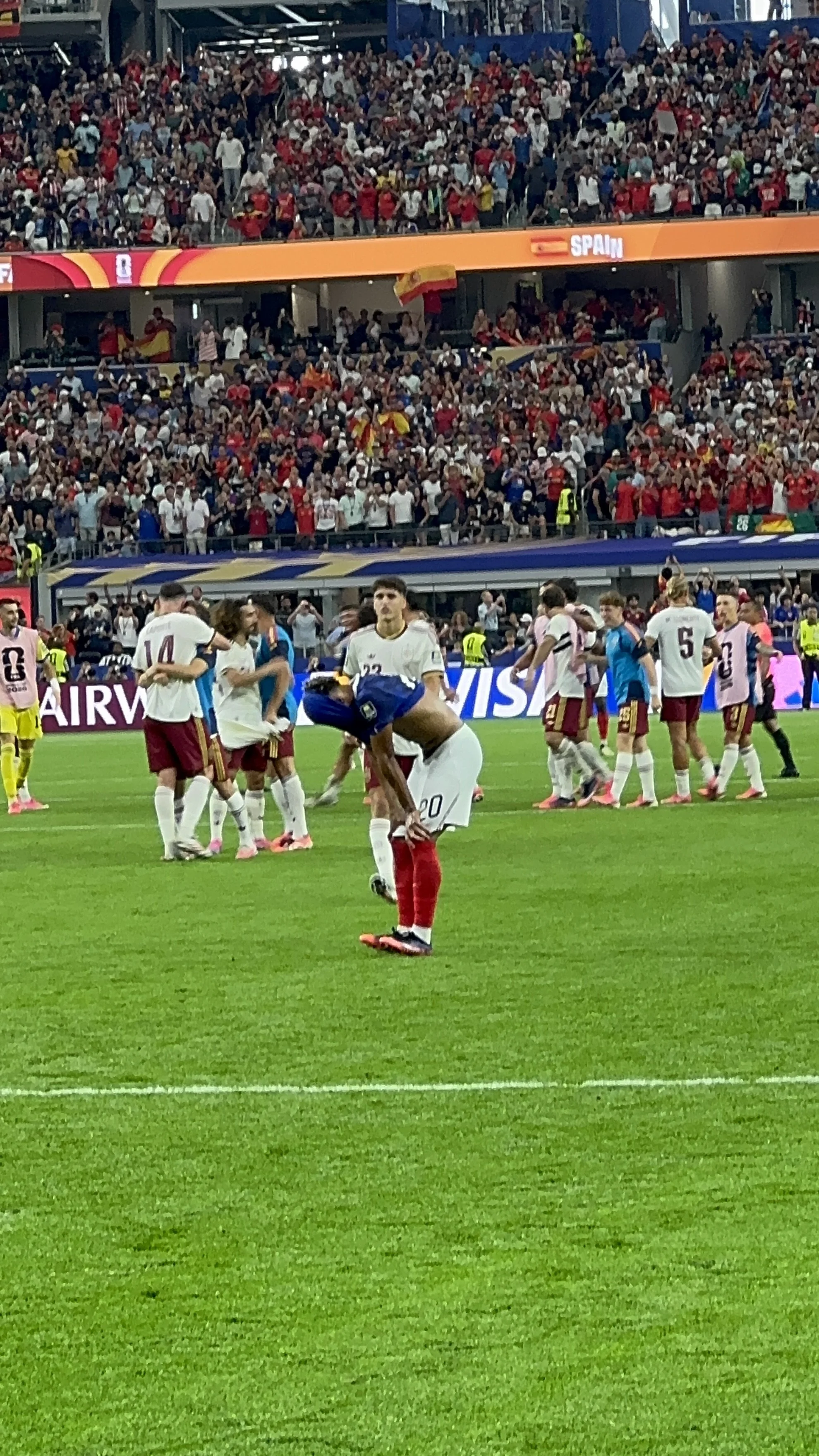
Mbappé and France kept growing, reaching the 2022 World Cup final and the 2026 World Cup semi-final. Mbappé himself became the leading player at Real Madrid and one of the best players in the world.
At club level, it took time to get going. Qatar’s investment in PSG was not so successful in the early years. The club signed huge names and dominated the French league to the point of crushing the competition, but in Europe it did not work. That changed when they began investing in local youngsters from across France and Paris specifically. After Mbappé left for Real Madrid, Ousmane Dembélé, Désiré Doué, Bradley Barcola and Warren Zaïre-Emery, all of the same profile, are among the names responsible for Paris Saint-Germain winning the Champions League two years in a row. They are the best team in Europe and probably the world, and look on course for another win in the cup with the big ears.
From the suburbs to the Champions League, in every sense. And yet all that glitters is not the Champions League trophy. It can also be a watch looted from a shop in central Paris.
Integration Through Football? Really?
So how does this dissonance arise between the share of the children of immigrants, residents of the suburbs, in French football’s success and their share in the harsh protests seen in Paris?
About thirty-eight percent of all the immigrants who arrived in France in the last century settled in the area of the capital, in what became “the other Paris.” The Paris of the banlieues, the suburbs.
In France, “banlieues” has more than one meaning. The first is suburbs: residential areas close to the city but outside it, with detached houses, lovely gardens, good cars and a pleasant atmosphere.
But when the French say “banlieues,” they do not mean suburbs only in that classic sense of the word, but in a more loaded one. In this sense, banlieues means housing blocks: projects built by income level, which is usually low. Some call them poverty traps, or “immigrant ghettos.”
Île-de-France, the Paris region, home to 18.2% of France’s entire population, consists of eight departments: one for the city itself and about seven around it. Within each department are hundreds of towns and small cities, close to 600 municipal councils in all, and tens, if not hundreds, of thousands of neighborhoods. Over the years, many of these neighborhoods have become places plagued by crime, unemployment and poverty, and by and large have existed in a state of ongoing crisis. The suburbs lag behind the rest of France, and especially behind Paris proper, in every field, by tens of percentage points. As of early 2025, about 38% of banlieue residents live below the poverty line, compared with 16% in the rest of France; 25% of banlieue residents are unemployed, compared with under 9% in the rest of the country; and among those under 25 the figure worsens, with 45% of young people in the suburbs unemployed, 20 points more than young French people who do not live in the suburbs.
Between three and five million people live in these suburbs, suffering social and economic discrimination. In effect, the banlieues are like a parallel country, a country of people with fewer opportunities. A country within a country. It is no accident that many of the young people in these suburbs are the ones who have taken to the streets of the capital in the recent protests.
Despite all the difficulties, the banlieues systematically produce one product: footballers. Talented ones, truly.
The phenomenon owes much to the French football system, which identifies talent at young ages and, through regional councils, schools and small local clubs, allows a player’s development to be followed from a very young age. In addition, most children in the suburbs have no alternative to football. The children see the stars who came from backgrounds like their own, and so football becomes an almost exclusive refuge, and certainly the most coveted one.
The best example is Les Ulis, a rather isolated suburb southwest of Paris. It does not even have an RER station, the rail network that runs through the suburbs and into the city center. Three players you may know came out of this suburb: Thierry Henry, Patrice Evra and Anthony Martial.
You could say a fascinating melting pot has formed in the banlieues. Young people of African, Arab, Caribbean and other origins, who arrive with athletic attributes different from those found in France, live a hard daily reality that steers them toward football or toward less legitimate pursuits, while the country’s network of football clubs and academies offers them an escape. That, and the ball, on the pitch and on the street, every day, from morning to night. This, many people believe, is what makes Paris the number one reservoir of football talent in the world. “Paris is already the biggest talent pool in the world after São Paulo,” said Arsène Wenger in 2010. In 2026, it looks as if Paris is close to overtaking even the Brazilian metropolis, which is a talent-producing factory.
The role model of the banlieue is Kylian Mbappé. His mother is Algerian, his father Cameroonian, and he grew up in Bondy, a rather neglected Paris suburb, playing for the municipal youth team. From there he moved to the Clairefontaine academy, then to Monaco, and then became the second most expensive player in the history of the game when Paris Saint-Germain bought him for 180 million dollars. In 2018 he led France to the World Cup title at 18, and today he is Real Madrid’s biggest star and the player who produced the best individual performance in World Cup history in 2026.
It is important to understand that a success story like Mbappé’s is not representative at all. In a study by two Danish researchers, Sine Agergaard and Jan Kahr Sørensen, in Denmark in 2009, they found that half of all young people aged 10 to 16 in the suburbs of Danish cities were children of immigrants and minorities. In a survey of suburban neighborhoods in Danish cities, 93.6% of immigrant children and 89.5% of children from other ethnic backgrounds took part in sports activities regularly, compared with 87.4% of “native” Danish children from the same area.
The Danish researchers’ study shows that despite the big dreams and high participation rates at young ages, very few of those young people from immigrant families become professional footballers. Less than one percent. According to studies in France and in Paris, footballers from the suburbs make up almost a quarter of every French national team, but out of the hundreds of thousands of young people who play, those are very small numbers.
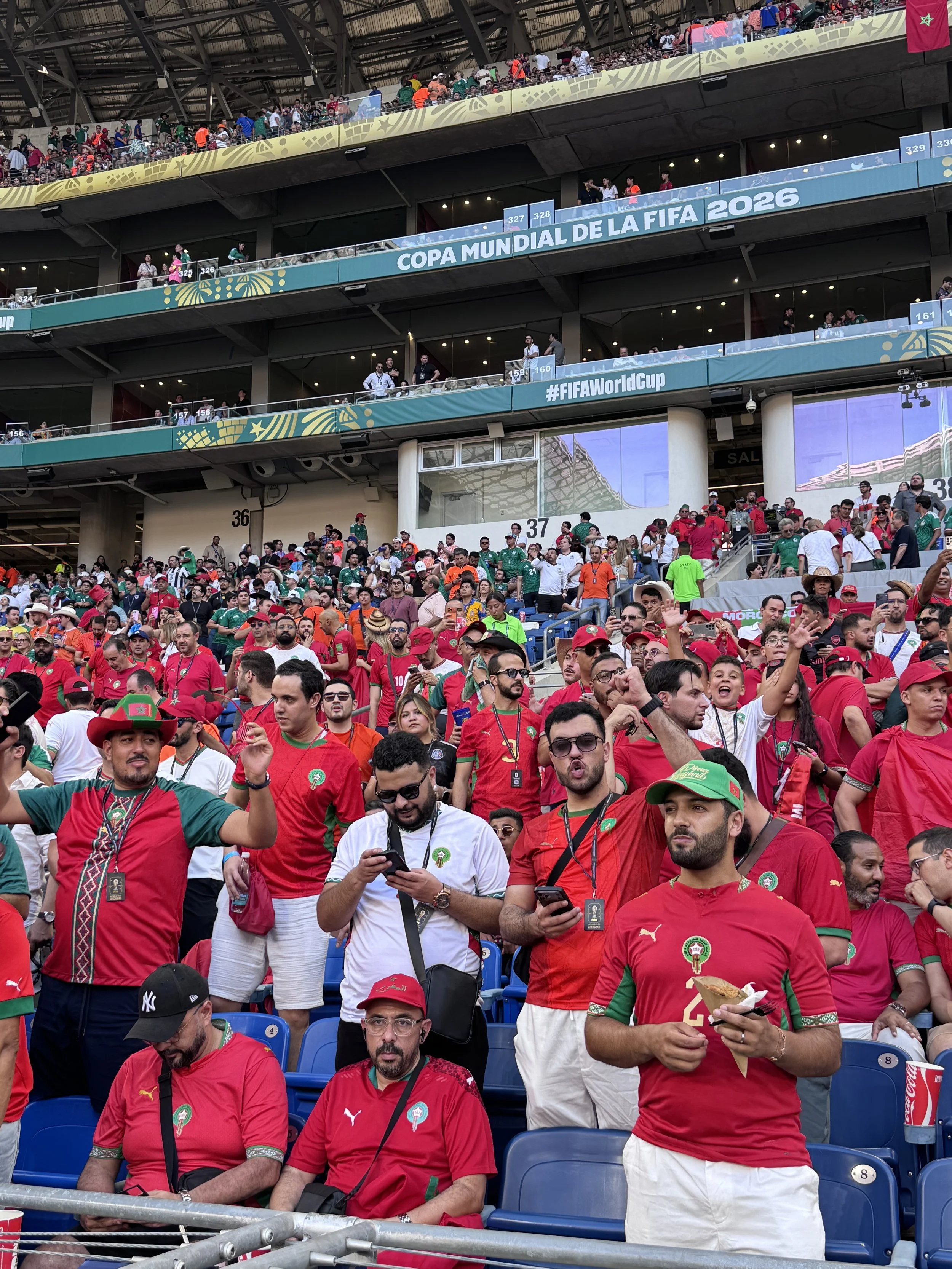
This creates a situation in which youth from the suburbs look with admiration at the chosen few who did manage to escape the reality into which they were born in the suburbs, want to be and live like them, and build up frustration when it doesn’t happen. That is why you often see the celebrations and the riots of fans of Algeria, Morocco, Tunisia and even Senegal when their national teams win the Africa Cup of Nations or win a match at the World Cup, especially against France. And also when they lose. These young people feel far more culturally connected to the countries of origin of their parents and themselves, and they are frustrated. And when there is frustration, people go out into the streets.
The Perfect Dissonance of Reality
As expected in protests on such a large scale, there are voices opposing the protest, and some even argue that Qatari elements have a hand in it, particularly given the combination of struggles expressed in the demonstrations, with the flags of North African countries and calls to free Palestine. So far, no evidence has been published to prove such involvement in the protests.
Qatar is one of the biggest investors in France, in projects ranging from culture and sport to energy, real estate and more. Nasser Al-Khelaifi, who heads PSG, is the face of Qatari influence in France, not only in sport but also culturally and politically. Al-Khelaifi, for those who have forgotten, took part in talks on a hostage deal held in 2024 at the Élysée Palace.
Has the Qatari influence that began in football through Paris Saint-Germain now moved through politicians and reached the Parisian street and the suburbs? Possibly, but that remains to be examined.
So Emmanuel Petit, one of the heroes of France’s 1998 World Cup win, is angry, but it is impossible to ignore the mirror of dissonance that the suburbs of Paris and France’s big cities hold up to French society. On one hand, they produce the raw material from which France became one of the world’s leading football nations. On the other, the suburbs are also the breeding ground of the largest wave of protests in France this century, and it is hard to see when, how or whether it will end soon. That is France’s trade-off today.
France needs an approach of inclusion, given its colonial history and centuries of resource exploitation, the low investment in immigrant populations and their descendants, and the sporting achievements these groups bring it.
On one hand, France as a country enjoys a sporting renaissance, particularly in football, thanks in no small part to the children of immigrants and French people of African and Muslim-country origin. Together with their encounter with the French establishment, the education system, the sports ministry, the football federation and local authorities, one of the world’s leading talent pools was created.
On the other hand, this does not seem to truly help narrow gaps, create a real and widespread sense of belonging, or bring full integration into society for these classes, and it comes at a price for society at large, part of which is expressed in the protests we are seeing.
So France today is in a situation where, on one hand, its national team, footballers and athletes come from society’s weaker strata and become cultural heroes, while at the same time the masses in those very same strata take to the streets to protest, at times to loot and vandalize, creating huge class and racial tension that, in a sense, tells the story of France’s identity crisis as of 2026 in the most striking way there is.
A version of this article was first published in Haaretz.





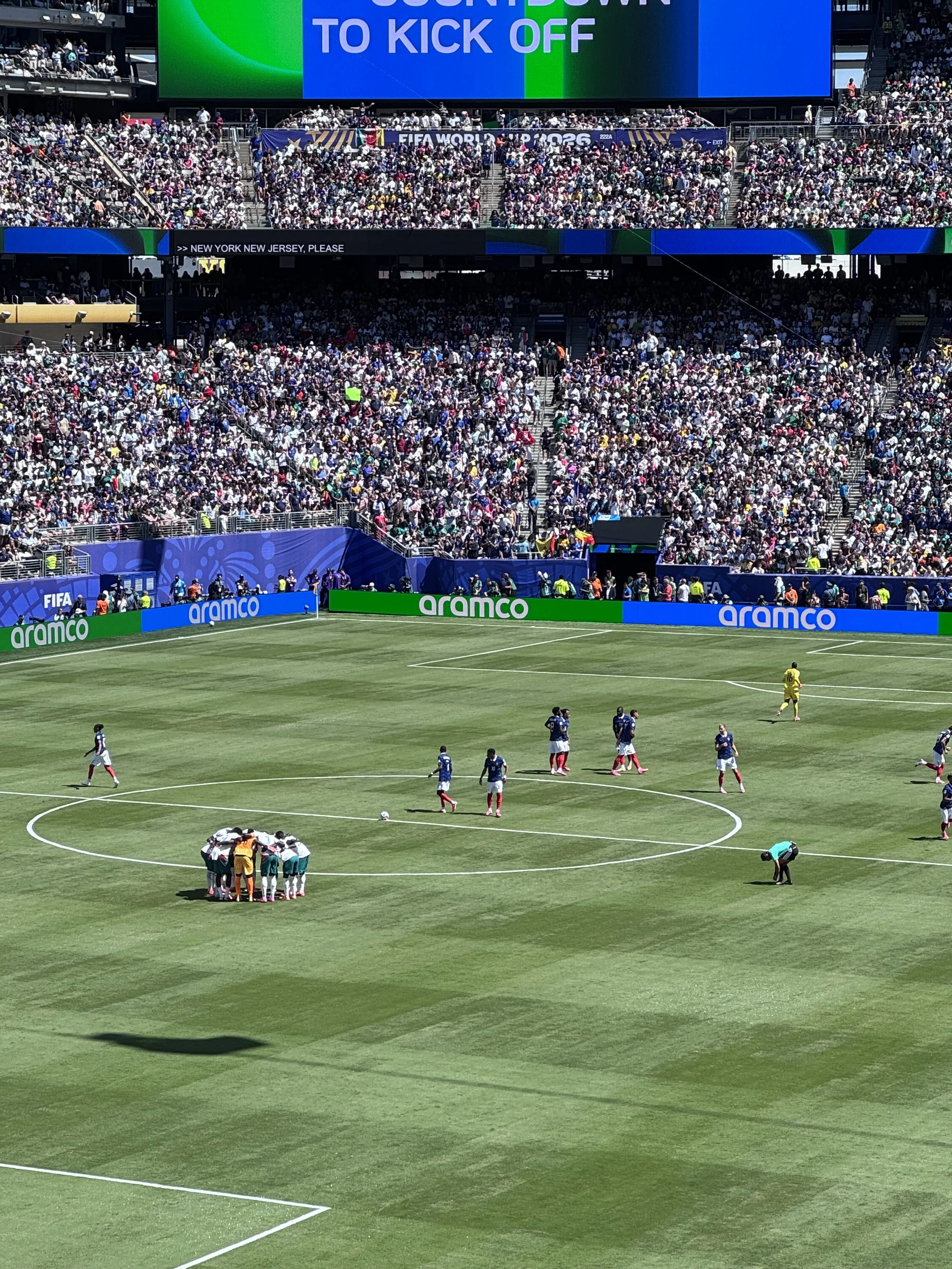
As protests sweep France, the banlieues that produce the football stars also fuel the unrest. This is the paradox of French society now.