
About a week and a half ago, the start of a match involving Al-Nassr, Cristiano Ronaldo’s Saudi club, in the AFC Champions League in Riyadh was delayed by an hour because of warnings of missile fire and drone incursions from the direction of Yemen.
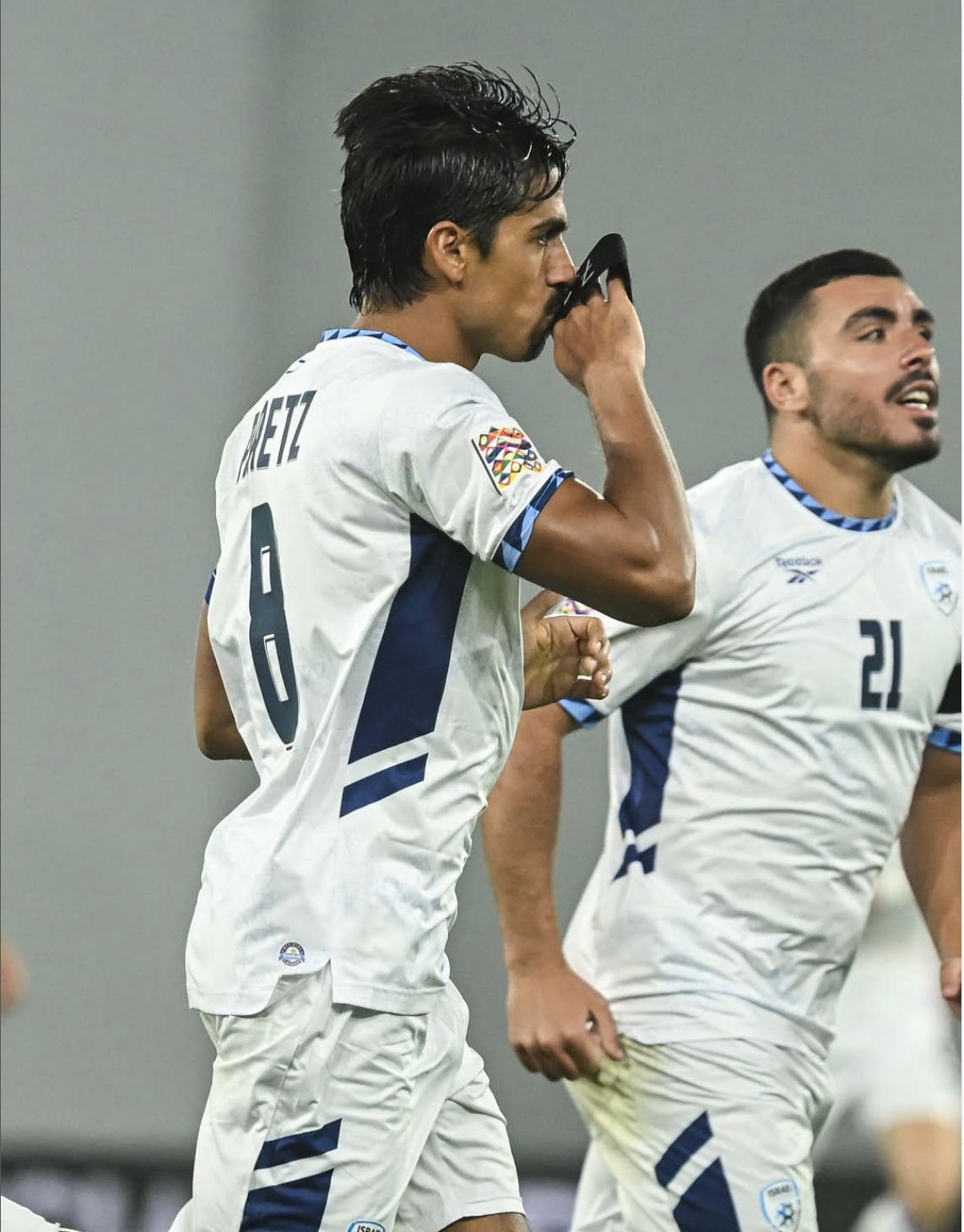
The Houthis have been attacking Saudi Arabia for weeks. In the Al-Nassr dressing room, Cristiano Ronaldo waited with his teammates for developments and, while he was at it, made a gesture of solidarity with the country where he plays. Pictures from the dressing room show Ronaldo kissing the Saudi crossed-swords emblem on the Al-Nassr shirt, a gesture that warmed the hearts of the Saudi public and, of course, of his employers. Al-Nassr eventually won the match, and Ronaldo again wrapped himself in the Saudi flag and saluted the local crowd at King Saud University Stadium in the Saudi capital.
“I’m Portuguese, but my heart belongs to Saudi Arabia,” he wrote in an Instagram post that evening.
The tension between the Houthis in Yemen and Saudi Arabia continues to make headlines and shape the agenda in the Middle East, with effects that could be dramatic for the 2027 Asian Cup, scheduled to take place in Saudi Arabia this coming January.
Over the past month and a half, the Yemeni Shiite militia has been attacking Saudi Arabia, with missiles and drones hitting oil facilities, ports, airports, military bases, strategic sites and key infrastructure, causing casualties and property damage. The most dramatic incident came on October 10, when a strike on King Khalid International Airport in Riyadh killed 13 people and wounded hundreds more.
The United States, Britain and other countries are rallying to the Saudis’ side, some by sending fighter and interceptor aircraft and others through operational coordination. The United Arab Emirates agreed to renew its involvement in the war against the Houthis in exchange for air cover from the Saudis. Egypt is also on alert to send forces to Saudi Arabia, and the Americans have already issued an unusual warning to their citizens in the region. As things look, it is no longer far-fetched that Israel and Iran could be drawn into the fray or, alternatively, widen the circle of fire.
In short, about two months before the Asian Cup kicks off in Saudi Arabia, the Gulf has the atmosphere of a real war. It is already seeping into football in the region, and it is already shaking the Saudis’ preparations for the tournament in the near term and for the 2034 World Cup in the longer term.
A series of events planned for the end of the month and the start of November have already been cancelled: FIFA’s e-Games World Cup, the Riyadh international golf tournament and the road cycling world championships. The “Six Kings Slam” tennis tournament has been postponed from October to December.
In the current situation, there is a real danger that the Asian Cup will not take place in Saudi Arabia in January 2027 as planned. The tournament, due to be held in Jeddah, Riyadh and Khobar between January 7 and February 5, is an important milestone in the Saudis’ preparations to host the 2034 World Cup, with FIFA representatives and giant corporations set to circulate among the stadiums.
In the past two weeks, speculation and rumours have spread about a postponement of the tournament to January 2028 because of the Houthi attacks, as more and more federations that need to send teams to the tournament fear a further flare-up. The players’ union and the football association in South Korea, among the most powerful bodies in Asian football, have already said they would rather postpone the tournament than put players at risk by flying over Saudi airspace between venues. The Japanese federation, another dominant body in East Asia, was among the first to cancel its delegation’s trip to Saudi Arabia for the e-Games. That does not necessarily mean they will act the same way over the Asian Cup, but it certainly shows they have no problem acting unilaterally when the security situation in Saudi Arabia is tense.
The organisers are trying to project business as usual. The tournament’s organising committee has announced that preparations are continuing as normal, and the president of the Asian Football Confederation, Sheikh Salman bin Ibrahim Al Khalifa of Bahrain, spoke on the subject. “We can wait and see what happens until the end of November. We can postpone to January 2028 and make the adjustments, but we are following events, and in this region everything can change by then,” he said at the confederation’s presidents’ and general secretaries’ conference in Tokyo earlier this week.
The fact that the AFC president himself mentions the possibility of a postponement says a lot. But in the meantime, in the corridors of the continent’s largest confederation, there are those pushing for a postponement and perhaps something even more extreme.
Sources on the confederation’s executive committee tell BabaGol that some of the delegates, including officials from the Iranian federation, are “promoting the possibility of a one-year postponement,” in effect pushing the tournament to January 2028. From Iran’s perspective, the Saudis are bitter rivals on the oil market, in the waters of the Gulf, on the football pitch and, as it turns out, in the confederation’s corridors, and such a delay would put a spoke in the wheels of Saudi efforts and preparations for the event that really matters: the 2034 World Cup.
The same sources add that the Iranians are not the only ones trying to change the original plan for the upcoming Asian Cup. Influential Qatari figures in the AFC have also proposed Qatar and its World Cup-grade football infrastructure as an alternative venue for holding the tournament on its original dates.
For now, neither option is under discussion, because the AFC and the Saudis want to project business as usual. To signal to any doubters that they are calm and confident the tournament will go ahead as planned, the Saudis have already released the full match and stadium schedule. “All preparations at the organizational and operational level are continuing as usual, including renovations and infrastructure for fan services,” read a press release. “We are committed to delivering the tournament at the highest level and, at the same time, are monitoring developments to ensure that the conditions for hosting a successful tournament still exist.” This statement leaves the Saudis with every option in the event of further escalation with the Houthis. On the one hand, they are moving forward; on the other, they are ready for change.
The opening match is due to be played at King Fahd Stadium in Riyadh, which is still being renovated ahead of the event, and will pit hosts Saudi Arabia against none other than Palestine, in front of 72,000 spectators.
At the previous Asian Cup, held in Qatar in January 2024, the Qatari organisers devoted the entire opening ceremony to the Palestinians, to Gaza and to the war. It will be interesting to see what the Saudis do, against the backdrop of their covert and overt rivalry with the Qataris and the fact that the Palestinians are playing in the first match.
Another team due to take part in the tournament is Yemen. Not the Houthi one, of course, but the team representing the leadership based in Aden and backed by the Saudis. Even so, the symbolism of a Yemeni team playing in Saudi Arabia at the Asian Cup against the backdrop of a war between the two countries, in a group with South Korea, Vietnam and the UAE, which is also involved in the conflict as noted, is the stuff of legends in Middle Eastern football.
All of these scenarios should be taken with a grain of salt. They will be relevant only if the tournament goes ahead as planned. For now, there appear to be several possibilities: sticking to the schedule, postponement or relocation. At the same time, there are those pulling the tournament in each direction and even trying to promote alternatives. It may still be far off, but if the Asian Cup is indeed postponed or, God forbid, moved to another country, it would hurt the Saudis’ timetable and preparations for the flagship project of Crown Prince Mohammed bin Salman’s Vision 2030: the 2034 World Cup. In the Middle East, in Asia and around the world, people are watching with concern or with anticipation, depending on which side of the geopolitical map they sit on.
This article has been published first in Haaretz.





As protests sweep France, the banlieues that produce the football stars also fuel the unrest. This is the paradox of French society now.