
“Much to our regret, a decision has been made not to allow the team’s fans to attend the away match against Alkmaar. This instruction was issued by the local authorities in the Netherlands.”
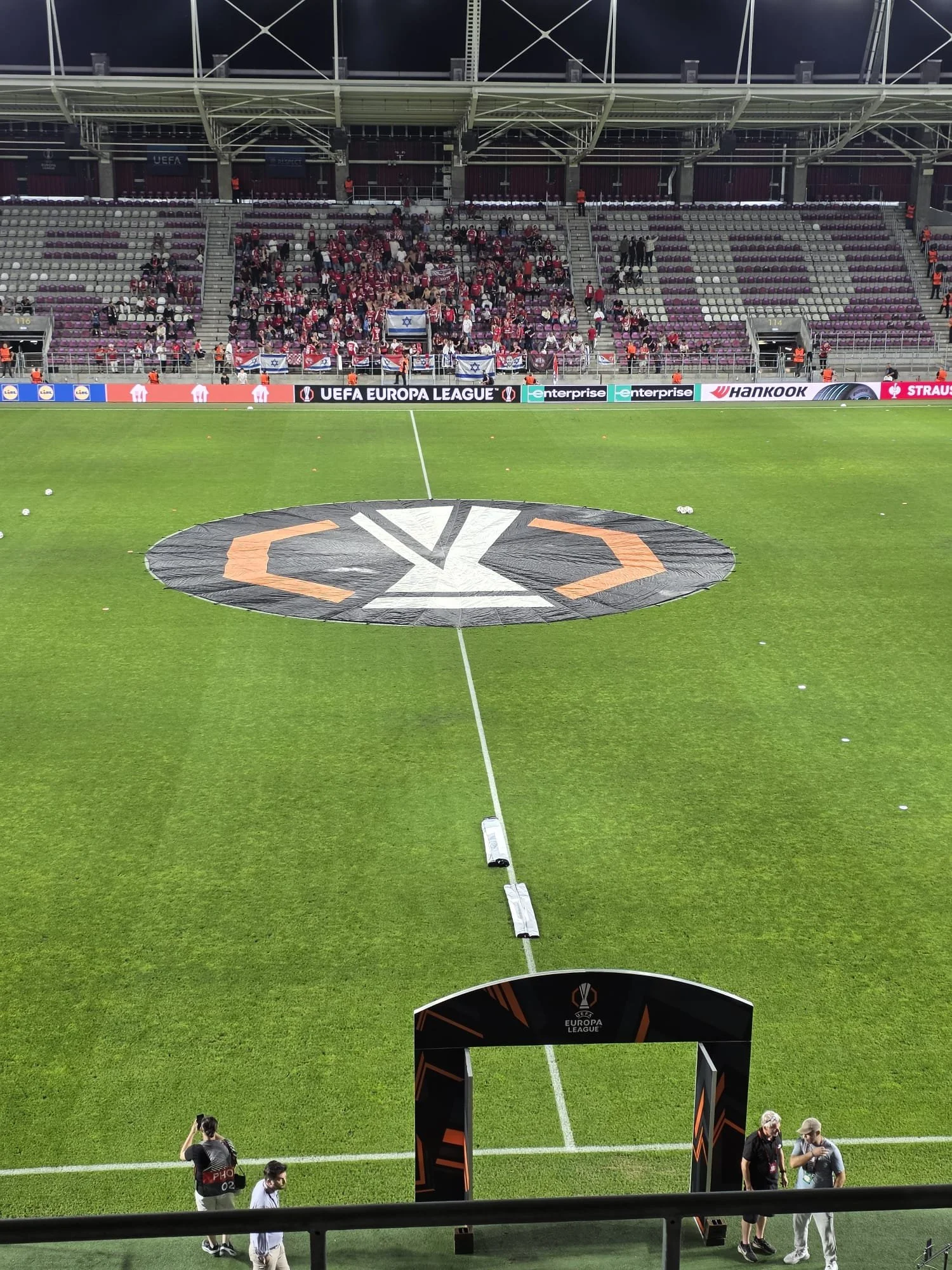
Hapoel Be’er Sheva published this statement last Thursday, ahead of the club’s second-round Europa League match at AZ Alkmaar.
Three years after October 7, the story seems to be slipping under the radar of Israel’s intense pre-election news cycle.
Still, it is hard to ignore what has been happening in the Netherlands in recent years. This is a country with a rich Jewish history and folklore, particularly in football, and with strong ties to Israel. Yet it is now unwilling to take responsibility for a few hundred Israelis coming to watch a match.
The Road to the Stadium Runs Through the Jewish Market
It wasn’t always like this. One of the great symbols of the Jewish and Israeli connection to Dutch football is the country’s biggest club, Ajax Amsterdam.
Ajax was founded in 1900, in an Amsterdam where football loyalties were divided by neighborhood. “Ajax’s home ground, even before De Meer, was called the Houten Stadion (the Wooden Stadium), and it sat in the east of the city, right next to the Jewish quarter,” explains Assaf Cohen, a Sport1 analyst and an expert on Dutch football. “Back then, matches in the Netherlands were played on Sundays, and visiting teams arriving in Amsterdam would come to Central Station and then walk through the Jewish quarter to reach Ajax’s ground. On a Sunday, all of Amsterdam is closed, naturally, and only the Jewish market is open. So the opposing players and fans would say, ‘We’re going to play at the Jews’.”
Before the Second World War, for many years, the Jews who lived in Amsterdam called it “the Jerusalem of the West,” much as Jewish communities in Spain and North Africa did for centuries, using the name for places where life was good for Jews.
“Amsterdam always welcomed foreigners, and Jews,” Cohen notes. “Especially after the expulsion from Spain and Portugal at the end of the fifteenth century, it was one of the only places that told them, ‘Please, come. Here everyone is equal.’” Baruch Spinoza, one of the most important Jewish philosophers, was born, lived and worked in Amsterdam. Locals call the city “Mokum,” Yiddish for “place,” and hundreds of other Yiddish words have entered the local slang.
That is partly how Ajax and its fans acquired one of their best-known nicknames, one still identified with the club today: “Super Juden,” the Jews.
There are various reasons for the bond between Amsterdam’s Jews and Ajax, and one stands out: in the early twentieth century, the Netherlands was a fairly devout Protestant Christian country. “At least until the war, Dutch society was very, very Calvinist and conservative,” Cohen explains. “You weren’t allowed to enjoy yourself, and you weren’t allowed to show outwardly that you were enjoying yourself. Now, Ajax is enjoyment. Football is enjoyment. So who went to football? The Jews went.”
Jewish players also turned out for Ajax over the years. “Ajax is not a Jewish club, but it is a club with Jews, because they were part of the city, and of course there were also players among them. Sjaak Swart, ‘Mister Ajax,’ the man with the most appearances for the team, is a Jew whose family lives in Israel today.” Names such as Eddy Hamel and Bennie Muller also starred in Ajax colors, and at certain periods the club had Jewish sponsors, such as the Van Praag family.
Ajax’s connection to Jewish identity in Amsterdam, from then until now, also includes difficult stories from the Second World War, when Jews were stripped of club membership under the racial laws the Nazi occupiers imposed on the Dutch authorities.
Even so, history cannot be rewritten. The Netherlands was among the first countries to offer Israel assistance during the Yom Kippur War, and today you can still find Israeli players in Dutch football. Oscar Gloukh is Ajax’s number 10, Stav Lemkin plays for Twente, and last season Eli Dasa was an important player at NEC Nijmegen.
So what is happening in the Netherlands that, despite all this history, AZ Alkmaar, the local authorities and even UEFA have decided not to allow Israeli fans to travel and support their team in a Europa League match?
The Social Climate and Dutch Domestic Politics
Official and diplomatic sources in Israel and the Netherlands confirm that relations between the two countries have worsened over the past year. The Netherlands is now governed by a minority government built on three parties from the country’s political left, center and soft right. According to the polls, the left-wing Pro party will be the largest party in the coalition, and to avoid losing voters, the government is now trying to move somewhat in line with its tune.
The mood in the Netherlands, especially after three years of war in Gaza and Lebanon, is that Israel is a state that stands in opposition to international law. At the same time, the country has seen a rise in antisemitic incidents over the past two years, along with demonstrations in support of Hamas, including last weekend around the events marking October 7. But it does not stop at street protests. The Netherlands has a public academic boycott of Israeli institutions. More recently, it has also imposed a ban on trade in goods from, and with businesses operating in, Judea and Samaria, East Jerusalem and the Golan Heights. Selling Israeli products from these areas can carry a prison sentence of up to six years. For now, this is the most extreme position in the European Union on trade with Israel, and the Netherlands is the first country to take it.
In addition, Amsterdam and the Netherlands have a Muslim population, mainly of Moroccan and Turkish origin, which is highly prominent at any event connected to Israel.
This social and political climate is tied to the events in Amsterdam in November 2024, when Maccabi Tel Aviv arrived in the city for a Europa League match against Ajax. As will be remembered, a march by Maccabi Tel Aviv fans before the game, and the violence by local residents against Israeli fans afterwards, led to two very tense days in the city and a long police and legal saga.
Alkmaar’s mayor, Anja Schouten, claimed that the city council and the local police “cannot guarantee the safety of the fans who remain in the city.” The ban was publicly encouraged by Amsterdam’s mayor, Femke Halsema, who knows that fans would want to stay in Amsterdam and who, for her part, wants to avoid at all costs a repeat of what happened in November 2024.
In response to an inquiry from BabaGol, AZ Alkmaar said: “The municipality, the police and the public prosecutor decided that away fans would not be allowed at the match. AZ respects this decision and is complying with the guidelines of the relevant authorities. We understand that this decision provokes different reactions and opinions in society, and we respect that people hold different views on the matter. Our responsibility is to organize a safe and responsible match within the framework set by UEFA and the competent authorities.”
“It’s a completely technical matter,” argues Erik-Jan Brinkman, a journalist at the Dutch outlet NH Nieuws. “It’s a shame, and I understand the disappointment of the Hapoel [Be’er Sheva] fans, but the mayor received the information and the authorities said what they were capable of doing. So that’s the situation.”
Brinkman goes on to explain something that is less familiar to Israelis. “Obviously, there is a connection to the fact that an Israeli crowd and an Israeli team bring pro- and anti-Israel protests with them. But this is a more general practice than the Israeli issue. You have to understand that Alkmaar’s fans have a problem with away supporters. It’s nothing new. It happened in the past with West Ham fans who came here, and with fans of teams from Poland, in cases that involved serious violence, and the local police are careful with them, as they are with extremist fans all over the Netherlands,” he tells BabaGol in a conversation from the Netherlands. “For years, Ajax fans haven’t gone to Rotterdam, and vice versa, and there are other fixtures in the Netherlands where the local police prefer to keep away fans from attending.”
Asked whether the Netherlands has changed its attitude toward Israel or toward Jews, Brinkman answers: “You have to separate the safety issue from what is happening in Dutch society at large. After October 7, there was a great deal of identification with Israel, but as the war went on, people began to question its conduct. It’s true that the attitude toward Israel and Israeli teams has become more negative during this period, but that doesn’t necessarily say anything about the attitude toward every Israeli in the Netherlands. The fans not coming is a safety and preventive matter, based on past events and the current political climate. I hope that in the future things calm down and that Israeli fans, and fans of any team, will be able to come here and everywhere to support their side.”
Israeli Fans? Not All of Them, but as a Group - ‘Persona Non Grata’
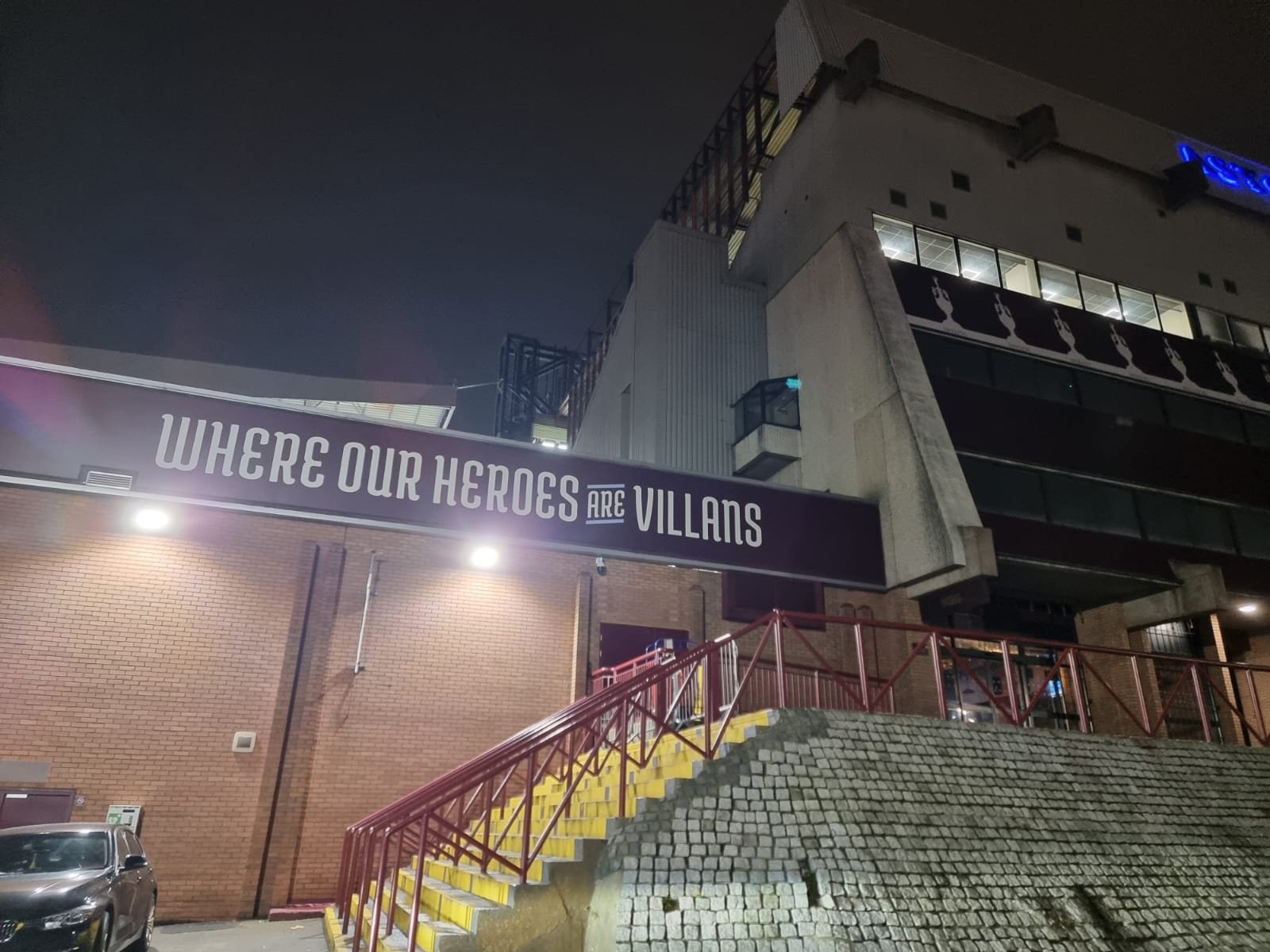
Brinkman’s insights put the notion that Israeli fans are pariahs in European football into some perspective, but it is hard to argue with the broader picture today. Belgium moved a match off its territory, and so did Ireland. And in Birmingham last year, when Maccabi Tel Aviv traveled to play Aston Villa, police decided to bar Maccabi fans from attending on the basis of a report generated by artificial intelligence.
So even if the average Dutchman is probably indifferent to a visit from Be’er Sheva, the problem with this case is that, in effect, any European mayor can say that he cannot host Israeli fans, and UEFA, the football association and the club can do nothing about it.
Be’er Sheva approached the relevant bodies several times, including UEFA and the local authorities in the Netherlands, in an attempt to change the decision, without success.
The Israel Football Association also tried to deal with the situation and approached all the relevant parties. But UEFA’s regulations contain a clause under which, if the local authority presents data showing it lacks the ability to secure the visiting team’s fans, the home team may refuse to host away fans, though it is not obliged to prevent local fans from attending the stadium. In that sense, UEFA has no influence over the local authority.
The ban on Be’er Sheva fans traveling to Alkmaar is directly linked to three years of war and to the political and social atmosphere in the Netherlands, which is currently negative toward Israel. In that sense, the chain of events set off by Dutch domestic politics, which produced the ban on Be’er Sheva fans, does signal a change in the relationship between the Netherlands and its football, and Israel.
“There is a change, of course,” Cohen sums up. “But we also shouldn’t get carried away. It’s not that Jews and Israelis are unwelcome in the Netherlands. Jews are a very significant part of Dutch history, and that is something that can’t be erased.”
That is true, but it doesn’t contradict the fact that, right now, when it comes to football fans, Israel is seen as a pariah in European football. The default position of many countries is not to engage with the issue of Israeli fans at all and to avoid contact as far as possible. Whether the cause is the war in Gaza, the Amsterdam events of 2024, or domestic political matters in the Netherlands, England and Ireland, the result is the same. Fans of Israeli sports teams who arrive as one group, with Israeli flags and symbols, are at this moment persona non grata in too many places in European football.
This article was first published in Haaretz Hebrew edition.


















Ivory Coast edged Nigeria 3-2 in the final of a solidarity tournament among eight African teams, organised by Sudanese refugees in Tel Aviv.