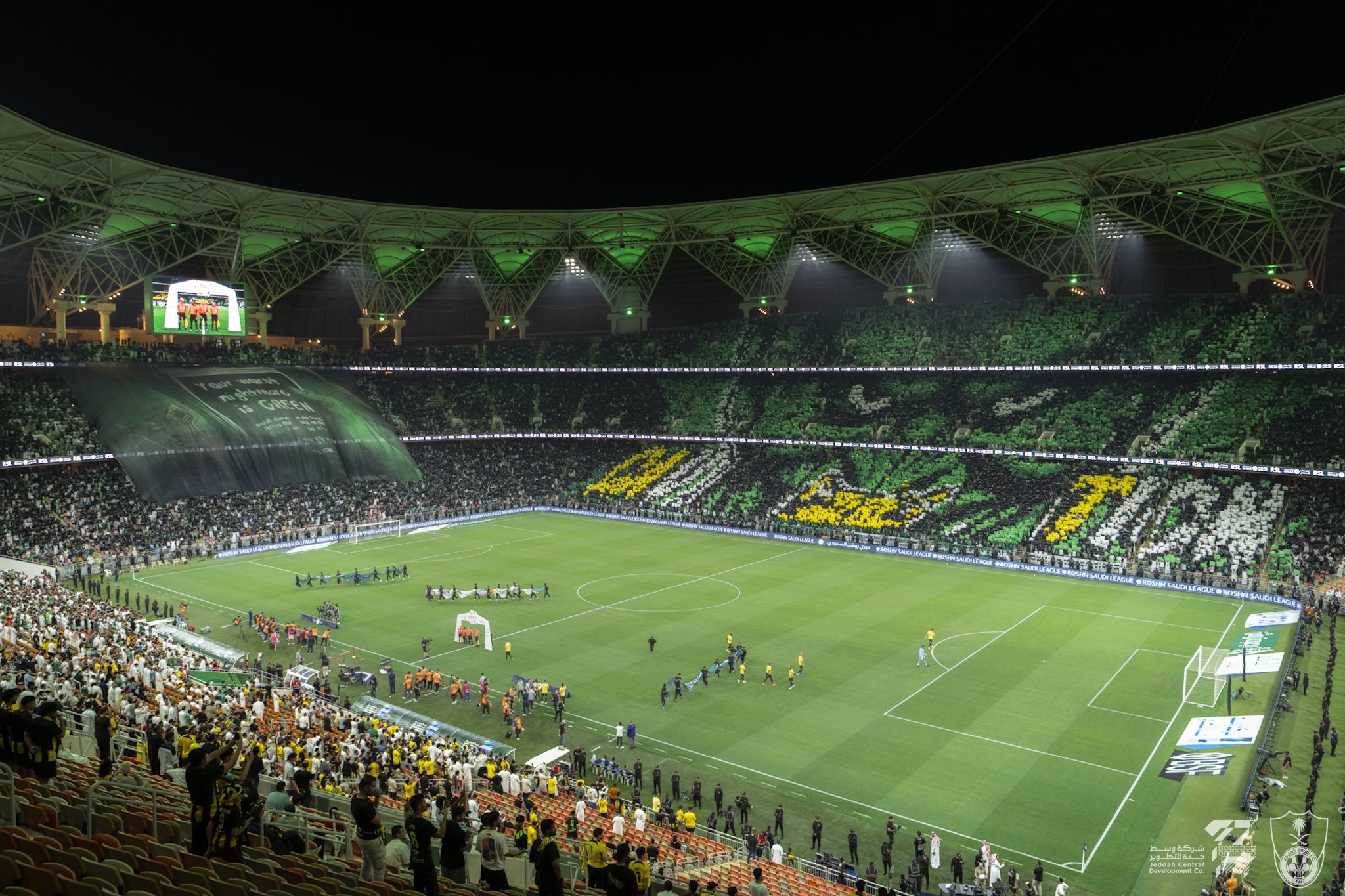
The 2027 Asian Cup, which was due to open in Saudi Arabia in January 2027, has been officially postponed to December 2027 because of the clashes between Saudi Arabia and the Houthis.
An official statement from the tournament’s organising committee, published on Tuesday morning, read: “The Asian Football Confederation, together with the Saudi Arabia 2027 AFC Asian Cup Local Organising Committee and the Saudi Arabian Football Federation, confirm that the upcoming edition of Asia’s premier national team tournament, originally scheduled to be played between January 7 and February 5, 2027, has been moved to December 23, 2027 through January 21, 2028.”
As noted, in recent weeks the tension and clashes between Saudi Arabia and the Houthis in Yemen have escalated. Beyond the kingdom’s oil facilities and factories, the Yemeni militia is now also attacking civilian sites, airports, ports and more. The events have led to several postponements and cancellations of football matches in Saudi Arabia over the past three weeks, in both the domestic league and the AFC Champions League.
In recent days, several checks were made on possible postponement dates. The Saudi organisers and the Asian confederation did not want to move the tournament, since they would now have to adjust the continental calendar, the World Cup qualifiers and club competitions, but there was no way around it.
The security assessments covered the Houthi front in Yemen, the clashes and fire from pro-Iranian militias in Iraq, and a growing chance of a war between the United States and Israel on one side and Iran on the other within the coming month. Given all this, it was decided not to take risks, as more and more federations whose teams are due to take part in the tournament expressed unease about the situation and asked not to fly to the region.
Importantly, in the past two weeks there were attempts by Iranian figures in Asian football to push for a postponement of the tournament, and it now seems that reality left no other choice. In addition, a source at the Asian confederation confirmed to BabaGol that Qatar had offered itself as a replacement host, but pressure from several Saudi figures, including large state-owned companies that sponsor the confederation and its competitions, dug in. They demanded that, if there was any change to the plans, it be only to the dates and not to the tournament’s location.
“This is the most responsible decision given what we know right now,” a source at the Asian confederation tells BabaGol. “The information that reached us showed that the conditions for continuing preparations in the original format and pace had become complicated. That is the regional and global reality at the moment, and we hope the situation will improve,” the source added.
“The organizing committee continues preparations in close coordination with the Asian confederation and all relevant stakeholders to deliver an unforgettable edition of the tournament, one that reflects the stature of Saudi Arabia and the aspirations of football fans from across Asia,” the short statement announcing the postponement concluded.
The winds of war are blowing again in the Middle East, and the shift of the 2027 Asian Cup by eleven months is the most significant event, in terms of its effect, on the world of sport in the region. All eyes now turn to Washington, Tel Aviv and Tehran to see what other changes, postponements and cancellations of events may occur in the coming weeks.
This article was first published in Haaretz.
The Saudi-hosted Asian Cup is postponed to December 2027 amid the Houthi conflict. All the details behind the decision.
Houthi attacks on Saudi Arabia put the January 2027 Asian Cup in doubt, with a delay to 2028 or a move to Qatar discussed behind the scenes.
Three years after Lior Asulin was murdered on October 7, Bnei Sakhnin hold a ceremony and game for the hero of their 2004 State Cup win. Why now?
Hapoel Be’er Sheva fans were barred from AZ Alkmaar. Why does the country with deep Jewish football roots now refuse to host Israeli supporters?
Cairo’s derby drew a record number of crowd for the first time in years, as Al Ahly and Zamalek fans united in October War banners and Israel chants.
Manchester City’s guilty verdict is spilling into geopolitics, as Abu Dhabi hints at curbing UAE investment in Britain over the club’s fate.
Israel's national team finished bottom of its Nations League group, as politically charged clashes versus Ireland overshadowed the campaign.
Israel opens a homeless Nations League campaign against Austria, Kosovo, and Ireland, with the Gaza conflict looming over every match played.
Hapoel Be'er Sheva drew 0-0 at Dinamo Zagreb to open their Europa League return, ahead of a brutal schedule and no home matches this season.
Maccabi Tel Aviv routed ten-man Hapoel 4-1 at Bloomfield, in a fiery derby marked by red cards and pyro chaos.
For the first time since Oct. 7, 2023, Palestinian club football returns this weekend as 226 teams compete across three war-scarred regions.
After nine years at Liverpool, Salah left for Trabzonspor — the money, the family, and the love of being the underdog all played their part.
Egypt pushed Argentina to the limit in a 3-2 World Cup thriller, but left the pitch furious at the referee and convinced justice was denied.
Ayoub Bouaddi chose Morocco over France at 18 and lit up a quarter-final about colonial history, dual identity, and what it means to belong.
Egypt beat Australia on penalties in Dallas to reach the last 16 for the first time, with Salah's Panenka the highlight of a historic night.
Diop headed Morocco level in the 91st minute and Saibari slotted the winner in the shootout as Morocco reached the World Cup quarter-finals.
Messi and the Jordanian Messi both scored as Argentina beat Jordan 3-1 in Arlington, with records broken and keffiyehs flying in the stands.
France beat Iraq 3-0 in Philadelphia, but the two-hour lightning delay stole the show, making it officially the longest World Cup game ever.
Qatar stole a last-gasp draw from Switzerland and Morocco held Brazil 1-1 — two results that announced Arab football’s full arrival at 2026.
Maccabi Tel Aviv edge Hapoel Be'er Sheva 2–1 in a dramatic Israeli Cup Final at Teddy Stadium, denying the champions a historic Double.
With tensions easing, Iran’s 2026 World Cup participation remains uncertain, as FIFA, politics, and regional dynamics collide.
CAF shocks African football by stripping Senegal’s title and awarding Morocco the AFCON crown after a chaotic final decision.
From silent protests to daring escapes, Iran’s women footballers turned a tournament into a global story of courage, politics, and survival.
Iran’s women’s team protested, faced threats, and signaled SOS in Australia—now their fate is uncertain amid calls for asylum.
FIFA joins Gaza rebuilding plans, restoring stadiums, pitches, and youth programs, supporting football and hope in the Strip.
From Benzema’s shock move to Ronaldo’s protest, a chain reaction in Saudi football is shaking the entire project and the global game.
A Hitchcock-style AFCON final in Rabat saw chaos, controversy and brilliance as Senegal stunned Morocco to claim their second African title.
From libraries to stadiums, Morocco lives football. As AFCON 2025 nears its climax, passion, politics, and ambition collide nationwide.


With another war looming, Iranian football is already deeply hurt: lost season, home games played abroad, and clubs at risk of collapse.