
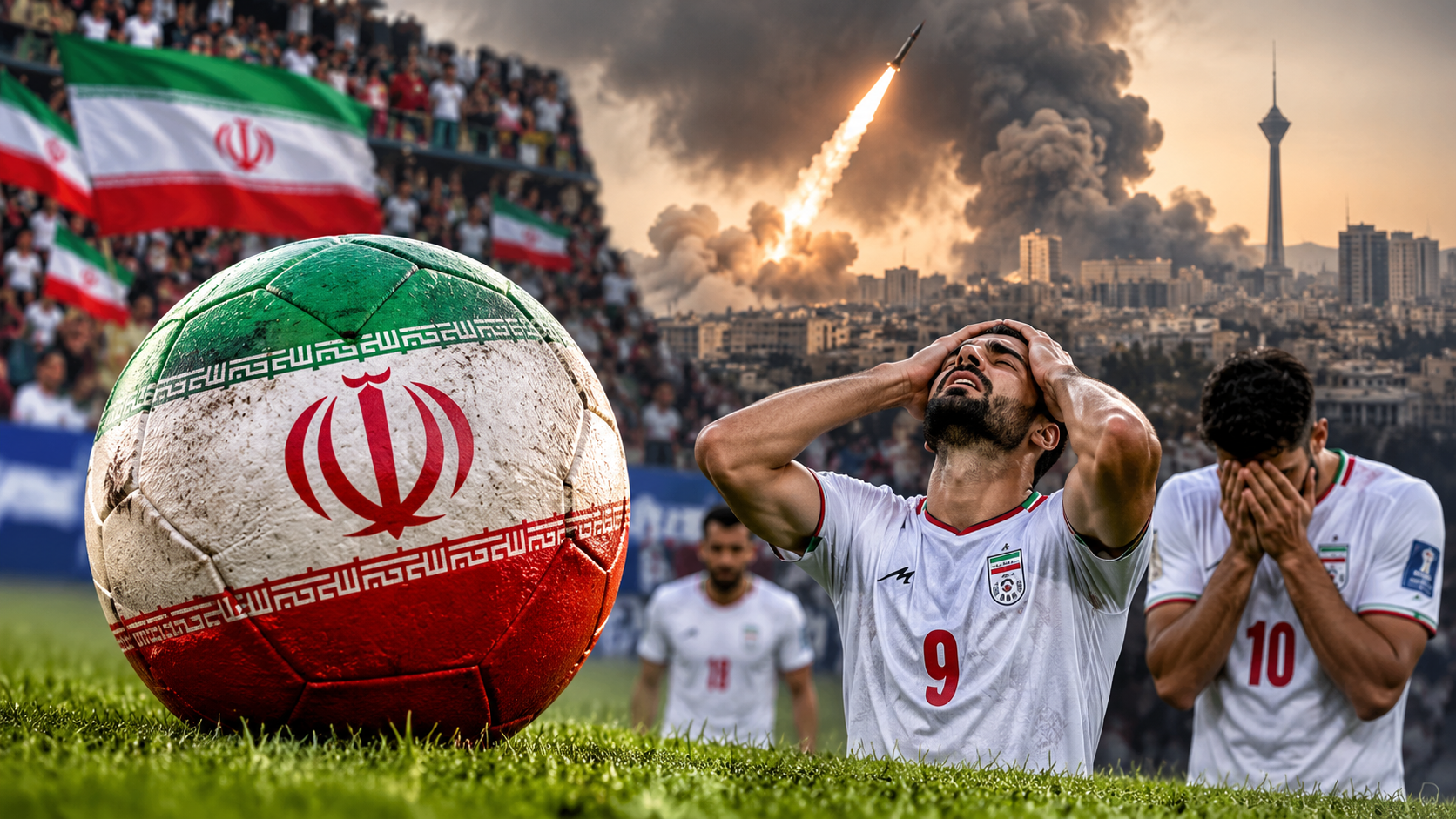
“If war breaks out again, it will be very bad for Iranian football,” says “Saman” (a pseudonym), an Iranian football journalist, speaking to BabaGol from Tehran.
“Another season that is halted and never finished will create more chaos and disputes on the organizational side, while on the professional side we have a generation of young players who are simply getting lost.”
The Middle East is not calm, and the winds of war blowing through it are leaving their mark on regional football too. The Asian Cup, which was due to kick off in Saudi Arabia in January 2027, has been postponed to December of that year, mainly because of the tension between the Saudis and the Houthis. As reported by BabaGol, the prospect of another round of fighting between the United States and Israel on one side and Iran on the other added no certainty either, and the tournament’s organizers decided not to take a risk.
Such a war, as Saman says, would have severe consequences for Iranian football, which is already struggling today, seven months after the previous round of fighting ended.
A small example surfaced last week, when Iran’s Tractor Sazi were on the verge of withdrawing from the AFC Champions League. The incident came after the United Arab Emirates refused to allow the Iranian team’s plane to land in Al Ain ahead of its Champions League match. The ban on landings by Iranian carriers is part of the sanctions imposed on Iranian airlines in the UAE, as part of the Emiratis aligning themselves with the updated US sanctions on Tehran.
Tractor, like every Iranian team since the war last March, does not host matches on Iranian soil. For the match in which they “hosted” Qatar’s Al-Shamal in Muscat, the capital of Oman, they had to make a twenty-hour journey from Tabriz to Tehran, from there to Najaf in Iraq and then Baghdad, and only then fly to Oman.
In the end, the Emirati federation decided to make a goodwill gesture and allowed Tractor Sazi to land in Dubai on a plane belonging to the Iranian airline Meraj, so they could reach the match against Al Ain, which ended in a 2-1 win for the UAE champions.
This small incident may be only a small swallow of what is approaching.
On the eve of the elections in Israel at the end of October, Prime Minister Benjamin Netanyahu said there was a chance of opening another campaign against Iran. According to reports, US President Donald Trump, who was himself focused on the midterm elections for the House and the Senate, was kept informed and was interested in the move.
The legitimacy of such an attack at such a time, certainly given the political climate in Israel and the United States, is open to debate. It may be that talk of it is only a tool for negotiating a new nuclear deal, or that it serves only the domestic interests of Netanyahu, Trump and the Revolutionary Guards, or that it really is preparation for another round of missiles, sirens and damage in Israel, Iran and the Middle East.
On the eve of another war, a deeper look at what has been happening in Iranian football in recent months helps us better understand Saman’s remark at the start of this text.
Similarities to Israel
The war with Iran affected every area of life in Israel, including football. It ranged from Israeli clubs and national teams not hosting international matches at home, to deals with foreign players that fell through because they preferred not to come, to the crowded schedule at the end of last season, caused by the need to complete matches from the war period and finish the season on time given the proximity of the World Cup.
In Iranian football the situation has been even more severe since the war. Last season’s league and cup ended without a champion or a cup winner being determined, and the federation chose, arbitrarily, the representatives who would play in the Asian competitions according to the teams’ league positions on the eve of the war.
Because of the break in league activity, the top division, the Persian Gulf Pro League, was expanded from 16 to 18 teams, with three promoted from the second division and only one team relegated, before the break.
Although Iranian league rules allow clubs to register eight foreign players in a squad, before the war there were close to 60 foreign players in the Iranian league, almost three per team on average. The reason is the value-added tax imposed on clubs from the third foreign player onward. Today, because of the war and safety concerns, only 19 foreigners remain in the whole league, five of them from Uzbekistan in Central Asia.
Iranian teams are hosting in Oman, in Tajikistan, and even in Iraq. Who would have believed that the security situation in Iran would be so fragile that Iranian teams would have to host in a place as safe as Iraq, a country that, until just a few years ago, had gone decades without hosting international sporting events.
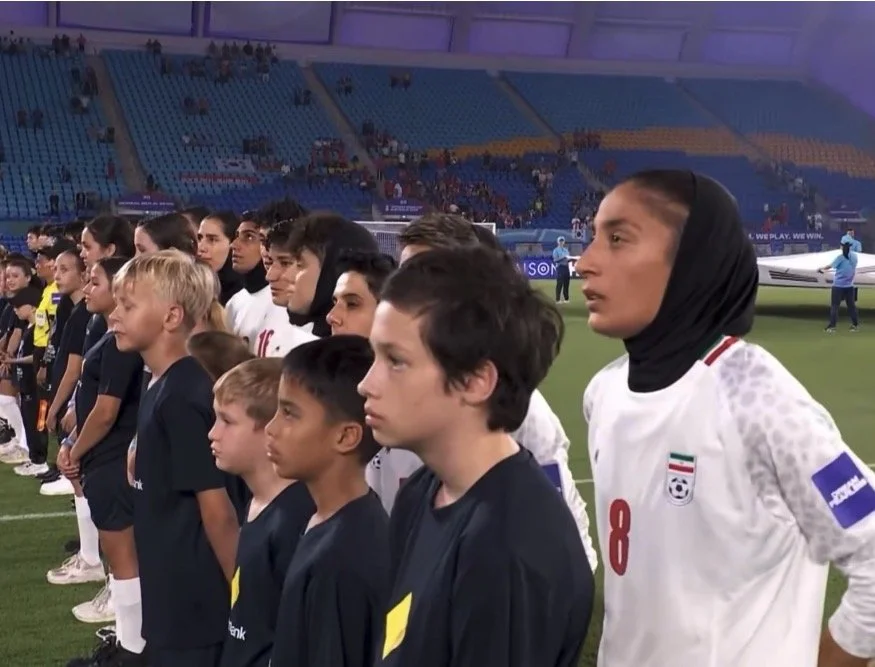
That is not the only effect the war has had on Iranian football. One of the prominent stories on the eve of the war and in its first days was the saga of the women’s national team at the Women’s Asian Cup in Australia. During the tournament seven Iranian players fled the Iranian camp and asked for asylum in Australia. The story made global headlines, with Donald Trump himself getting involved on the players’ behalf and demanding that Australia grant them asylum.
Despite the fine gesture, in the end only two players, Fatemeh Pasandideh and Atefeh Ramezanizadeh, stayed in Australia and were partly absorbed into the local Brisbane Roar team, while five players changed their minds and returned home with the team after, according to reports, their families in Iran received threats. Zahra Ghanbari, the team’s captain, who was one of the players who defected and then returned, discovered on her return that her private property had been confiscated by the Revolutionary Guards.
Another saga that drew international attention and a response from the US president himself was the participation of Iran’s men’s national team in the World Cup in the United States. Iran’s whole participation took on a symbolic dimension because of the war, and together with the fact that its matches were scheduled on US soil, this led to great political pressure beginning to take effect. First, the team’s camp was moved from Arizona to Mexico. Then the length of stay allowed to the Iranian team on US soil before and after the matches was restricted, and the matches themselves became a meeting point between Iranians opposed to the regime and those who support the Revolutionary Guards. “Despite the difficult conditions at the tournament, fans expected the team to at least reach the round of 32,” an Iranian football journalist living in exile, who asked to remain anonymous, explains to BabaGol. “The disappointment that coach Amir Ghalenoei remains in his job is enormous, and most of the public demands that the federation appoint a foreign coach who will lead the team and be detached from the politics among federation officials, club heads and players.” Sound familiar?
Today the national team is based mainly on players in the domestic league, and if the war returns, Iranian football, like all football in West Asia, will be in deep trouble. The Asian Cup in Saudi Arabia has already been postponed, and for the Persian Gulf Pro League, another round and another cancelled season would be “a heavy blow in both the short and long term,” the exiled journalist explains. “In the previous round many plants in vital and heavy industries were hit, including some that own league clubs, such as Sepahan of the city of Isfahan, which is owned by the Mobarakeh Steel company, and Foolad Khuzestan, owned by Khuzestan Steel. Those hits led to economic problems, and both teams failed to obtain an AFC license to take part in the Asian competitions. The damage to this infrastructure directly harms football activity in the country, and there is a danger to the continued existence of clubs owned by companies and factories in key industries, which will presumably become targets in a war,” he adds.
Iran is one of the leading teams in Asian football. Although it has not won the Asian Cup since 1976, it regularly reaches the late stages of the tournament (a semi-final in 2023) and almost always qualifies for the World Cup (it has taken part in seven). At the same time, after years of sanctions and now the war, the general trend in Iranian football is negative. The national team failed at the World Cup, its clubs struggle to compete with Saudi teams in the Asian competitions, international matches are out of the question, and while there used to be Iranian legionnaires playing in Europe’s top leagues, most now play in smaller leagues or in the UAE and Qatar. Iran’s youth national teams, apart from the under-23 side, also struggle to deliver significant results. “Let us hope the mediation efforts succeed,” the journalist concludes. “Another direct war would be a severe blow to Iranian football, both in the near term and in the long term. In fact, one more war like that, and it will struggle to recover.”
This article was first published in Haaretz.








With another war looming, Iranian football is already deeply hurt: lost season, home games played abroad, and clubs at risk of collapse.