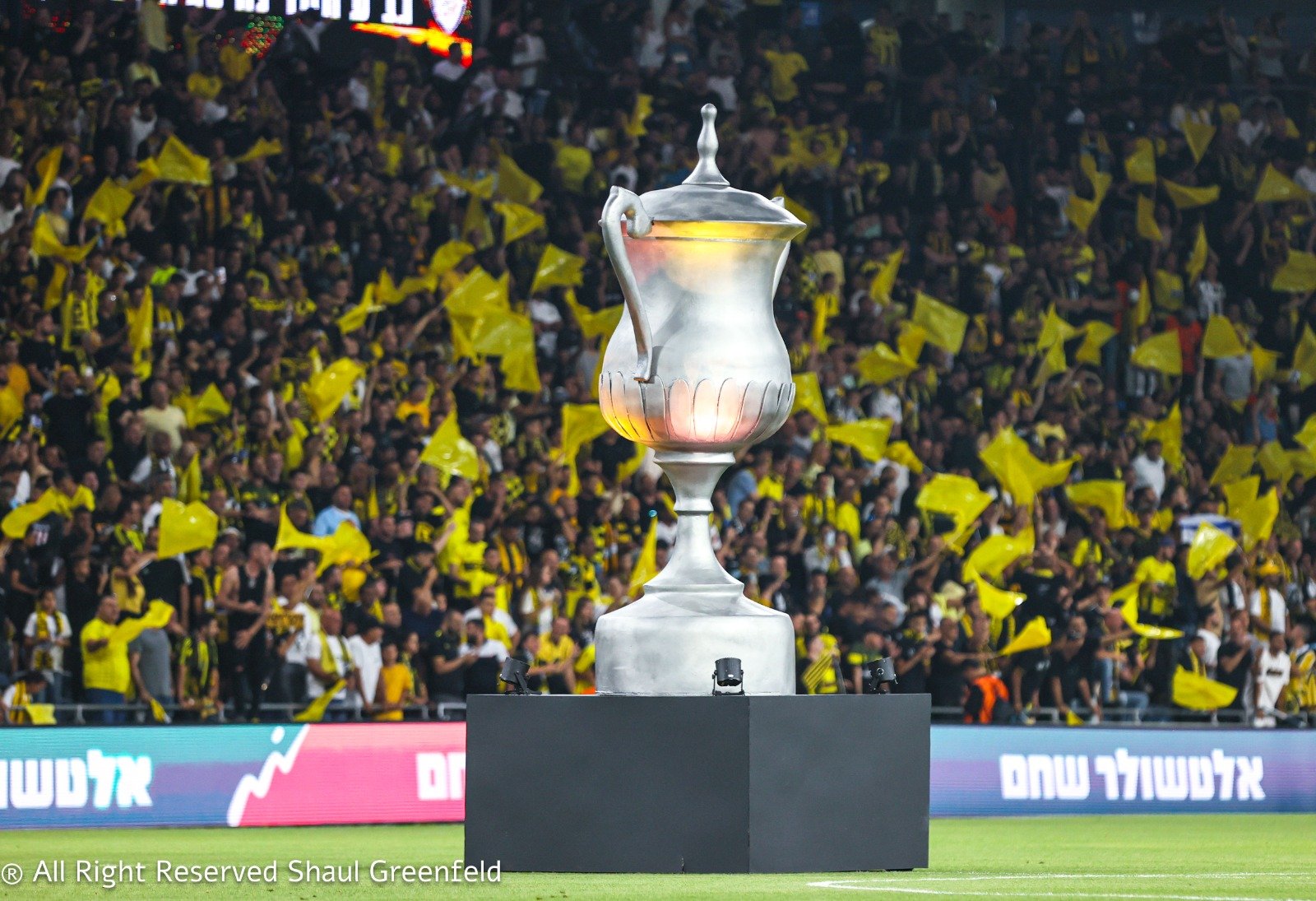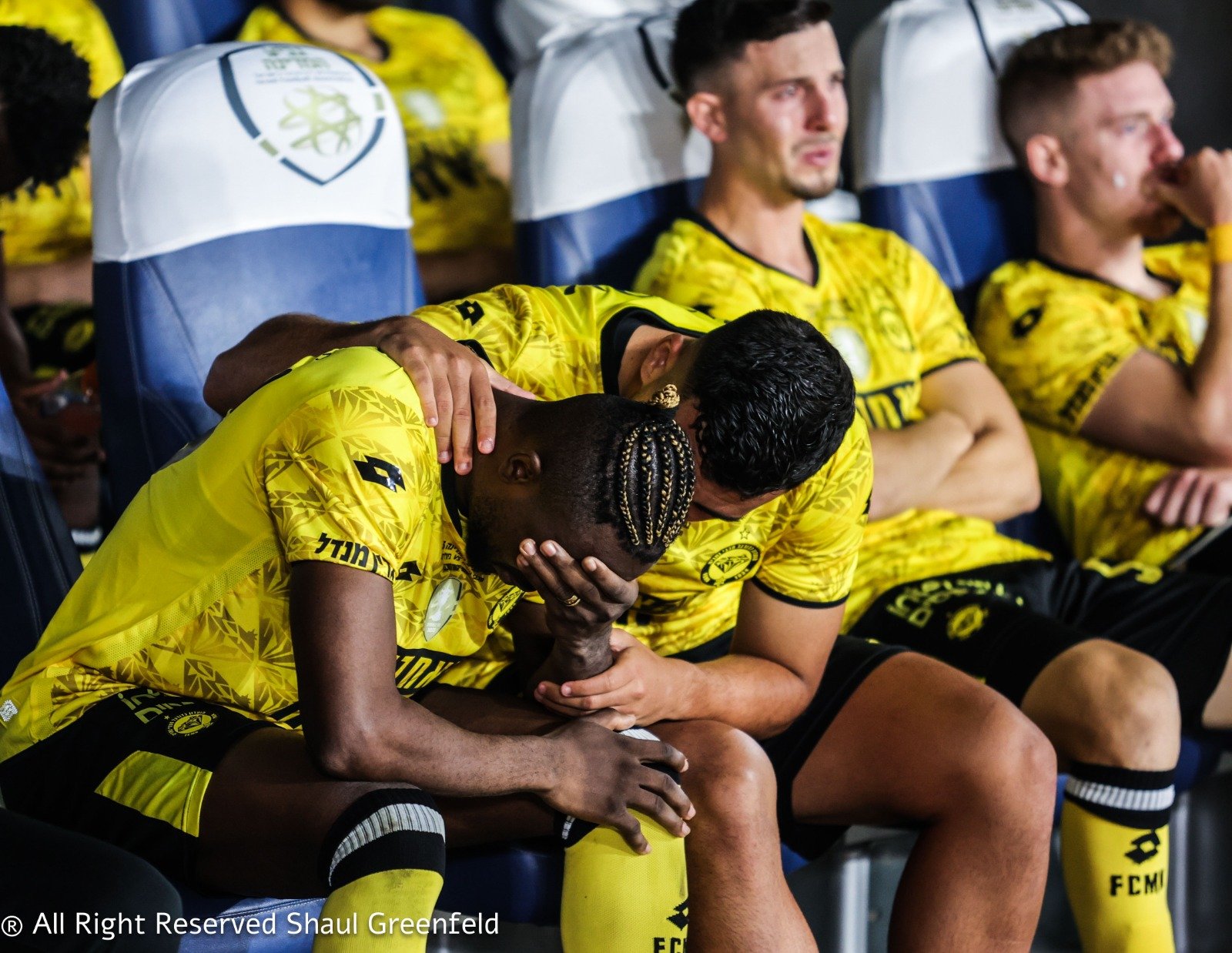
Beitar Jerusalem and Maccabi Netanya met today in the crown jewel of Israeli football, the final of the State Cup.
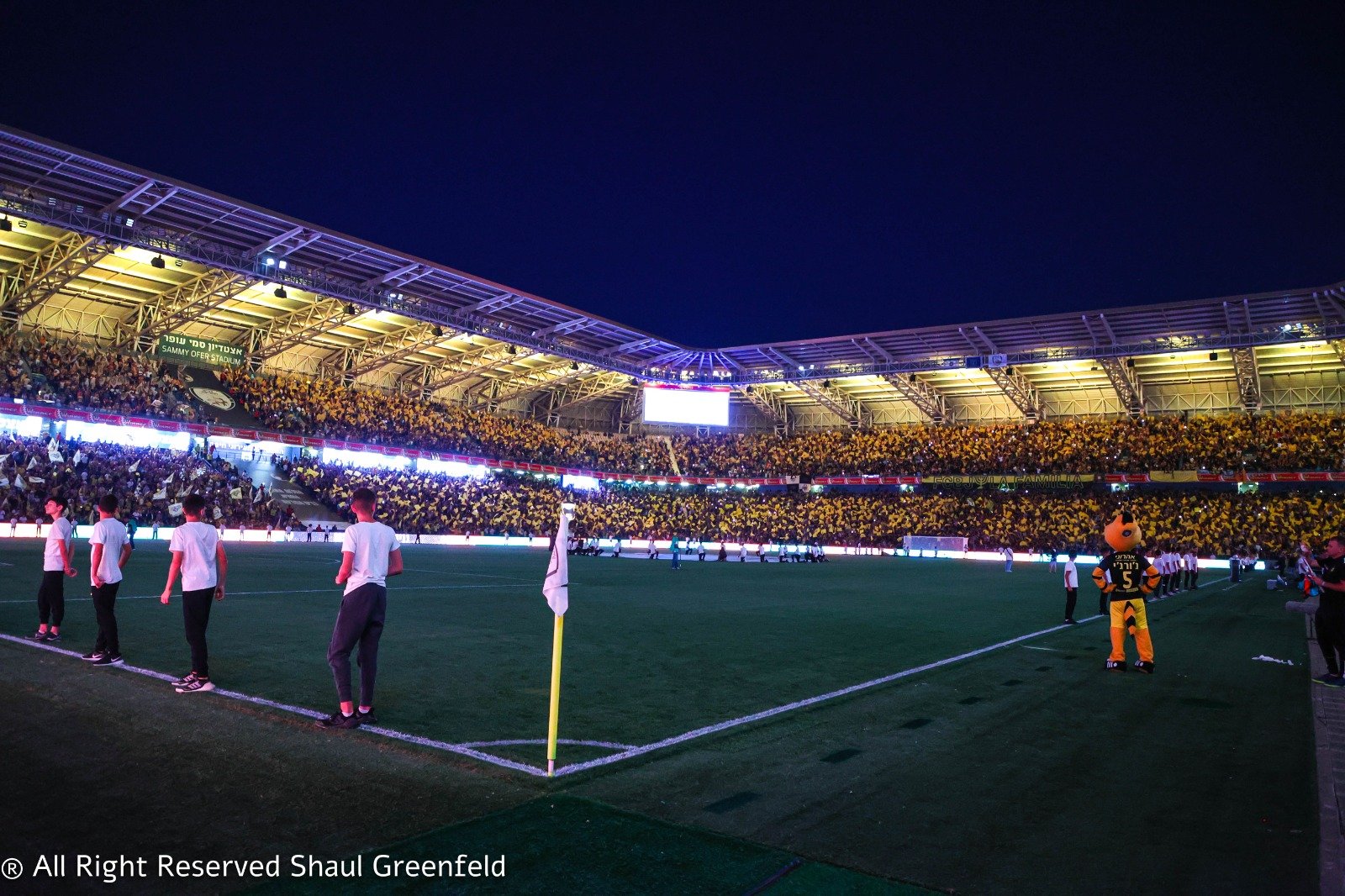
It was a fitting end for the Sammy Ofer stadium’s season, having also hosted three Champions League games this season.
Both sides were in the midst of long trophy droughts.
Beitar’s last piece of silverware was the 2009 State Cup, at the end of their golden era, under Arkadi Gaydamak’s ownership.
Netanya’s last major trophy, however, seems prehistoric in comparison. They’ve been waiting for glory since their 1983 league title, 40 years of longing.
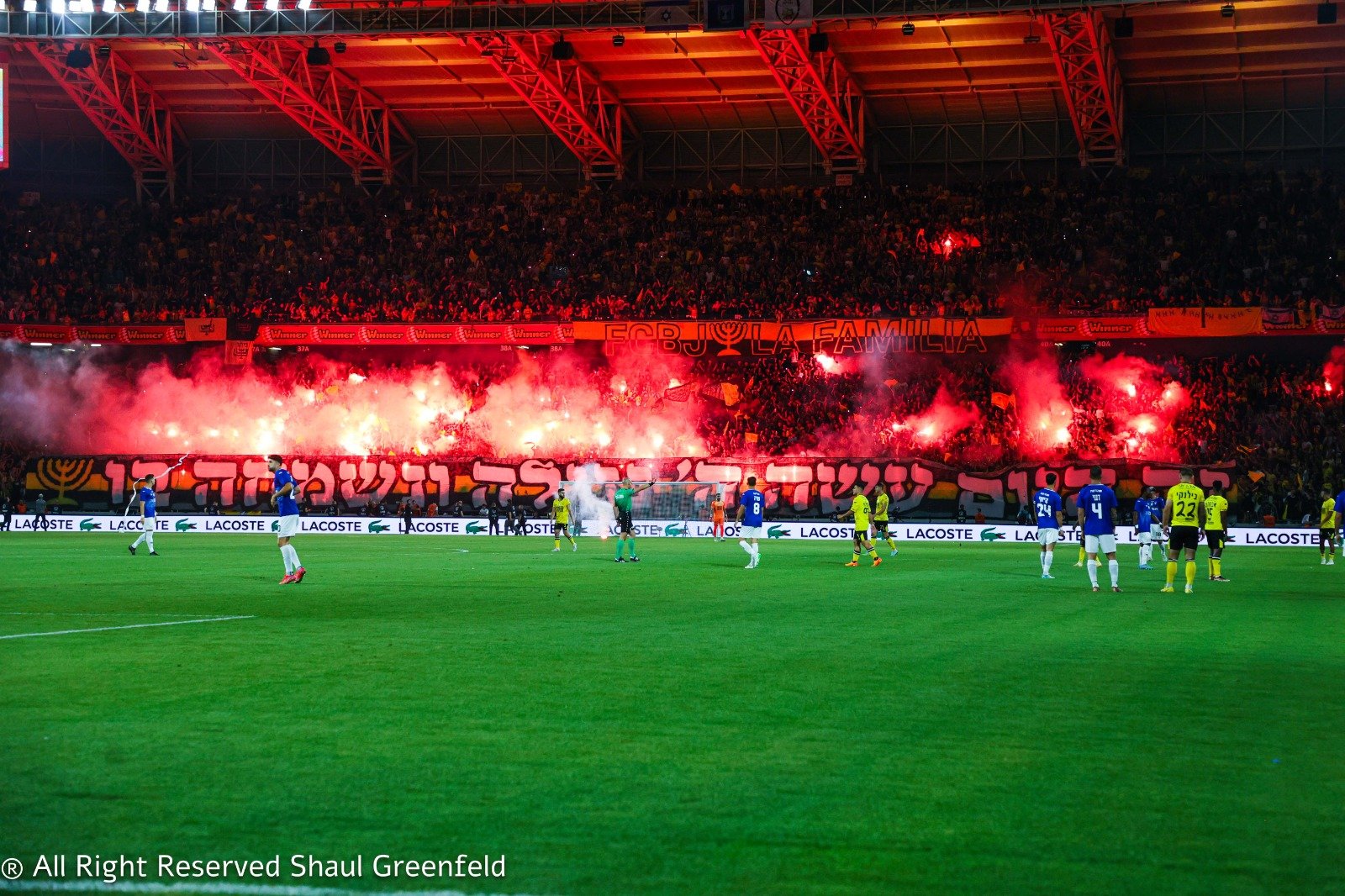
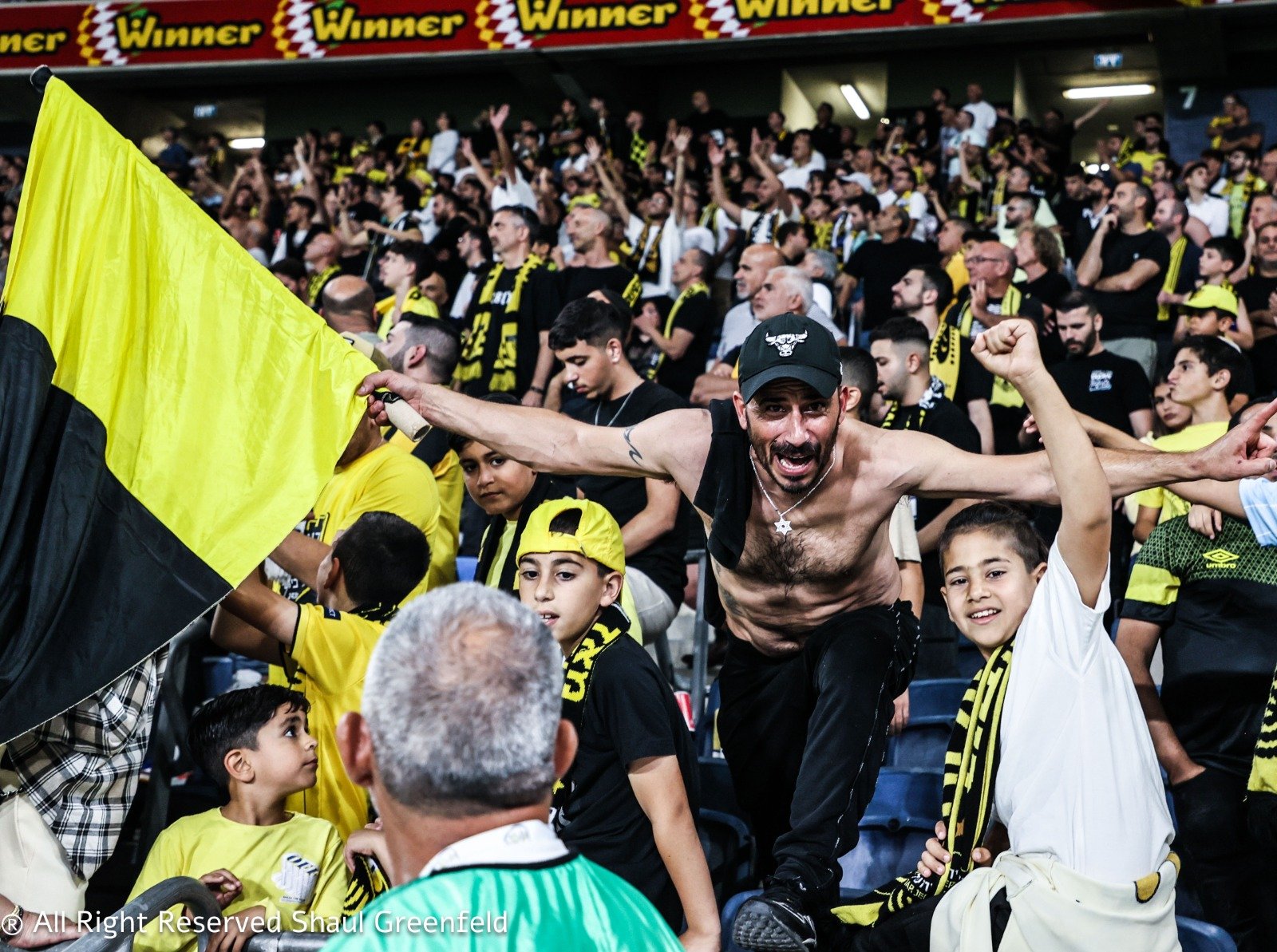
The game indeed had a Champions League atmosphere to it, the stadium was packed with 30,000 spectators - all in yellow and black of course, the colours of both teams.
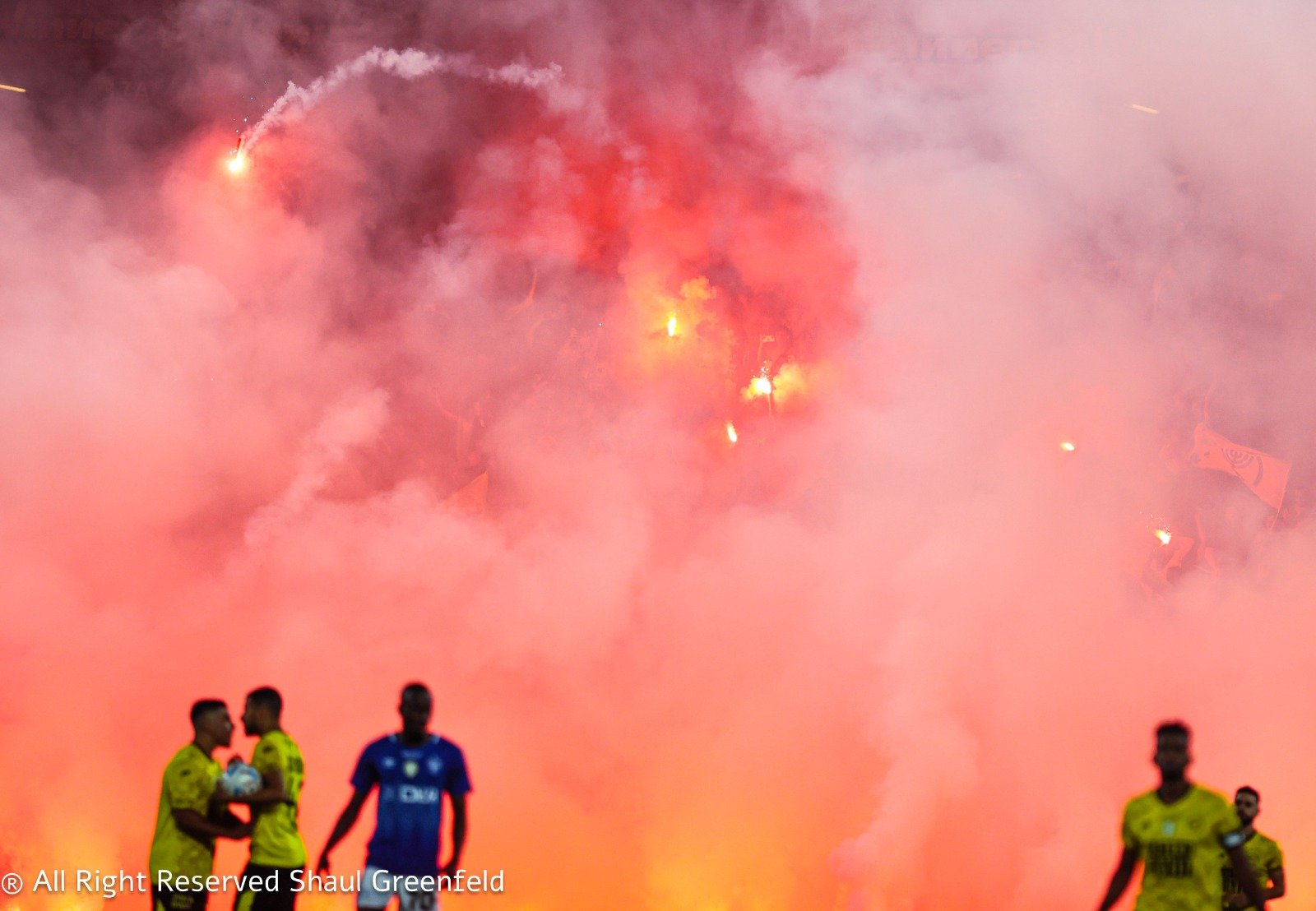
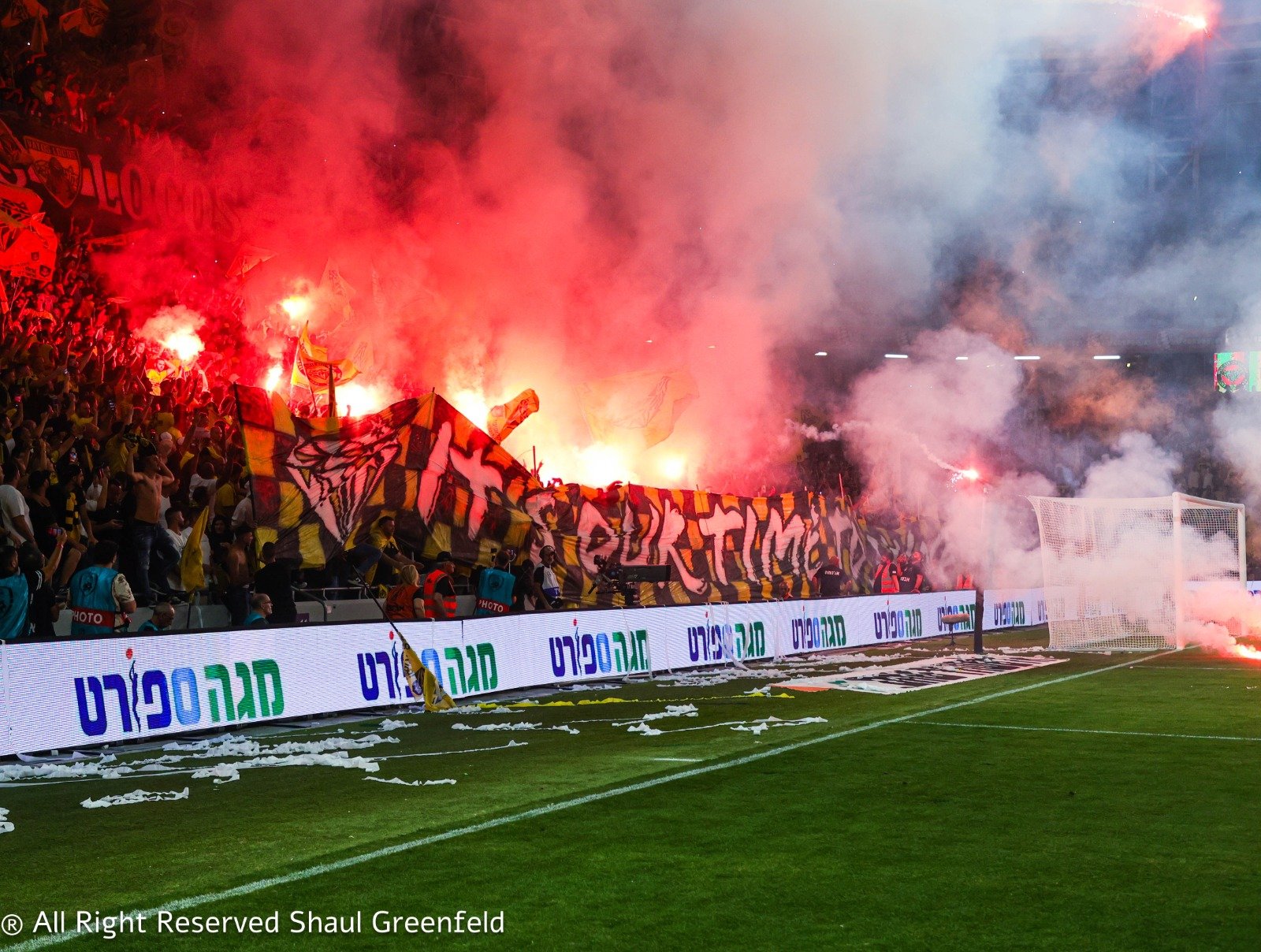
As per recent tradition in big games in Israel, both sets of fans let off pyrotechnics in the stands, delaying the game twice for a total of 15 minutes.
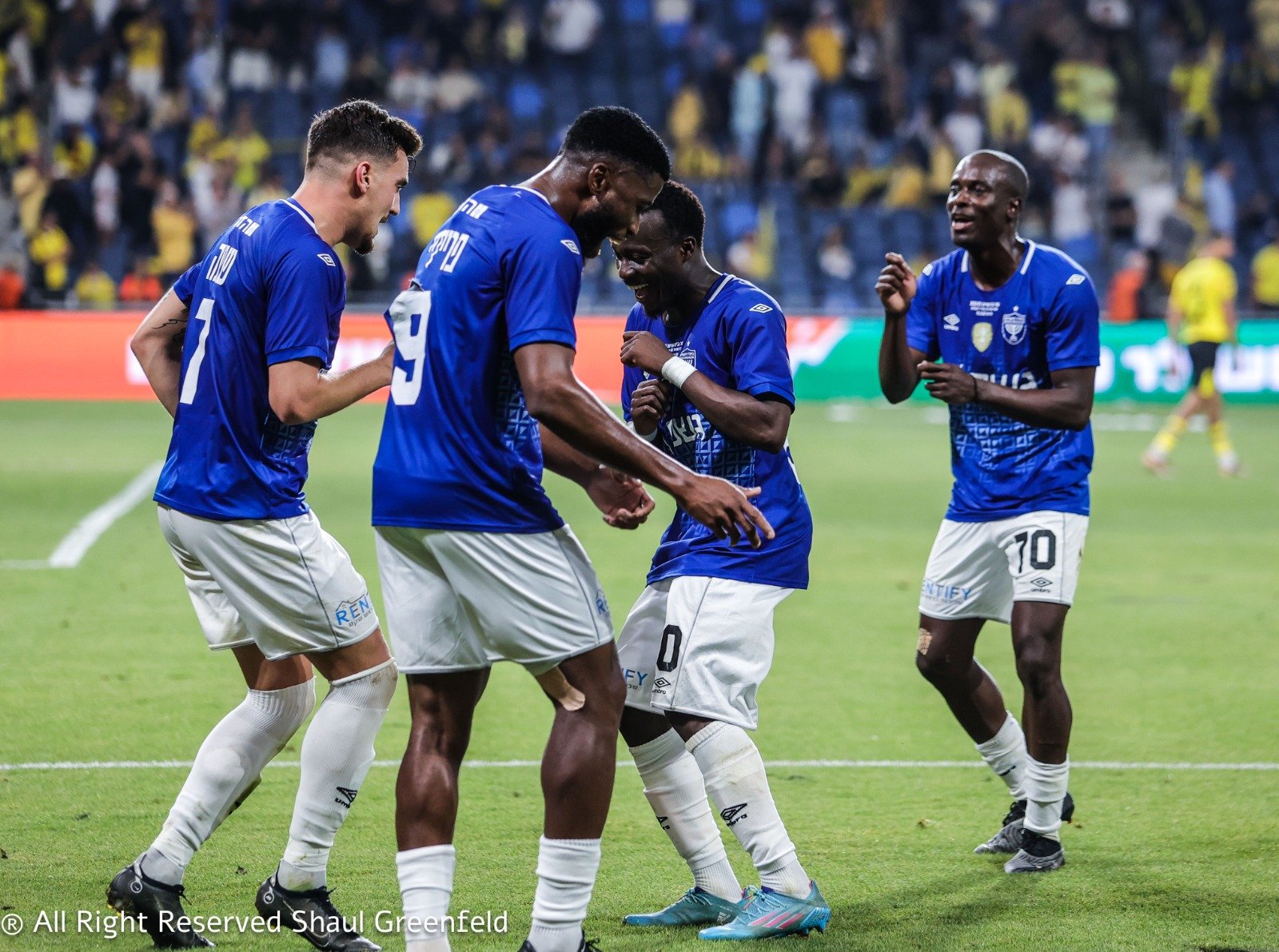
Beitar, who wore their away kit, debuted a new classic blue shirt that was made specially for the final.
The team from Jerusalem fed off their fan’s energy and started bright, almost scoring immediately after the restart, but Yarden Shua missed a header from close range.
The two coaches were animated and lively on the touchlines.
On one hand, Beitar’s Yossi Abuksis is a veteran coach who is known to be a knockout specialist. His resume includes two back-to-back cup wins with different teams, in 2019 - where he beat Netanya - and 2020.
On the other, Netanya’s Ran Kozuk is a rookie in his first season in charge. After Benny Lam was sacked mid-season, Kozuk was given a promotion to the top job, and led his team to a great season - fifth place in the league, winning the Toto Cup and leading the Yellow Diamonds to the cup final.
On the night the deadlock was broken in the 37th minute.
Beitar’s slick passing and quickness managed to leave overlapping defender Grigori Morozov free on the left wing, and the Russian squared the ball to the middle where Ion Nicolaescu tapped in from close range.
Electric scenes in the stands followed. It was 1-0 at the break.
In the second half, Netanya took over the game and dominated possession, but without any real venom.
For a Yossi Abuksis-led team, that is familiar territory, especially in cup games - sit back, defend tightly, and wait for opportunities on the counter attack.
It was a moment of brilliance in the 76th minute that sealed the game.
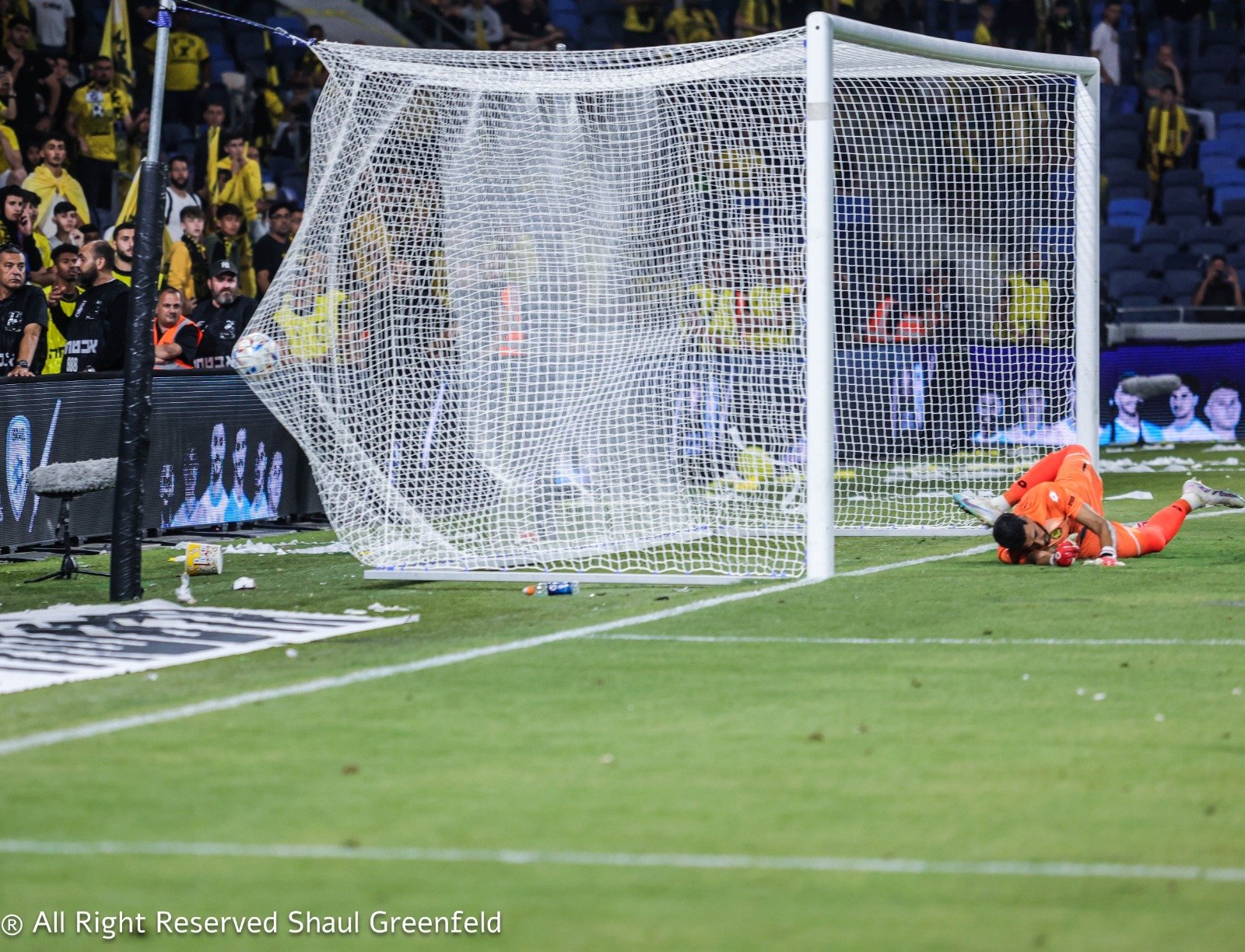
Nigerian striker Fred Friday outsmarted Netanya’s defenders with a nice turn and shoulder drop, and fired home from outside the box.
Itamar Nitzan had no chance. 2-0.
To add salt to the wound, Danilo Asprilla was fouled in the box in the 90th minute.
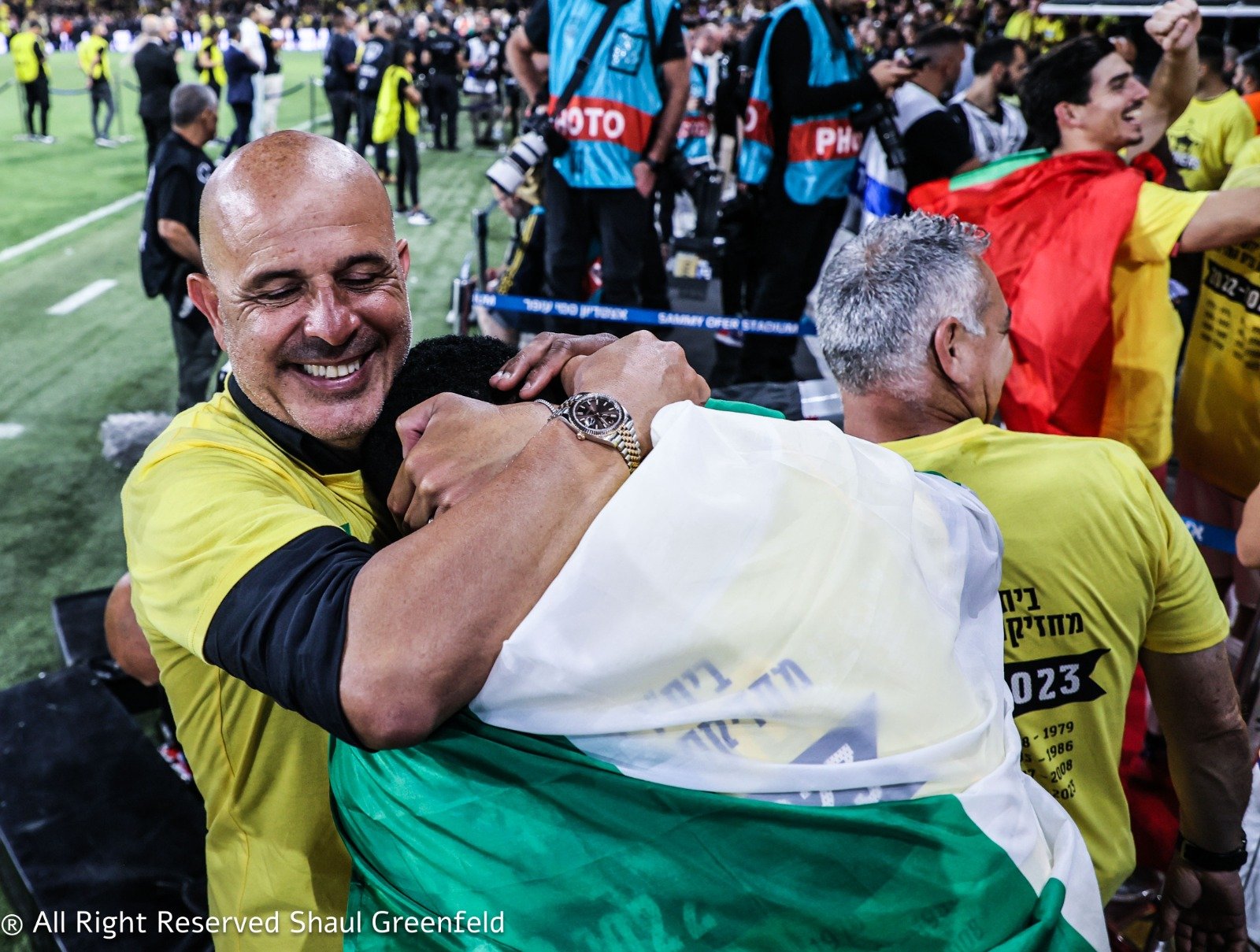
Yarden Shua converted the penalty to make it 3-0, and coach Abuksis couldn’t hold his joy any longer, and ran across the pitch, celebrating with the Beitar fans.
It was another cup final heartbreak for Netanya, while Beitar are alive and proud.
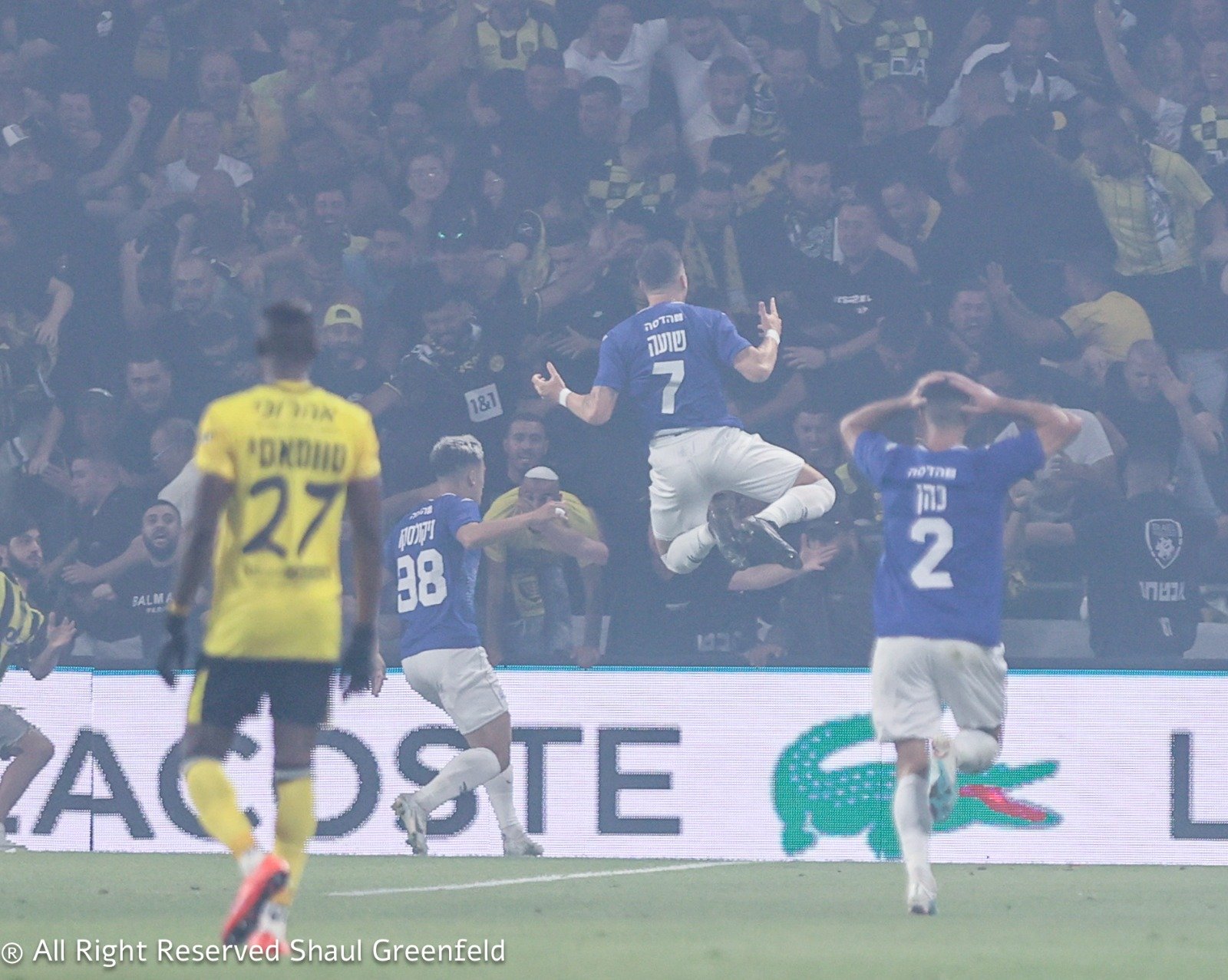
A team that has seemingly been on the verge of catastrophe many times in recent years, they have risen back into Israeli football glory.
But with Beitar nothing is ever simple or straightforward, even lifting the cup for the first time in 14 years.
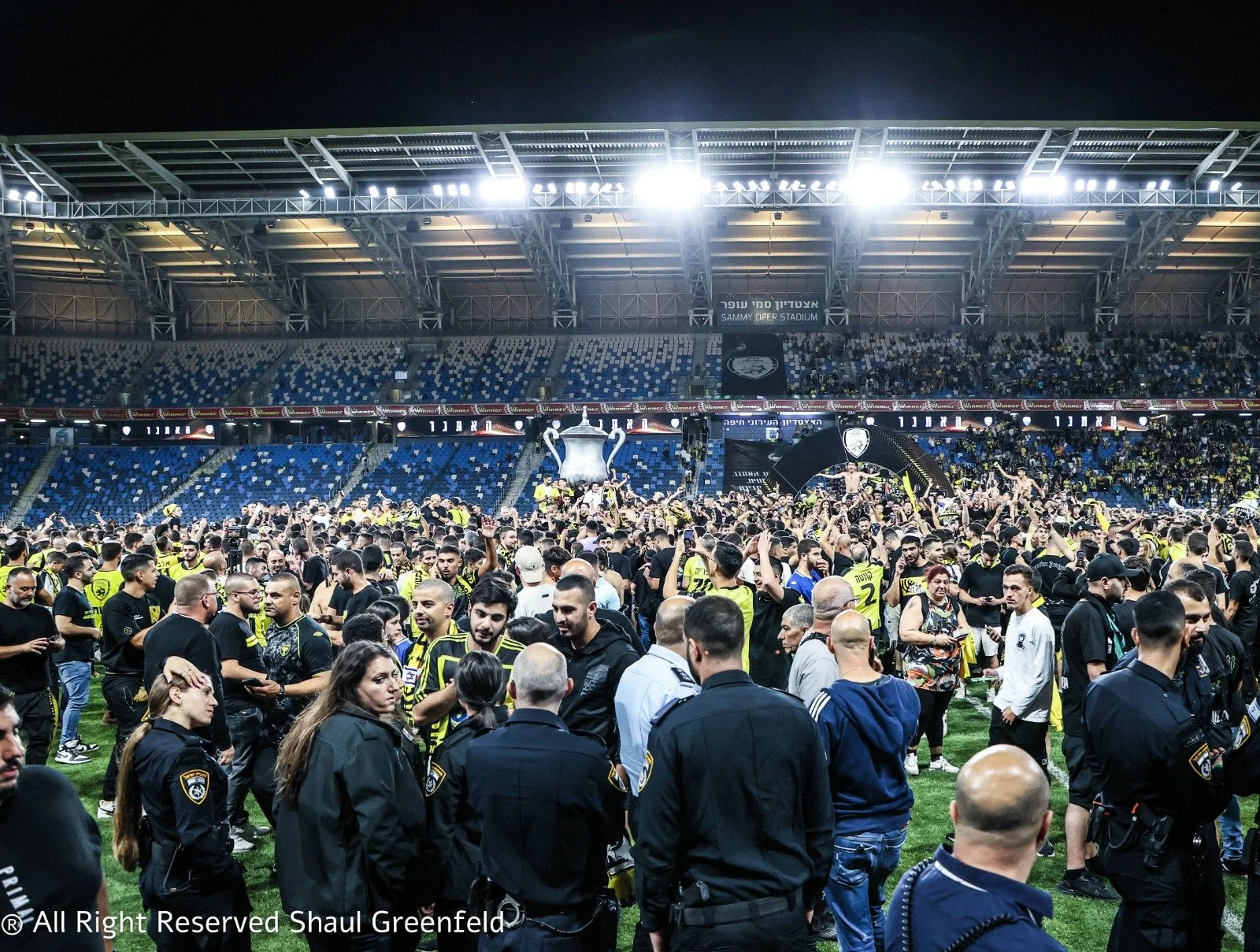
As the players started to make their way to the stage to receive their medals and lift the trophy, hundreds of fans ran onto the pitch and took over the ceremony.
All hell broke loose, and after 30 minutes of attempting to restore order, stadium officials and the Israeli FA simply gave up and sent everyone home.
Medals weren't handed out, the cup wasn't lifted.
So a great evening of football ended on a sour note, and it will be interesting to see what the consequences will be.
Edited by Alex Smith
Photos by Shaul Greenfeld
With tensions easing, Iran’s 2026 World Cup participation remains uncertain, as FIFA, politics, and regional dynamics collide.
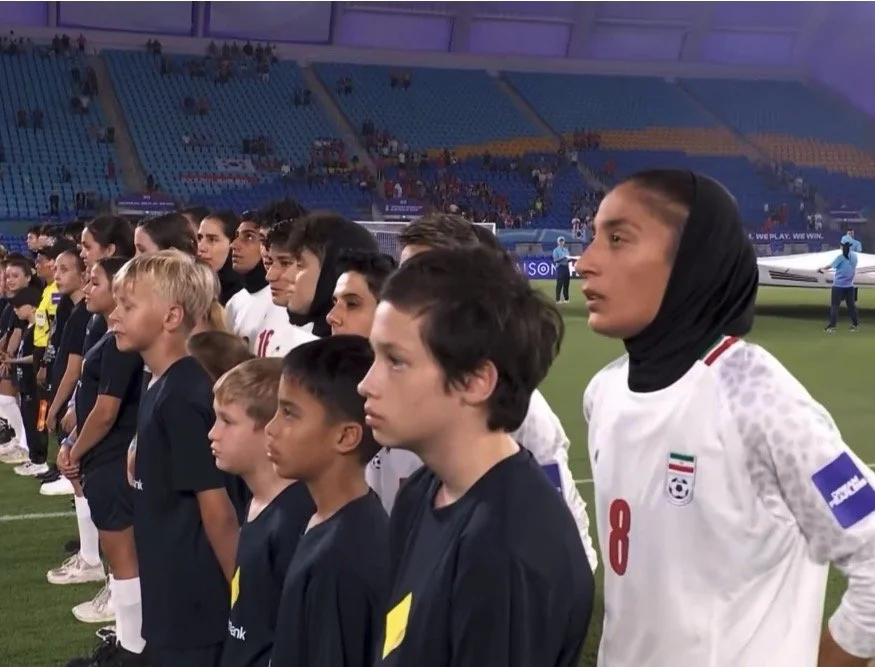
From silent protests to daring escapes, Iran’s women footballers turned a tournament into a global story of courage, politics, and survival.
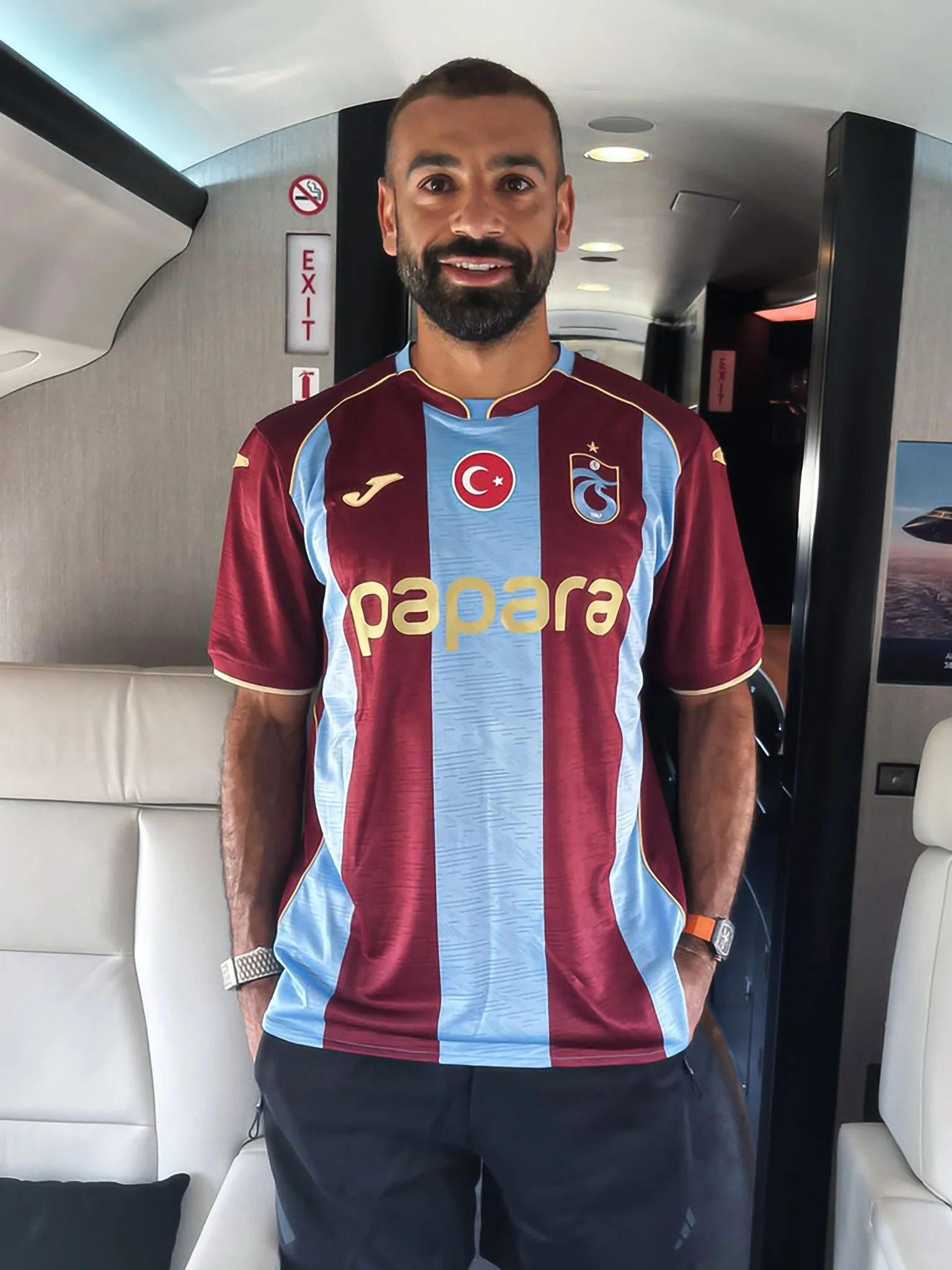
After nine years at Liverpool, Salah left for Trabzonspor — the money, the family, and the love of being the underdog all played their part.
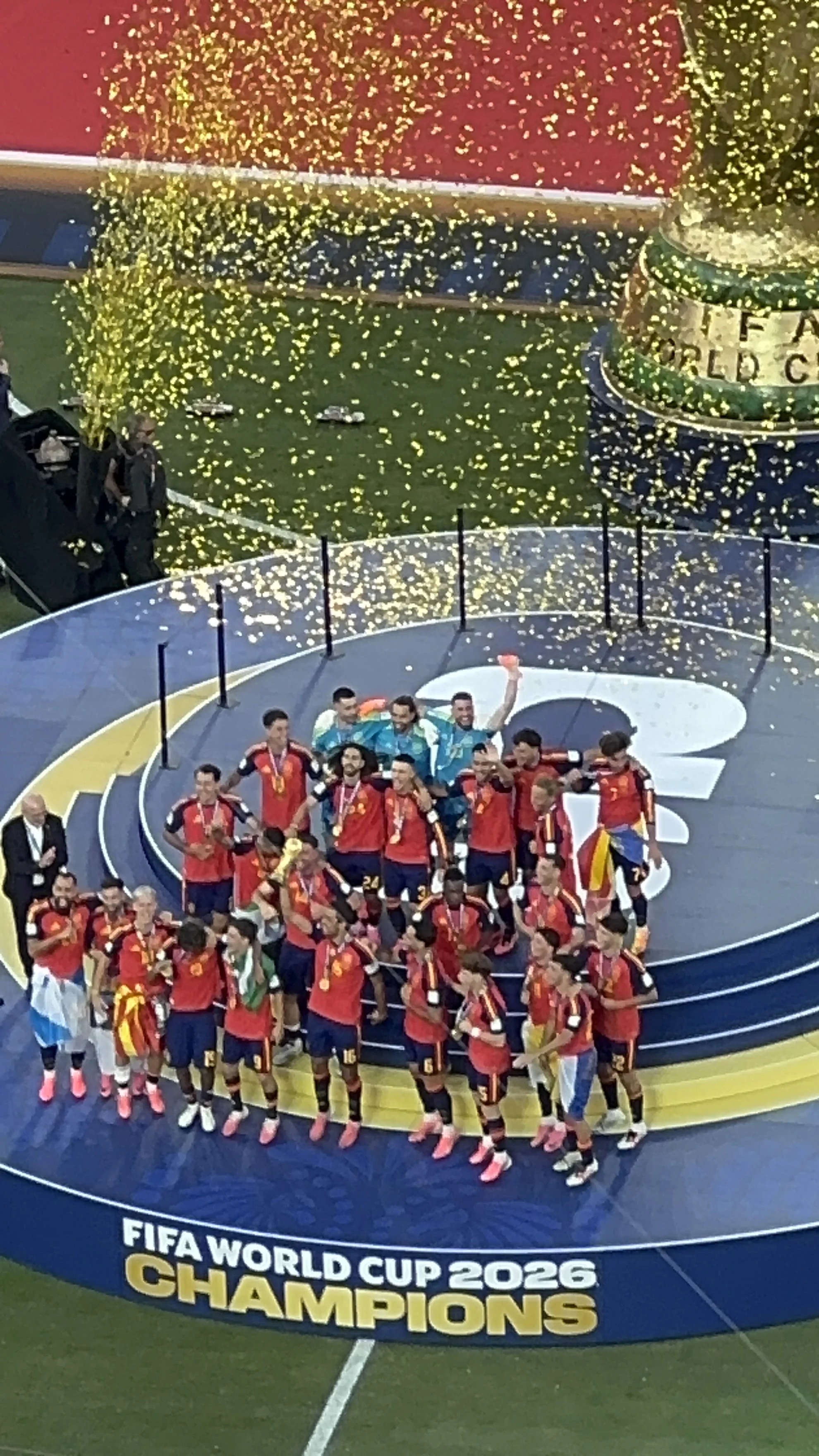
Spain defeated Argentina 1-0 in the 2026 World Cup Final, ending Lionel Messi's dream World Cup with heartbreak.
Thousands of Argentina fans transformed Times Square before the 2026 World Cup final, all united to thank Lionel Messi.
Spain were ruthless in Dallas as Oyarzabal and Dani Olmo starred, leaving France's Bastille Day to end in deep disappointment for Deschamps.
Norway outplayed England for most of a sweltering Miami classic, but two Bellingham strikes in extra time sent the Three Lions to the semis.
Egypt pushed Argentina to the limit in a 3-2 World Cup thriller, but left the pitch furious at the referee and convinced justice was denied.
Ayoub Bouaddi chose Morocco over France at 18 and lit up a quarter-final about colonial history, dual identity, and what it means to belong.
Merino's late goal gave Spain a 1-0 win over Portugal as Ronaldo left the World Cup stage in tears in what many believe was his final match.
Egypt beat Australia on penalties in Dallas to reach the last 16 for the first time, with Salah's Panenka the highlight of a historic night.
Diop headed Morocco level in the 91st minute and Saibari slotted the winner in the shootout as Morocco reached the World Cup quarter-finals.
Messi and the Jordanian Messi both scored as Argentina beat Jordan 3-1 in Arlington, with records broken and keffiyehs flying in the stands.
France beat Iraq 3-0 in Philadelphia, but the two-hour lightning delay stole the show, making it officially the longest World Cup game ever.
Saibari scored inside two minutes as Morocco beat Scotland 1-0 in Boston, leaving the Scots on the very brink of 2026 World Cup elimination.
Senegal relived their legendary 2002 magic for an hour, but Kylian Mbappe struck twice to sink them and seal France's 3-1 win in New Jersey.
Qatar stole a last-gasp draw from Switzerland and Morocco held Brazil 1-1 — two results that announced Arab football’s full arrival at 2026.
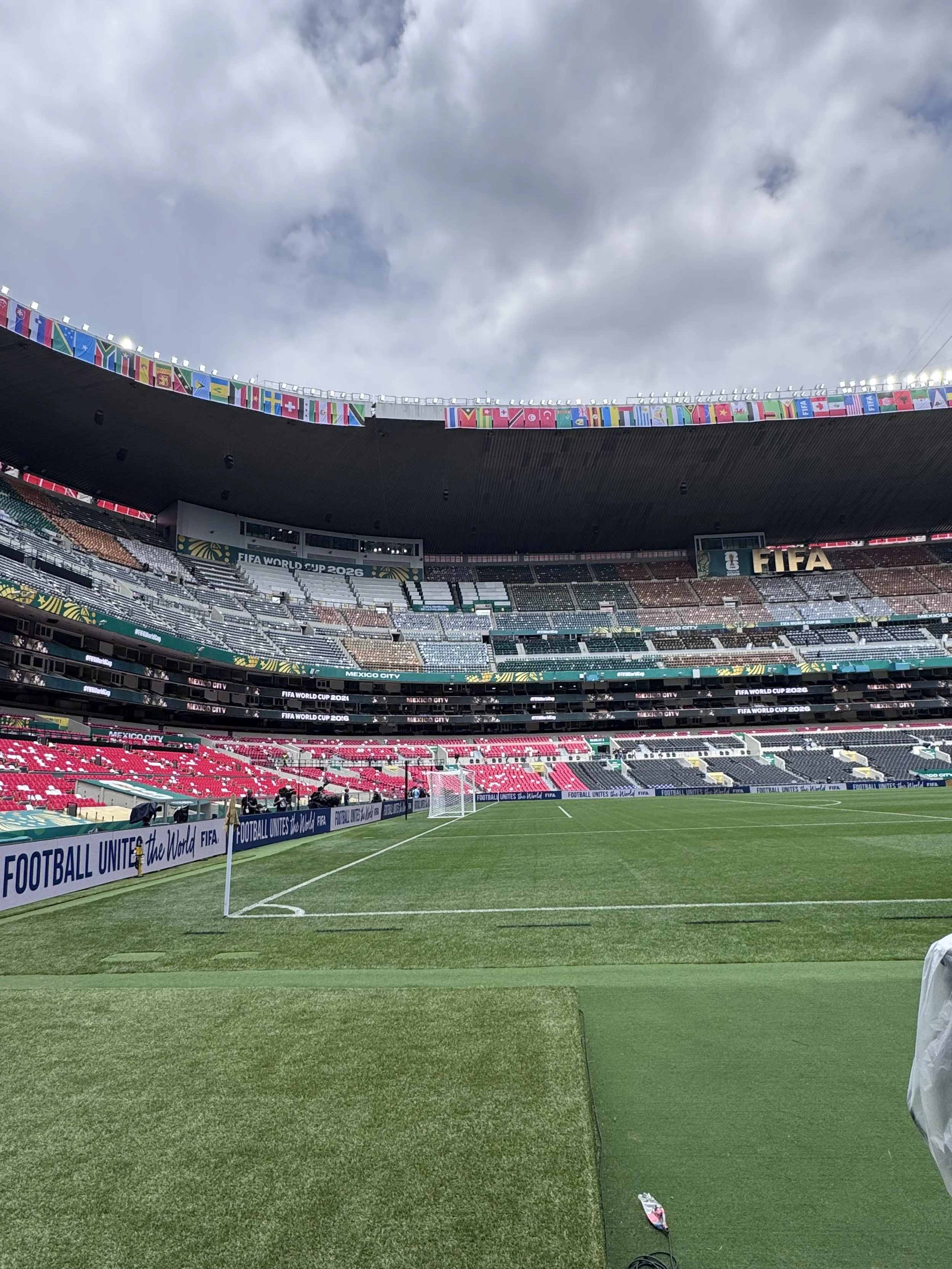
Azteca stadium hosts its third World Cup as Mexico City buzzes with pride, protest, and the deep belief that football has always lived here.
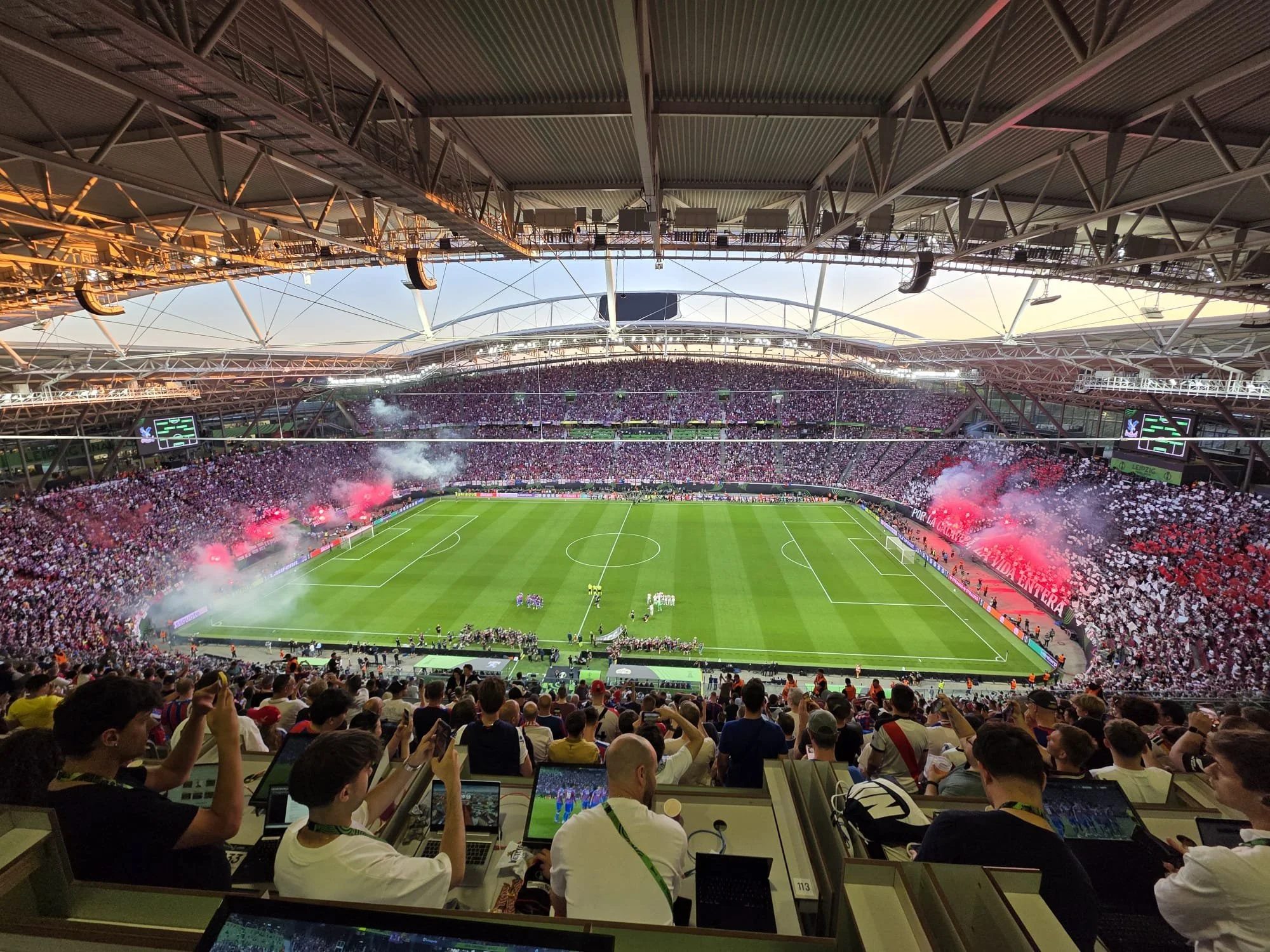
Crystal Palace beat Rayo Vallecano in Leipzig to win the Conference League in the most romantic underdog final in European football history.
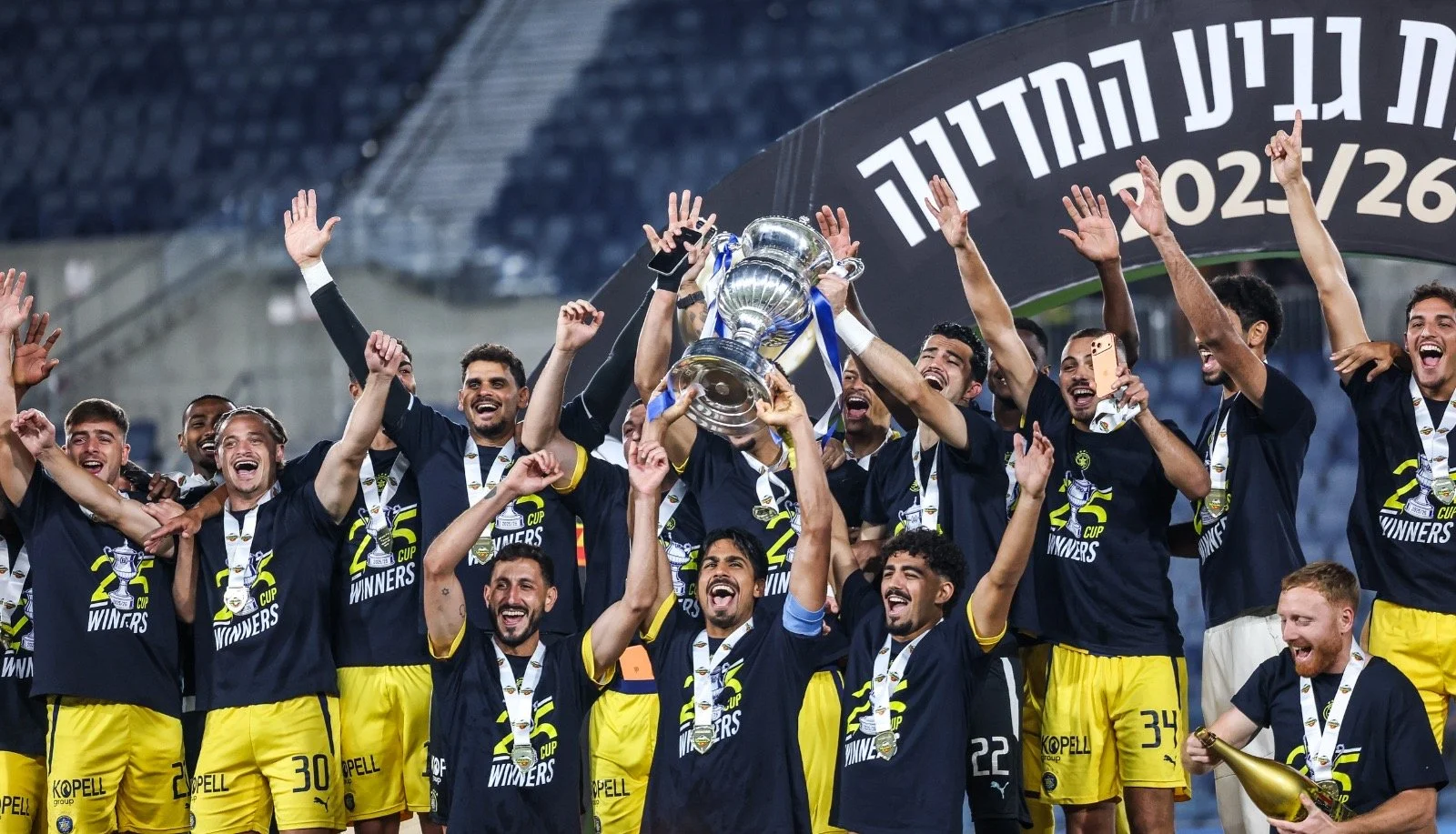
Maccabi Tel Aviv edge Hapoel Be'er Sheva 2–1 in a dramatic Israeli Cup Final at Teddy Stadium, denying the champions a historic Double.
With tensions easing, Iran’s 2026 World Cup participation remains uncertain, as FIFA, politics, and regional dynamics collide.
CAF shocks African football by stripping Senegal’s title and awarding Morocco the AFCON crown after a chaotic final decision.
From silent protests to daring escapes, Iran’s women footballers turned a tournament into a global story of courage, politics, and survival.
Iran’s women’s team protested, faced threats, and signaled SOS in Australia—now their fate is uncertain amid calls for asylum.
From geopolitics to spectacle, Trump looms over World Cup 2026—reshaping football, power, and culture in the biggest tournament ever.
FIFA joins Gaza rebuilding plans, restoring stadiums, pitches, and youth programs, supporting football and hope in the Strip.
From Nigeria’s Mavlon academy to Viktoria Plzeň and the Europa League dream: Salim Fago’s journey is just beginning in Europe.
From Benzema’s shock move to Ronaldo’s protest, a chain reaction in Saudi football is shaking the entire project and the global game.
A Hitchcock-style AFCON final in Rabat saw chaos, controversy and brilliance as Senegal stunned Morocco to claim their second African title.
From libraries to stadiums, Morocco lives football. As AFCON 2025 nears its climax, passion, politics, and ambition collide nationwide.
From rain-soaked Rabat to a deafening semifinal night, Morocco edge Nigeria on penalties and stand 90 minutes from an AFCON title.


Maccabi Tel Aviv edge Hapoel Be'er Sheva 2–1 in a dramatic Israeli Cup Final at Teddy Stadium, denying the champions a historic Double.