The recent escalation between Israel and Hezbollah has significantly disrupted the football scenes in Israel and Lebanon.
While in Israel, the impact focused particularly on the northern regions, in Lebanon, it is cross-country.
The report was edited on Tuesday, September 24, with the announcement of the Lebanese Football Association on the postponement of all its football activities until further notice.
Israel
Match Postponements
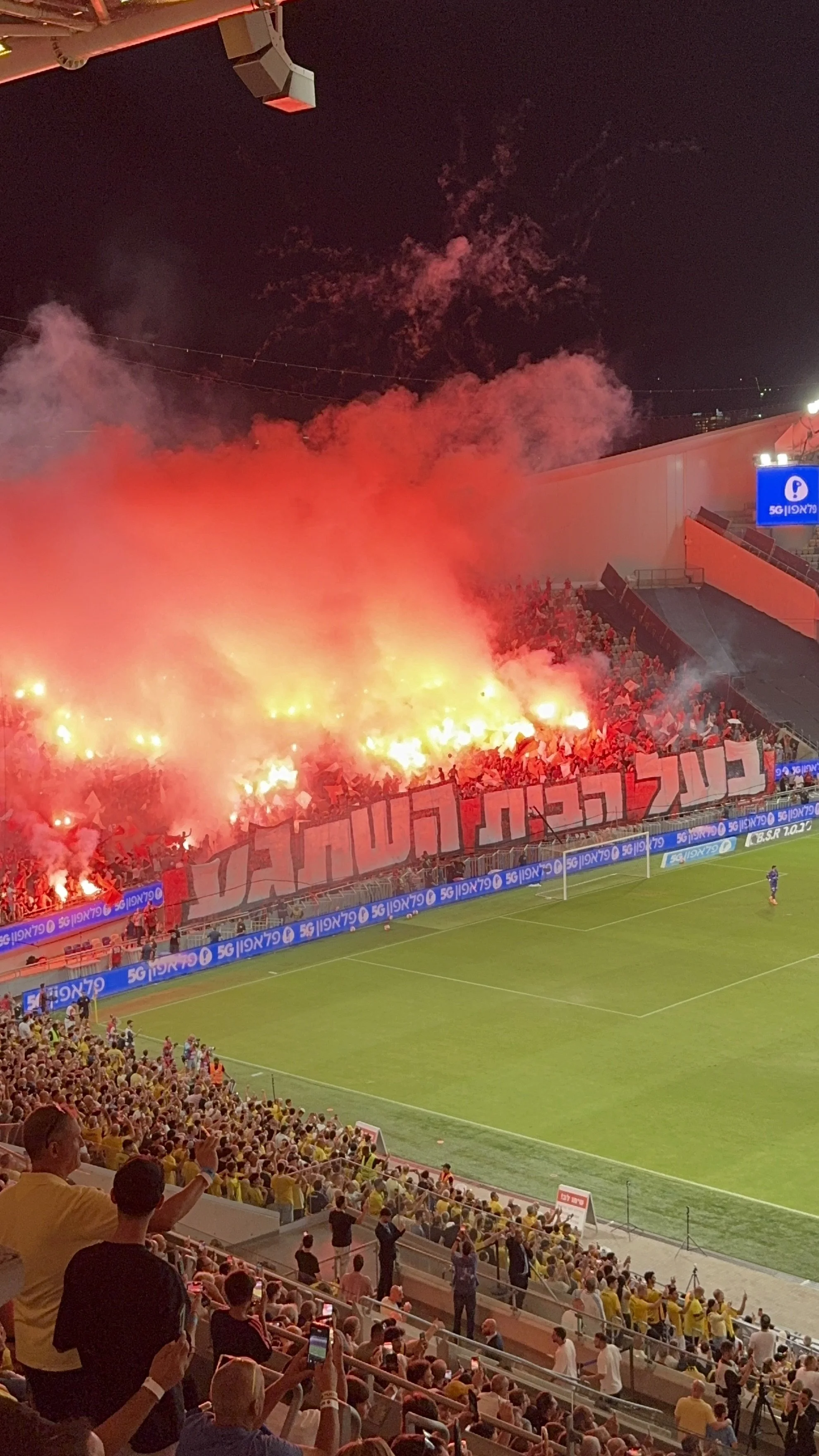
The high-profile match between Maccabi Haifa and Beitar Jerusalem has been rescheduled to October 1.
All matches from Haifa northward have been postponed due to security concerns.
All cup matches planned for midweek (Wednesday, September 24) are postponed.
All the coming weekend’s lower league matches, as well as youth matches in Haifa surroundings and north, are postponed.
Gathering Restrictions
The Israeli government has banned gatherings of more than 10 people in northern areas, directly affecting football matches and fan attendance.
Venue Changes Under Consideration
The football authorities are examining the possibility of switching hosting duties for all northern clubs in both the Premier and National Leagues.
Lebanon
Despite the tensions, Lebanese football has shown resilience at first, before a full postponement of all football activities on Tuesday, Septmeber 24, morning.
Opening day completed, future in dark
The Lebanese Premier League successfully completed its first matchday without interruptions, yet the next matchday is under consideration due to upcoming developments and escalation.
Organized Political Expressions
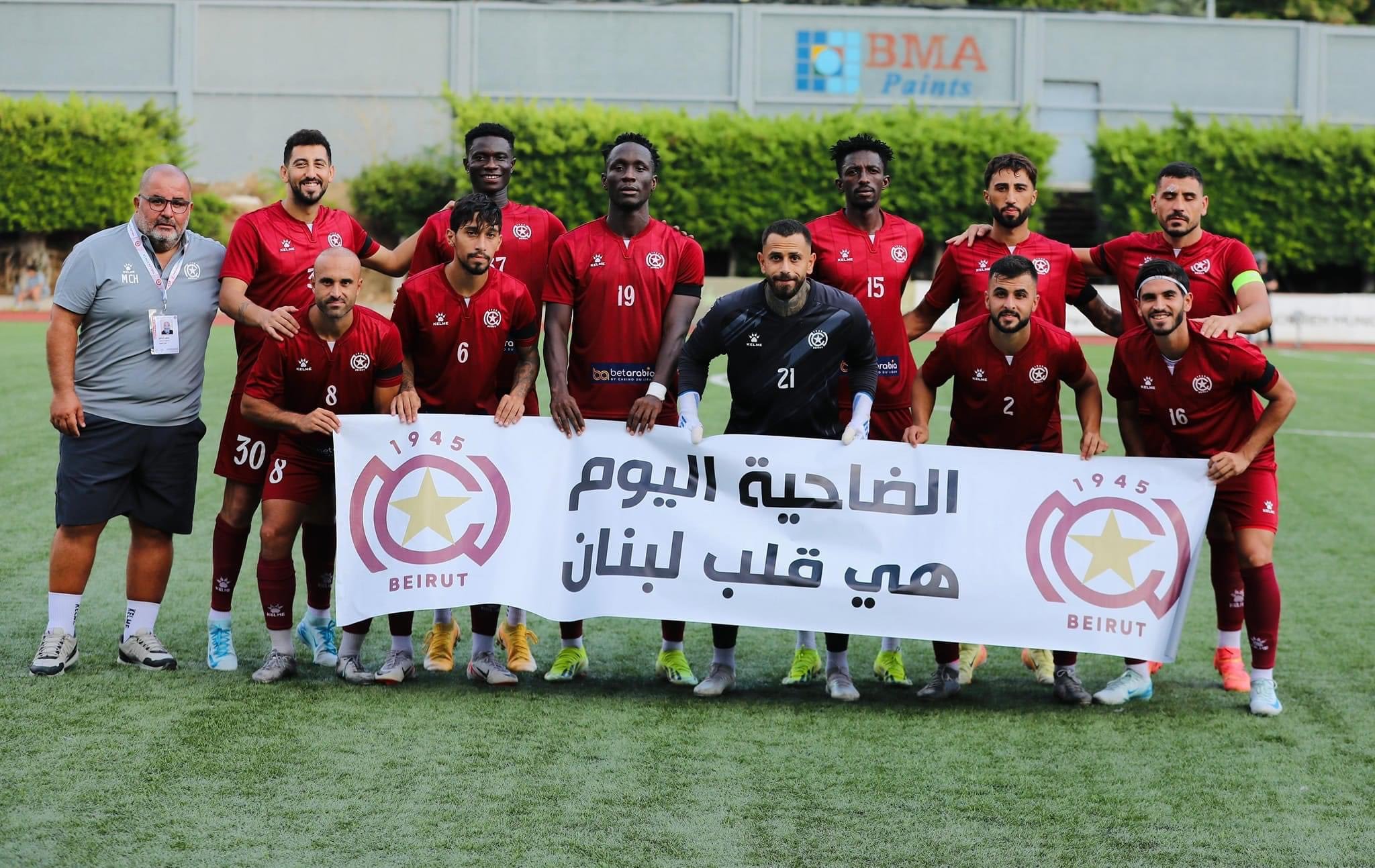
Matches featured banners and signs supporting the victims in the Israeli Air Force strikes, especially in the Dahieh district (which is known as Hezbollah’s stronghold), indicating the political undertones present in Lebanese football during this time.
Second Division Adjustments
The Executive Committee of the Lebanese Football Association has rescheduled a postponed Second Division League match that was supposed to take place on Monday.
Full Postponement
On Tuesday, Septmeber 24, the Executive Committee of the Lebanese Football Federation has decided to POSTPONE ALL FOOTBALL matches until a date to be determined later.
"The Dahieh today is [the] heart of Lebanon". Nejmeh, one of Lebanon's football powerhouses, poses with a banner identifies with the distrcit that has been hit by recent Israeli air strikes. (Photo courtesy: Lebanese Football Association)
Conclusion
The contrasting responses in Israel and Lebanon highlight the region's complex relationship between football and geopolitics. While Israeli football faces significant disruptions and potential long-term scheduling challenges, Lebanese football continued with a degree of normalcy, albeit with visible political expressions within stadiums, until Monday afternoon, September 23. Yet, the intensifying bombings and rising internal immigration from south to north of the country, has brought the Lebanese Football Association to announce a full postponement of the league on Tuesday, Septmebr 24.
This situation underscores the sport's resilience in times of conflict and its role as a community expression and solidarity platform. As tensions continue, both nations' football associations will likely need to remain flexible and responsive to ensure the safety of players and fans while maintaining the integrity of their respective leagues.
Hapoel Be’er Sheva fans were barred from AZ Alkmaar. Why does the country with deep Jewish football roots now refuse to host Israeli supporters?
Cairo’s derby drew a record number of crowd for the first time in years, as Al Ahly and Zamalek fans united in October War banners and Israel chants.
Hapoel Be’er Sheva fans were barred from AZ Alkmaar. Why does the country with deep Jewish football roots now refuse to host Israeli supporters?
Cairo’s derby drew a record number of crowd for the first time in years, as Al Ahly and Zamalek fans united in October War banners and Israel chants.
Manchester City’s guilty verdict is spilling into geopolitics, as Abu Dhabi hints at curbing UAE investment in Britain over the club’s fate.
Israel's national team finished bottom of its Nations League group, as politically charged clashes versus Ireland overshadowed the campaign.
Israel opens a homeless Nations League campaign against Austria, Kosovo, and Ireland, with the Gaza conflict looming over every match played.
Hapoel Be'er Sheva drew 0-0 at Dinamo Zagreb to open their Europa League return, ahead of a brutal schedule and no home matches this season.
Maccabi Tel Aviv routed ten-man Hapoel 4-1 at Bloomfield, in a fiery derby marked by red cards and pyro chaos.
For the first time since Oct. 7, 2023, Palestinian club football returns this weekend as 226 teams compete across three war-scarred regions.
After nine years at Liverpool, Salah left for Trabzonspor — the money, the family, and the love of being the underdog all played their part.
Egypt pushed Argentina to the limit in a 3-2 World Cup thriller, but left the pitch furious at the referee and convinced justice was denied.
Ayoub Bouaddi chose Morocco over France at 18 and lit up a quarter-final about colonial history, dual identity, and what it means to belong.
Egypt beat Australia on penalties in Dallas to reach the last 16 for the first time, with Salah's Panenka the highlight of a historic night.
Diop headed Morocco level in the 91st minute and Saibari slotted the winner in the shootout as Morocco reached the World Cup quarter-finals.
Messi and the Jordanian Messi both scored as Argentina beat Jordan 3-1 in Arlington, with records broken and keffiyehs flying in the stands.
France beat Iraq 3-0 in Philadelphia, but the two-hour lightning delay stole the show, making it officially the longest World Cup game ever.
Qatar stole a last-gasp draw from Switzerland and Morocco held Brazil 1-1 — two results that announced Arab football’s full arrival at 2026.
Maccabi Tel Aviv edge Hapoel Be'er Sheva 2–1 in a dramatic Israeli Cup Final at Teddy Stadium, denying the champions a historic Double.
With tensions easing, Iran’s 2026 World Cup participation remains uncertain, as FIFA, politics, and regional dynamics collide.
CAF shocks African football by stripping Senegal’s title and awarding Morocco the AFCON crown after a chaotic final decision.
From silent protests to daring escapes, Iran’s women footballers turned a tournament into a global story of courage, politics, and survival.
Iran’s women’s team protested, faced threats, and signaled SOS in Australia—now their fate is uncertain amid calls for asylum.
FIFA joins Gaza rebuilding plans, restoring stadiums, pitches, and youth programs, supporting football and hope in the Strip.
From Benzema’s shock move to Ronaldo’s protest, a chain reaction in Saudi football is shaking the entire project and the global game.
A Hitchcock-style AFCON final in Rabat saw chaos, controversy and brilliance as Senegal stunned Morocco to claim their second African title.
From libraries to stadiums, Morocco lives football. As AFCON 2025 nears its climax, passion, politics, and ambition collide nationwide.
As protests spread across Iran, footballers are turning goals, silence and visibility into acts of resistance and solidarity with the people.
From Trump’s World Cup to wars, revolutions and fairy tales – the football stories that shaped 2025 in the Middle East and beyond.
A dramatic 107th-minute penalty sends Iraq to the intercontinental playoff—now just one game from a first World Cup since 1986.
Ireland and other European FAs are joining efforts to push UEFA to suspend Israel over settlement clubs and racism allegations.

Ivory Coast edged Nigeria 3-2 in the final of a solidarity tournament among eight African teams, organised by Sudanese refugees in Tel Aviv.